

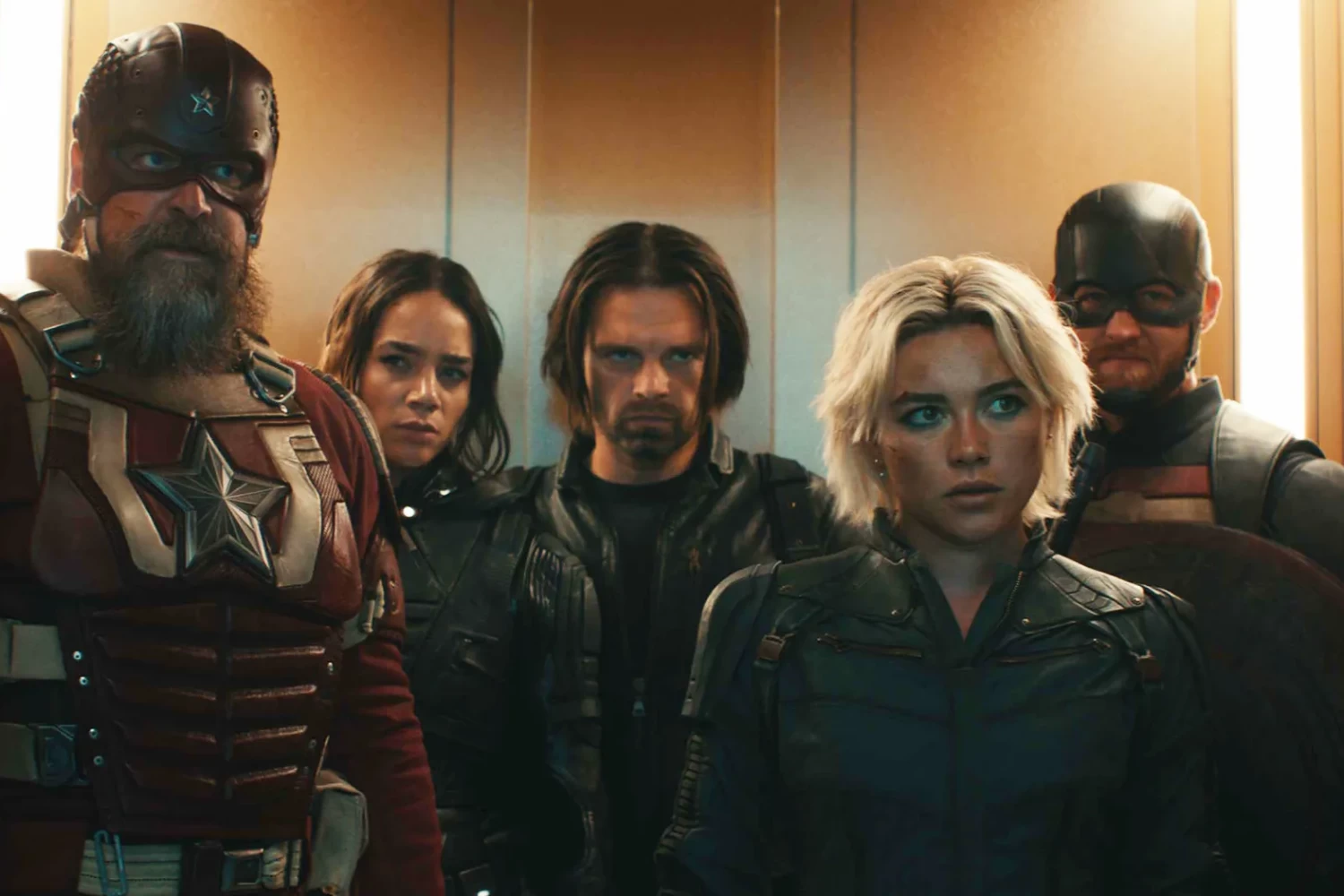
Thunderbolts*, directed by Jake Schreier (known for making Netflix’s Beef), is a bold recalibration of the Marvel Cinematic Universe, steering away from the franchise’s typical bombast to explore the psychological depths of its characters.
The film centers on a group of morally ambiguous figures—Yelena Belova (Florence Pugh), Bucky Barnes (Sebastian Stan), John Walker (Wyatt Russell), Ava Starr (Hannah John-Kamen), Robert “Bob” Reynolds (Lewis Pullman), and Red Guardian (David Harbour)—assembled by the manipulative CIA director Valentina Allegra de Fontaine (Julia Louis-Dreyfus). Rather than focusing on world-ending threats, the narrative delves more into themes of mental health, including trauma, redemption, and the search for identity.
The film begins with Yelena jumping off a high-rise building. It looks like a suicide attempt as her voiceover describes “There is something wrong with me,” but it’s not. She is just in the middle of a mission assigned by the CIA director, Valentina Allegra de Fontaine, or Val. In her final assignment, Yelena united with the other members (who had discreetly worked on Val’s missions before) at Val’s top vault on the mountain containing important secrets (which are actually trash left to be destroyed) remote place. They later realize that it was a setup by Val to clean up her mess to save herself from the congressmen, which includes Bucky, aka The Winter Soldier.
There’s a lot going on. These anti-heroes turned Thunderbolts unite, except for Robert “Bob” Reynolds, aka the Sentry, as he (unaware of his powers) struggles to recall how he entered the vault. All he remembers is going through a medical lab procedure and waking up in the vault. Eventually, the ragtag team decides to take Valentina down.
The film’s screenplay, written by Eric Pearson and Joanna Calo, emphasizes character development over spectacle. The narrative allows for introspective moments, like the team’s interactions in a CIA facility, where their vulnerabilities are laid bare. These scenes provide insight into their psyches, moving beyond the typical action-driven plot to explore the emotional scars each character bears.
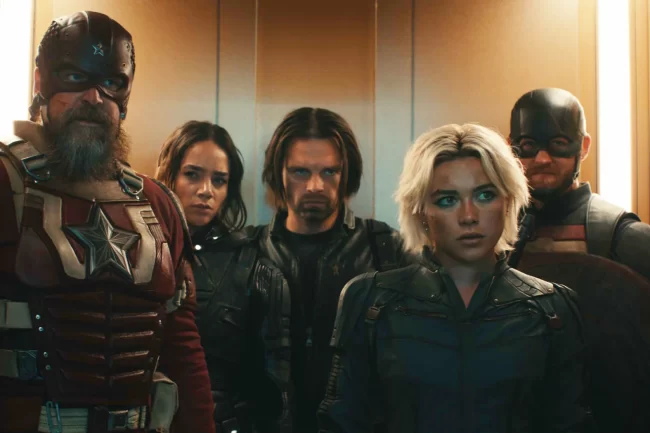
Schreier’s direction brings a grounded, character-focused approach to the superhero genre. The film’s climax, rather than culminating in a traditional battle, focuses on the team’s efforts to console the troubled Bob (Lewis Pullman), highlighting themes of empathy and healing, which is something the MCU has been lacking lately. This subversion of expectations underscores the film’s commitment to exploring the emotional landscapes of its characters.
Thunderbolts is not without its flaws. The sudden death of Taskmaster (Olga Kurylenko) feels unnecessary. Including the character in the ragtag team wouldn’t have harmed the future of this universe. Additionally, the film’s darker tone in the final act, while thematically consistent, may not resonate with all audiences.
Florence Pugh delivers a terrific performance (and so do the additional characters) as Yelena. In an early scene, Yelena is depicted in a state of deep depression, a moment Pugh fought to keep in the film to authentically represent her character’s internal struggle. Her interactions with Red Guardian, her adoptive father, are particularly poignant; their dynamic swings between tension and tenderness reflect a complex familial bond strained by past betrayals.
Despite these shortcomings, Thunderbolts succeeds in delivering a superhero film that prioritizes emotional resonance over spectacle. Its focus on the psychological complexities of its characters offers a refreshing departure from the genre’s norms. The performances, particularly by Pugh and Louis-Dreyfus, anchor the film, providing depth and authenticity to their roles.
In navigating themes of trauma, redemption, and the human need for connection, Thunderbolts carves out a unique space within the Marvel Cinematic Universe.
You can watch Thunderbolts* at the theatres near you.