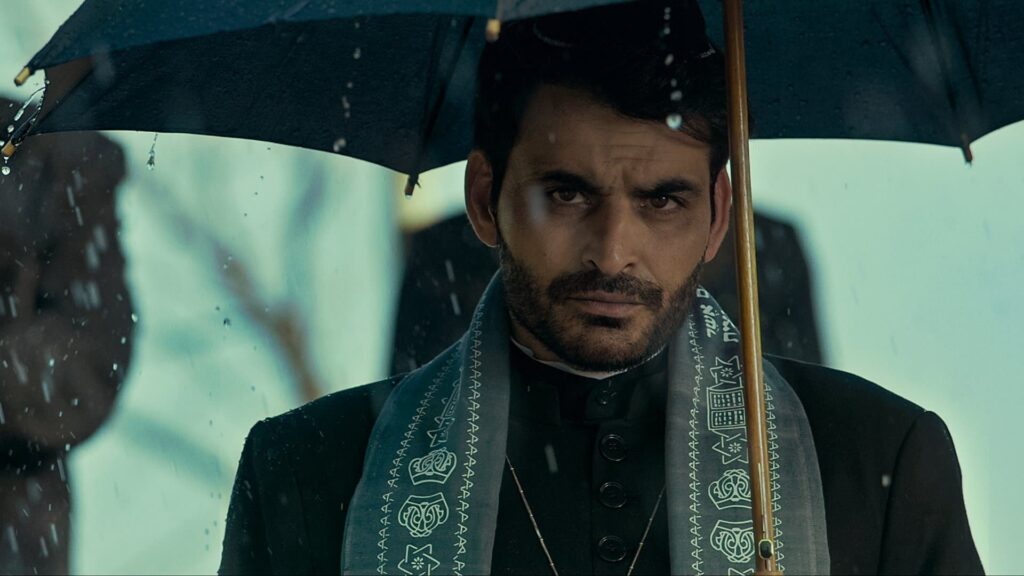
Dybbuk (2021) is the official remake of director Jay K’s 2017 film Ezra, starring Prithviraj Sukumaran. Considering I haven’t seen the original version, this is the first time I am entirely experiencing the story, which is written by Jay K, who also directed this remake. The only distinction between the original and this remake that I know of, is that the setting has shifted from Kochi in the original to Mauritius in the remake.
Dybbuk follows the story of Sam Issac, an engineer at a multinational company called Zayake. He is transferred to Mauritius to take over Zayake’s headquarters there, and Issac and his wife move in to a colonial house. Sam’s wife Mahi, buys an antique Jewish box as part of redecorating her own home. Soon paranormal events start occurring, which bears resemblance to a strange murder at an antique shop which had occurred a couple of days back. Things start to become complicated when Sam learns that it is a Dybbuk box, used to capture and lock down malicious spirits called Dybbuk, believed to be the dislocated soul of a dead person. Once the box is opened, the soul possesses a host and sets out to complete its bidding.
Dybbuk the film is an interesting film in terms of recent Bollywood releases, as this is the first time we see Bollywood tackling any sort of Jewish folkore, much less folklore related to horror. The fact that the setting is shifted to Mauritius is a bit of a dissapointment, as the original benefited from telling the story of religious differences and resulting atrocities that occurred with the Jews in Kerala. No such connections here. The religious angle being explored here comes at the tail end of the story, and mostly serves as generic exposition-al backstory.
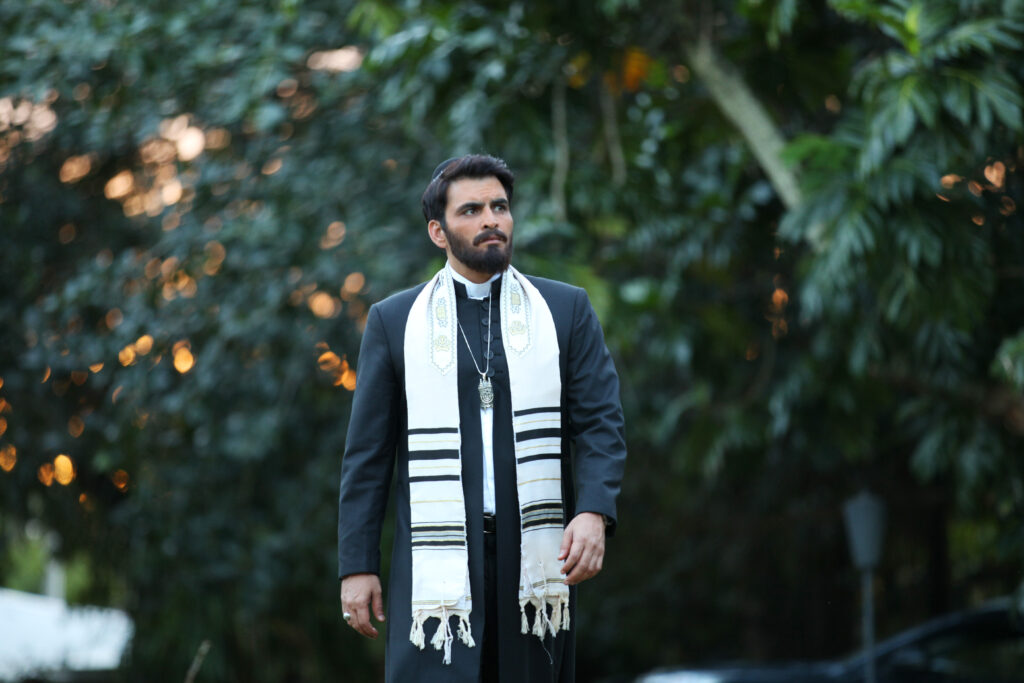
The biggest issues with Dybbuk as a genre exercise is that there isn’t much of a horror element for much of its runtime. For a movie with a runtime of 112 mins, Dybbuk feels strangely devoid of horror, content to utilize traditional jump scares instead of a build-up of the dread that Sam and Maahi experiences according to the narrative. Instead nothing much occurs in the middle, until almost the hour mark. There is a chase sequence, or more correctly a walking sequence which is shot beautifully. The cinematography by Satya Ponmar during that sequence is fantastic, as well as the production design throughout the film. The second half of the film is when the meat of the story and narrative propulsion occurs, but it still feels far too bland to stand out. Even Manav Kaul, whose entrance in the film promises a bolt of energy is present in fits and spurts. And while Dybbuk promises a conversation of violence related to religious differences, it is content to rush through that avenue via backstory instead of allowing that to breathe. The fact that Mahi marries Sam, a christian and that act causes friction between the families, is only mentioned in passing.
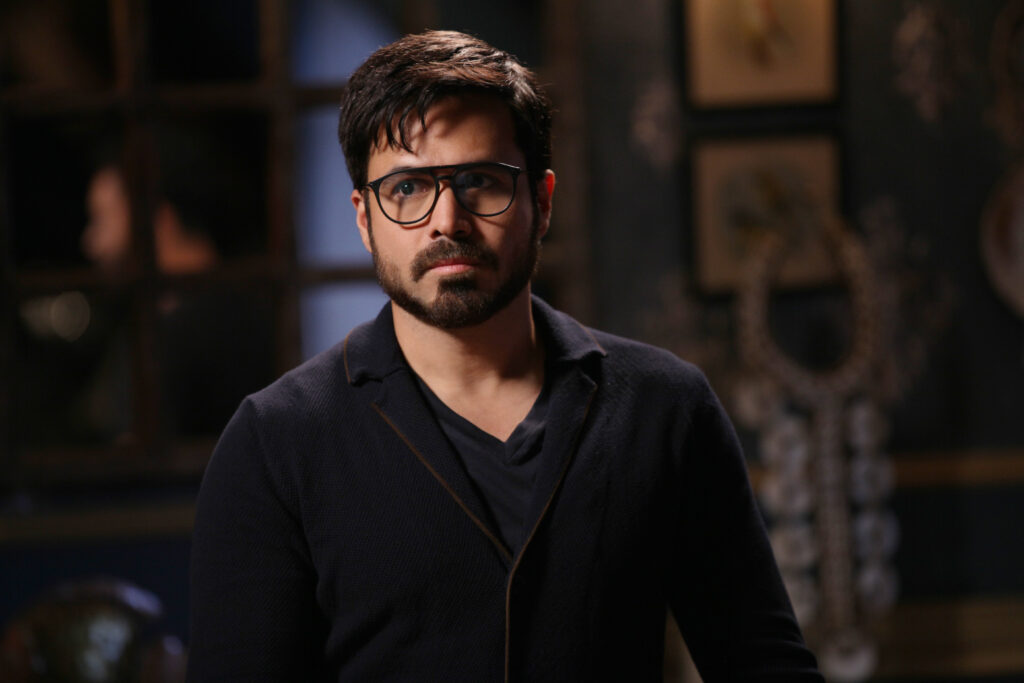
Emraan Haasmi is reliably good in the film here. The standout of Dybbuk is Manav Kaul and the premise or the basic story of the film. There is however a strange dissonance of tones here, a clash between the serious family drama and the horror elements which at times border close to camp. Balancing those two tones causes a huge pacing problem, which is why the film commits the biggest cardinal mistake – it is boring for the majority of its runtime. And even narrative twists, diligently at the hour mark and at the tail end, is unable to recover the movie from limping to the finish line. Its a shame , because Dybbuk is definitely a different sort of horror than what we usually expect from Bollywood, and it would have been a definite standout if the script was tightened up a bit more.
Yash Raj Films is the biggest Indian studio and it’s Chairman and Managing Director, Aditya Chopra, has directed and produced some of the biggest blockbusters in the history of Indian cinema. His debut directorial, the historic romantic film Dilwale Dulhania Le Jayenge, which released in 1995, is still running in theatres. Popularly called DDLJ, it is one of the highest grossing movies in the history of Indian cinema and the biggest IP of the country’s rich and diverse movie industry.
After 26 years, Aditya Chopra is set to direct DDLJ again and it will mark his debut as a director on Broadway. He strongly feels Broadway and Indian films are ‘two long lost lovers separated in time’ because of their intrinsic similarities as both celebrate heart-warming stories and human emotions through music and dance. Aditya has been working on this passion project for the past three years and has roped in a stellar, extremely diverse team, comprising some of the best talents of Broadway and India for the same.
Come Fall in Love – The DDLJ Musical is being produced by Yash Raj Films. Based on an original story by Chopra, the musical will feature book and lyrics by Laurence Oliver Award-winner Nell Benjamin (Legally Blonde, Mean Girls), top Indian songwriters Vishal Dadlani & Shekhar Ravjiani will serve as composers. Tony and Emmy winner Rob Ashford (Frozen, Thoroughly Modern Millie, The Boys from Syracuse) will choreograph with associate choreographer Shruti Merchant. The design team will also include set design by Emmy and Tony Award winner Derek McLane (Moulin Rouge!, Hairspray Live!, 33 Variations) and music supervision by Tony, Grammy, and Emmy Award-winning Bill Sherman (In The Heights, Sesame Street, Hamilton). Adam Zotovich is the Executive Producer for the project.
Come Fall in Love – The DDLJ Musical is set to be on stage in the Broadway season of 2022-2023, with a World Premiere at the Old Globe Theatre in San Diego September 2022. A global casting search begins shortly headed by Duncan Stewart of Stewart/Whitley casting and Yash Raj Films casting head Shanoo Sharma.
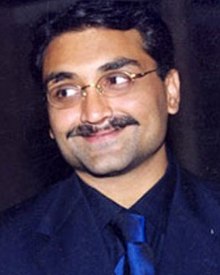
Aditya Chopra
ADITYA CHOPRA’s NOTE ON HIS BROADWAY DIRECTORIAL :
Summer 1985. I was 14 and on a holiday in London. My parents took my brother and me for our first musical theatre experience. The lights dimmed, the curtains lifted and what unfolded in the next 3 hours left me speechless and stunned. Now, till then, I was a kid who was an avid movie watcher and what I loved the most was big screen Indian blockbusters. But that day what I saw on stage blew my mind. I couldn’t believe that this kind of spectacle could be created live on stage. But the most significant aspect that resonated with me was how similar musical theatre was to our Indian films. It was just not the fact that both use songs to tell the story, it was much more than that, it was the feeling they evoked which was exactly the same. The burst of colours, the heightened drama, the passionate singing, the unabashed dancing, a classic story, a happy end. It filled me with the same joy and emotions that a good Indian film does. I realised then, that worlds apart, languages apart, western musical theatre and Indian films are two long lost lovers separated in time.
Autumn 2021… I’m embarking on my most ambitious project till date. I’m reuniting two long lost lovers, Broadway Musical and Indian Films. 26 years back I started my career with a film called Dilwale Dulhania Le Jayenge (DDLJ, what it is more famously known as). The film created history and changed my life and many others forever. But what many don’t know is that I never intended to make DDLJ in Hindi. As a 23 year old young man greatly influenced by Hollywood and American pop culture, I thought I would make a couple of Indian films and then I would be off to Hollywood and make DDLJ for a worldwide English speaking audience with Tom Cruise as my leading man. That obviously didn’t happen. DDLJ released in 1995 and became the longest running film of Indian cinema. It gave me my identity and kickstarted an amazing journey for which I’ll always be grateful.
26 years later I’m going back to my original vision of the story of DDLJ, a love story of an American boy and an Indian girl, a love story of two cultures…two worlds. But this time the medium is not cinema but theatre. 26 years later I will be directing DDLJ all over again but this time as an English language Broadway Musical for a worldwide audience.
I’m terribly nervous and incredibly excited. I’m a hardcore cinema guy, I have never done theatre in my life and here I am trying to pull off the craziest ambition of my life. But what is giving me confidence is the fantastic team that I have. Each one of them are masters of their field and their brilliance and expertise is going to make this a fantastic show. The past 3 years as we have developed this passion project, I have learnt so much from them and discovered the unbelievable talent that the Broadway community has. I feel 23 again, the same age I was when I directed DDLJ. I’m once again a student, each one of my team members is more experienced than me in the world of theatre, I’m the rookie and I’m loving every moment of it. I’m all set to learn, explore, create and enjoy with these wonderful theatre artists and the magical world of Broadway Musicals.
See you on stage in Autumn 2022 with Come Fall in Love – The DDLJ Musical
Aditya Chopra
Quote from Nell Benjamin:
“DDLJ was my introduction to Indian filmmaking before I even knew who the amazing Aditya Chopra was, and the movie had such joy and heart that I fell in love with it. I was so happy to be approached to do the musical and I hope my work helps everyone fall in love with Simran and Raj and their journey across multiple cultures to love. The world can always use a little more cultural understanding, and I can’t wait to sit in a theater with an audience sharing the joy and surprise of Come Fall in Love – The DDLJ Musical.”
Taste and skill develop at varied paces. The former can be acquired. The latter has to be gained through penance and constant practice. Sardar Udham is a film of fine taste, hands down. But the skills are a veil rather than a storytelling microscope.
The film is a departure from the archetype freedom fighter/patriotic film formulae, which is a respite. But the construct of it devises or rather leans on a method of its own.
The central character of Sardar Udham is the mood plan of its universe. Cold and gloomy like a Blackpool winter dusk, the story uncoils with Udham Singh walk out serving his jail sentence into a world that’s in shreds and still fuming with the smoke of past flames.
The origins aren’t met with a head start but a tale spin where the narrative oscillates between the aftermath and establishment of the Jallianwala Bagh massacre.
Shoojit Sircar and his writers Shubhendu and Riteish Shah invest runtime in ovulating the protagonist’s voyage from plight to vengeance, through slow burning, stoic moments sufficiently gruelling to affect the most hardened of us. The problem being, nuances are sporadically riveting and mostly draggy.
In this nonlinear uncovering, the issuance of the conflict takes backseat while the viewer is consumed by a memoir of character development. For seemingly, the makers are slated to redeem the character’s emotional journey at the culmination and not retrospect of the travails of collective grief spurred by the satanic blood bath.
About halfway through the film, the writing appears empty or rather unavailable to holistic objectivity of the story.
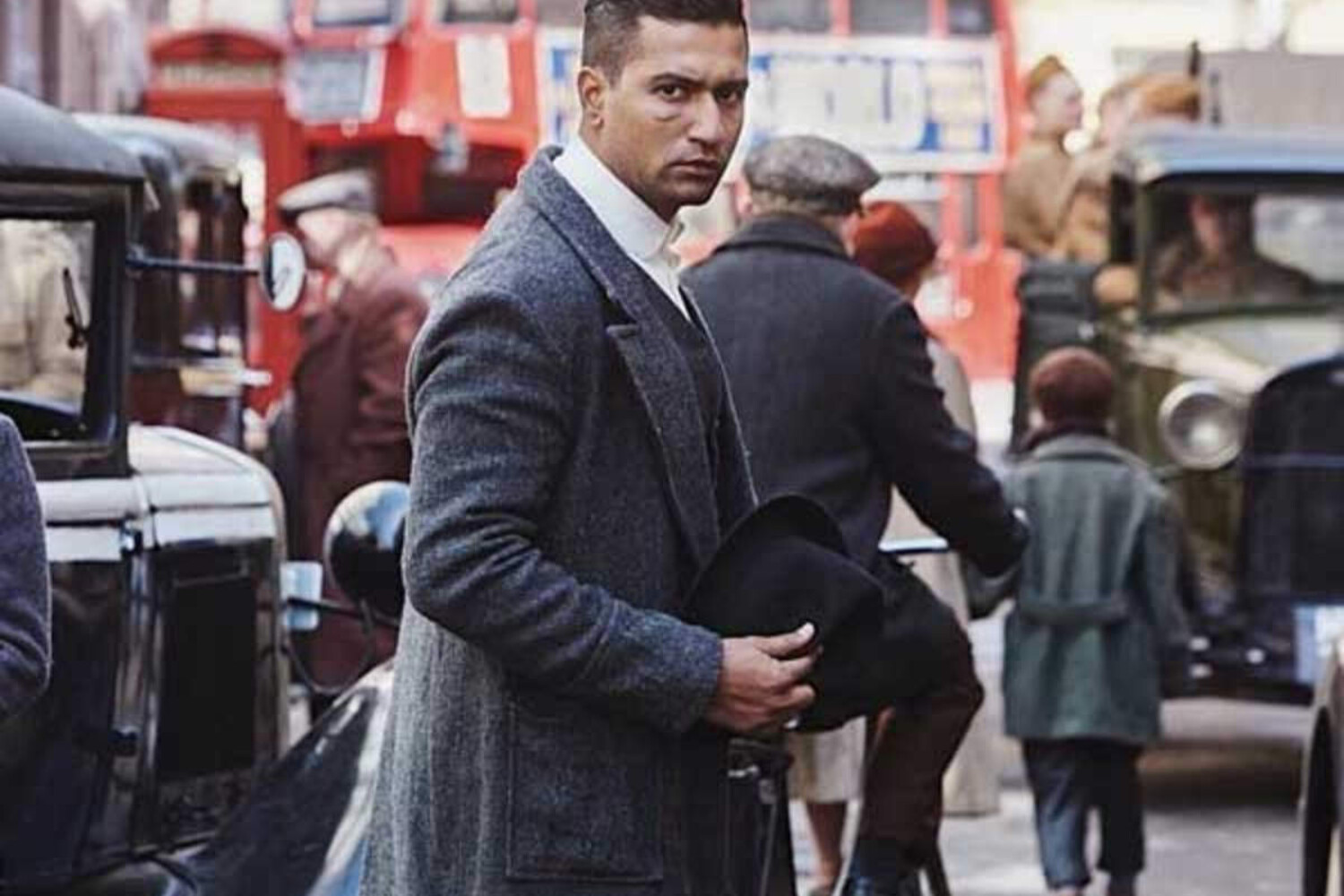
Still from Sardar Udham
Sardar Udham isn’t a bad film. It’s a stellar piece of work. But the restricted expression is glaring.
The story is aware of the current socio-political status of the country. The creators seem to have wilfully taken away a chunk of the perspective.
It doesn’t have much to say besides the fact that it views Sardar Udham Singh as a revolutionary. But fails to tap into the making of that revolutionary.
And, I don’t blame the makers either. The film dabbles with the obvious compulsion of free will and speech but ironically practices the exact same indictment it loathes.
The seed of Sardar Udham’s revolution wasn’t vengeance. It was political consciousness. The freedom to think and express. The film never confronts the colonial mind-set of weaponing fear. It wasn’t imperialism that enslaved our nation. It was fear, inflicted methodically, through caste system and class divide.
To understand this facet, one has to browse through the Sepoy Mutiny of 1857, which the film addresses in bylines and whispers. Mangal Pandey, Rani Laxmibhai, Bahadur Shah II were some of the leaders of that revolt. A rebellion that made the Brits realise India’s power sanctum; it’s religious unity. To dissect which, the colonials piped in an effective policy on their part – Divide and Rule.
This whole ordeal is palpable but passable in this film. When Udham Singh oaths upon Heer Ranjha and reintroduces himself as Ram Mohammad Singh Azad, it’s a symbolic overtone of the realms the film desired to achieve but couldn’t, courtesy predominant political divide and trivialised bigotry.
While the film gets the morality on point by exclaiming the sensibility of separating an evil and his community or nation and the difference between hating someone and still being in parity with the rest of his community, the voice of the telling lacks zeal in narrative points warranting depth and gall. Sad, that speaking your mind has to be considered audacious in a free world.
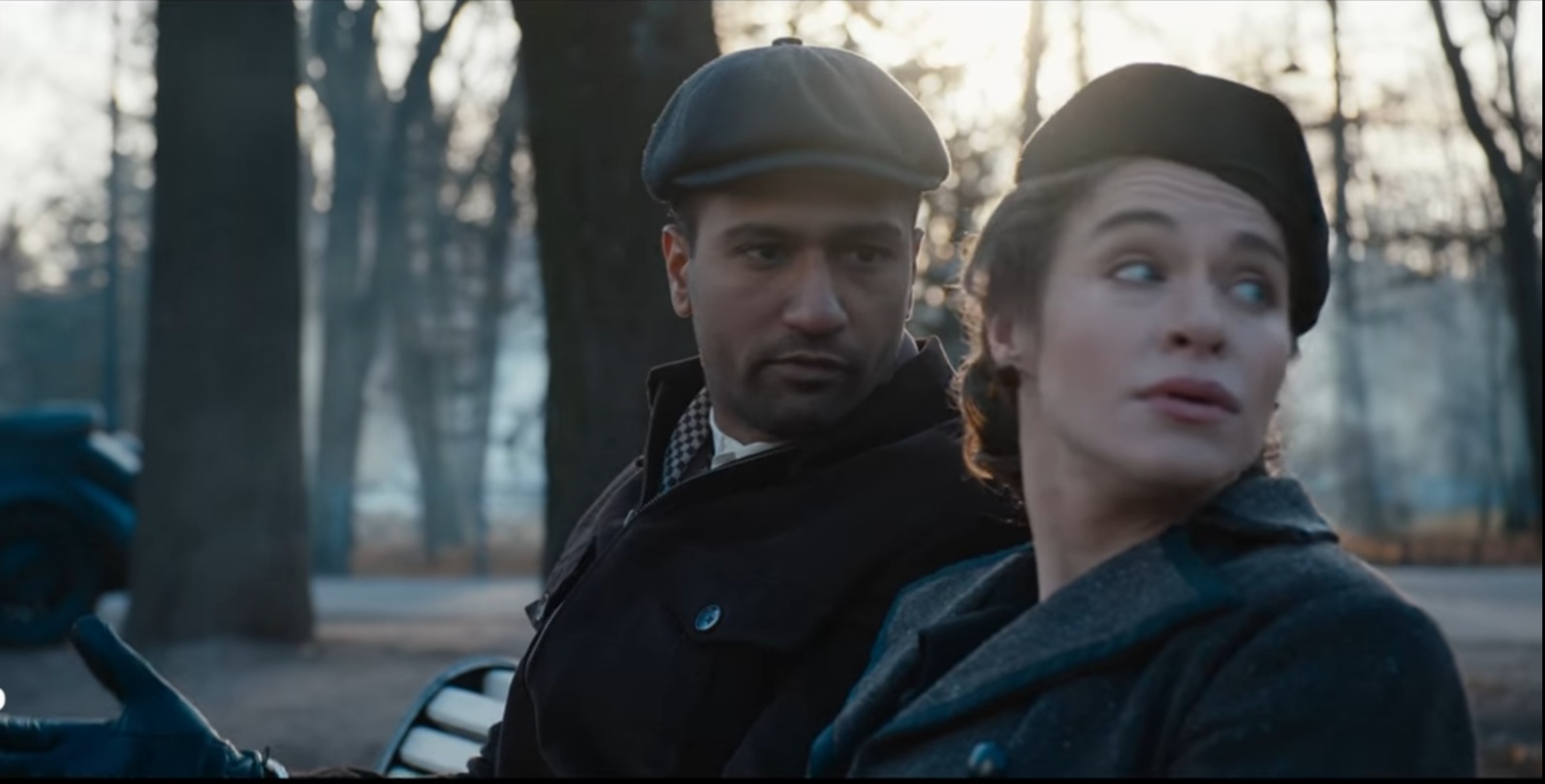
Still from Sardar Udham
The film is cut above the rest and will be remembered as one of the finest products of Hindi cinema but it isn’t a masterpiece. It refrains from studying the reasons behind Udham Singh’s scorn. Absolutely failing to comprehend his trauma, it doesn’t address what PTSD could do a person and to what extents.
A young Ambarsariya lad who’s never killed a fly goes onto assassinate the prime oppressor in public. That tells a lot about the mental state of a pained human being. Someone who’s lost his dear friends and family in most demonic act of oppression in history. It’s also a fashionable trait of us, the moden Indians who go amiss at comprehending our history.
We see the valour in our heroes but tend to let pass of the vindication they had to undego. Most of our leaders and revolutionaries of Sardar Udham Singh’s credence were broken people trying to fix a world for the future to exist in peace and prosperity. Their fight was a cause, backed by an ideology of equality and not exactly vengeance.
Did they plan to kill anyone in the process? I bet not. But the constant attack on psyche and sense led to a succession of traumatic events which made them snap.
They weren’t killers or murderers. They were depressed people who resorted to violence as nothing else worked in that phase of white dominion. That’s their context. Killing isn’t a justifiable act. Else, one day someone who’d walk up and make a film glorifying Nathuram Godse killing Mohandas. K. Gandhi. Godse wasn’t a revolutionary. He killed Gandhi for he vouched for the Zionist mentality of one world – one ruler. A thought that’s against the multiracial, multilingual setup which made this country great.
Remember the Sepoy Mutiny we talked about several minutes ago in this article. The religious unity of this nation; that’s what Godse and his breed were against. The same philosophy that Bhagat Singh, Udham Singh and countless other of our leaders and fighters gave their lives for. Oh wait, someone’s actually making a film on Godse.
Deprived of its true voice, Sardar Udham is a restrained and ironic take on its central topic, freedom.
People born in this millennium might find this film either overbearing or terrific based on what politics is being instilled into them. You cannot make an honest film on national interest and topicality in our nation. It’s not plausible either. You’ll rub so many people the wrong way that your film or show might get stalled. Which means a gutpunch to livelihoods of thousands at stake.
Reasons why Sardar Udham is showcased as the journey of a young boy scathed by vengeance whilst the actuality is of a young boy spending 21 years of his life tackling unattended trauma.
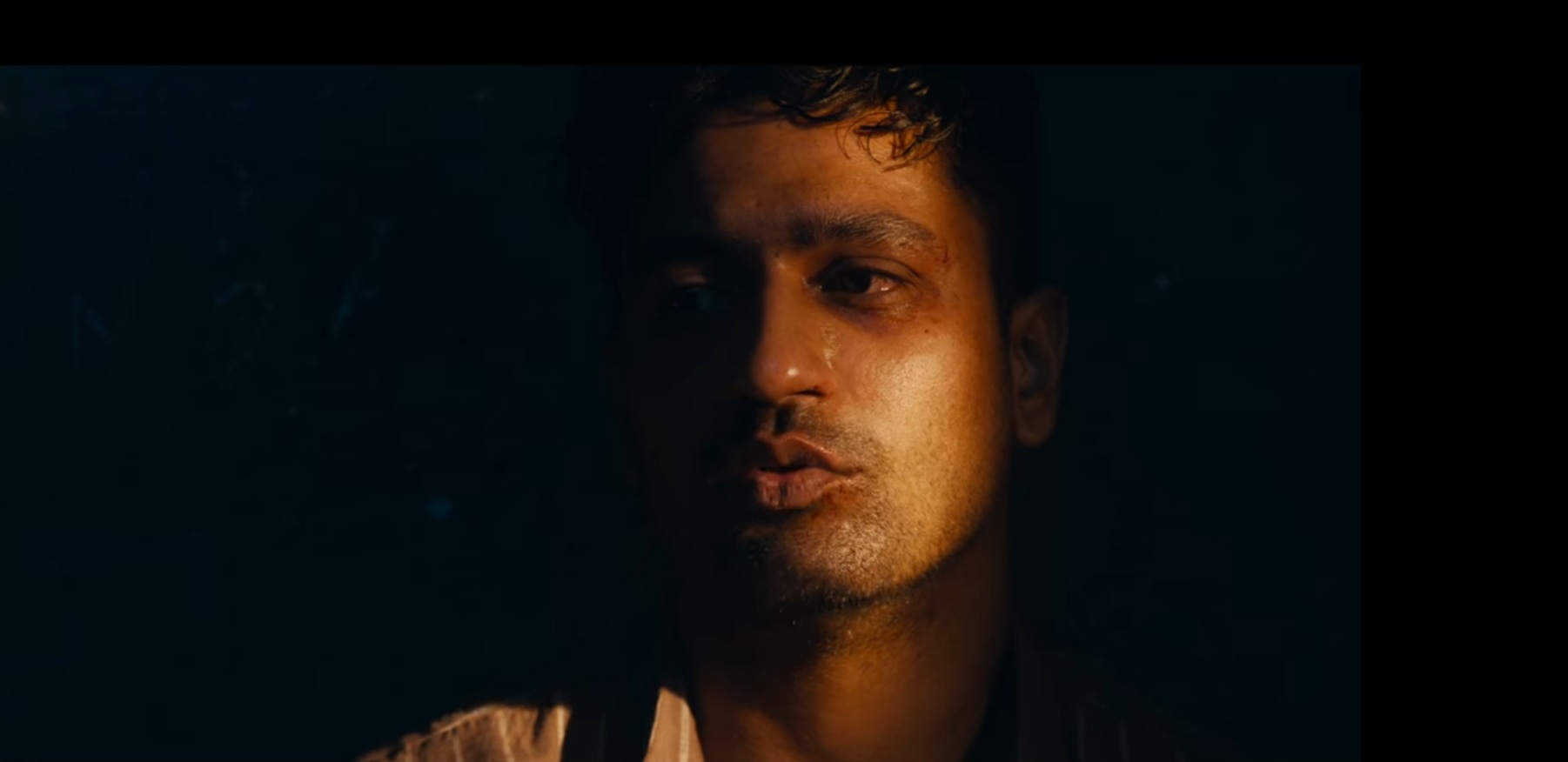
Still from Sardar Udham
The film however sparks some food for thought. The faint and passive mention of free will makes one ponder upon the true essence of freedom. In a world where fear dictates everything you write, speak, opine or even suggest, free will is still farfetched.
When Vicky Kaushal’s character asserts in the final moments of the film saying, “Poochunga, meri jawaani ka kuch matlab tha ya zaaya kar di?” it stings as a hindsight of our own structures of freedom.
Did we really live up to the sacrifices of our predecessors? Who wanted a country, a world of free thinkers and hardworkers. A country still fighting for equality, dictated by overlords who incite and instil fear in us courtesy religious, political and ideological divide. Is this any different than imperialism? Ruled but not governed. Before and after independence. Revolts, variable. Apathy, a constant.
Apathy reminds me of a steaming issue Prime Video and Netflix don’t seem to fix. This film is majorly in British English. Even though global in nature, it’s a film on Indian history. A film that everyone should get to watch. A part of the demographic isn’t well versed with English, so there should be a complete Hindi dub. And a chunk of the demographic can’t read. So, subtitles won’t be helpful either. This needs to be resolved. That’d make their service well-rounded and for every consumer. Hope this gets attended soon because making someone feel left out is not cool.
Sardar Udham is a good film that could’ve been a generational memento. But the film warped by the strange of the world it has chosen to exist in.
A safe attempt, a successful venture. In an ocean of stupid, hypernationalistic and propagandist films, Sardar Udham is a fresh lease. In our cesspool of cinematic patriotism, Shoojit Sircar’s Sardar Udham – Andho Mein Kana Raja.
While not directly based on the 2014 case between the IAFF and Dutee Chand, Rashmi Rocket is heavily inspired from that case, especially the allegations and subsequent ban Dutee Chand had to face when the amount of testosterone in her blood was found to be above an arbitrary threshold, thus disqualifying her.
Dutee Chand then went on the offensive and fights for her rights, and her ban was ultimately lifted because of lack of evidence supporting that higher testosterone could give an unfair advantage to female players.
The above case of hyperandrogenism, and the subsequent effects it has had on the world of competitive sports is an interesting and frankly far more ambiguous and exhaustive affair – especially the different rules being implemented, amended, addendum established etc.
On that regard, Rashmi Rocket should be applauded in bringing the existence of gender test as well as the existence of this condition to public focus.
But the film’s existence in being an original story and not an out and out biopic about Dutee Chand ultimately shows us Bollywood’s propensity into leaning in on sensationalizing events in order to convey a message.
While that is not a bad thing in hindsight, it is clear that Rashmi Rocket is really not interested about hyperandrogenism and its nuances in response to competitive sports, instead focusing on a contrived plotting about internal politics as well as jealousy and personal agenda between competitors that force Rashmi out of the competition.
It really makes for an emotionally charged affair, but it does look like a missed opportunity.
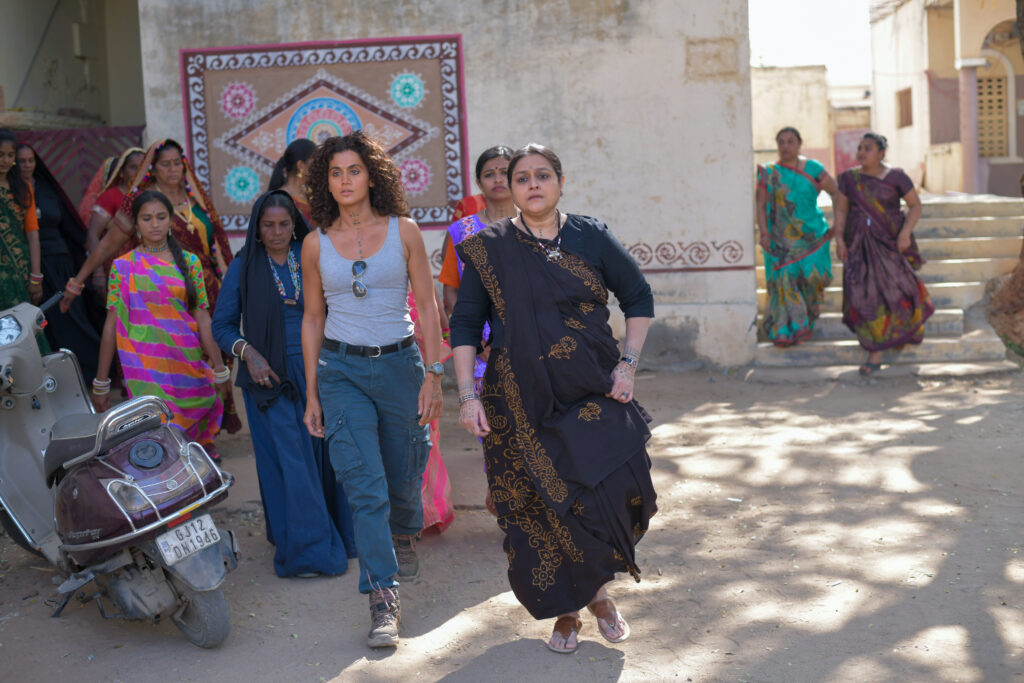
The first half of the film is the typical origin story of Rashmi Vira, a young girl who is tomboyish, the apple of her father’s eye and has a contentious relationship with her mother. She grows up to take over her father’s business of a tour guide in Gujrat; it’s all a well paced and a good, if somewhat predictable origin story.
The relationship between Rashmi and Captain Gagan, played by Priyanshu Painyuli is a sweet and mature one.
The movie becomes far more sensationalized when the hour mark approaches, and Rashmi is carted off to a medical centre to do a blood and sample test and unbeknownst to her, a gender test.
Here is where Akarsh Khurana as a director tries his best to elevate a frankly troubling sequence, and ultimately leading to the opening sequence of the movie, which grabbed headlines when it was shown in the trailer.
The image of Taapsee Pannu’s Rashmi being dragged by male officers from her hostel is definitely a sight designed to grab you and pull at your anger-strings.
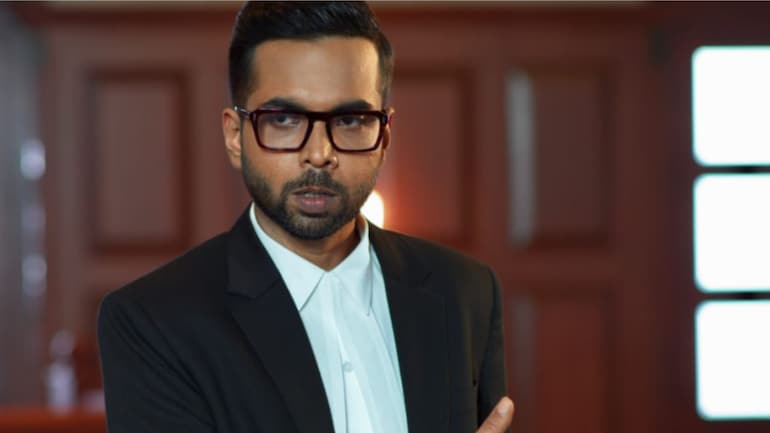
The movie at the second half becomes a far more interesting affair when Abhishek Banerjee’s Eeshit enters the film, as a lawyer interested to fight Rashmi’s case.
Bollywood has been excelling at depicting court cases in movies as of late, and this film definitely can proclaim the court scenes to be the strongest.
Eeshit’s character being impulsive and a maverick lawyer is called out by the judge (a superb Supriya Pilgaonkar) as someone who is a fan of Bollywood movies and thus is far more impulsive than necessary. A clever call-out, but that’s what it all ends up being, a call-out, because it is a Bollywood movie where commercial elements and big monologues in court movies are somewhat essential.
At the end of the day Akarsh Khurana crafts a movie which is definitely an important one, and a project he and his team of writers have crafted definitely invites conversation.
It also helps that the central performances are universally sound.
While Taapsee’s acting prowess is settling into something far more familiar nowadays, her physical transformation as well as physical acting is top notch. Rashmi’s portrayal by Taapsee definitely makes the viewer believe in her athletic capabilites .
Rashmi Rocket at the end is an important movie that brings to light topics the general audience has little knowledge of. However, it chooses plot contrivances to push the narrative and thus makes it feels like a far different movie than what you were expecting.
It is a far more simplistic movie than the ambitiousness it aspires to execute.
Popcorn Rating – [2.5/5]
Rashmi Rocket releases on ZEE5 on 15 October 2021.
Watch an exclusive interview with Abhishek Banerjee discussing the Rashmi Rocket and more:
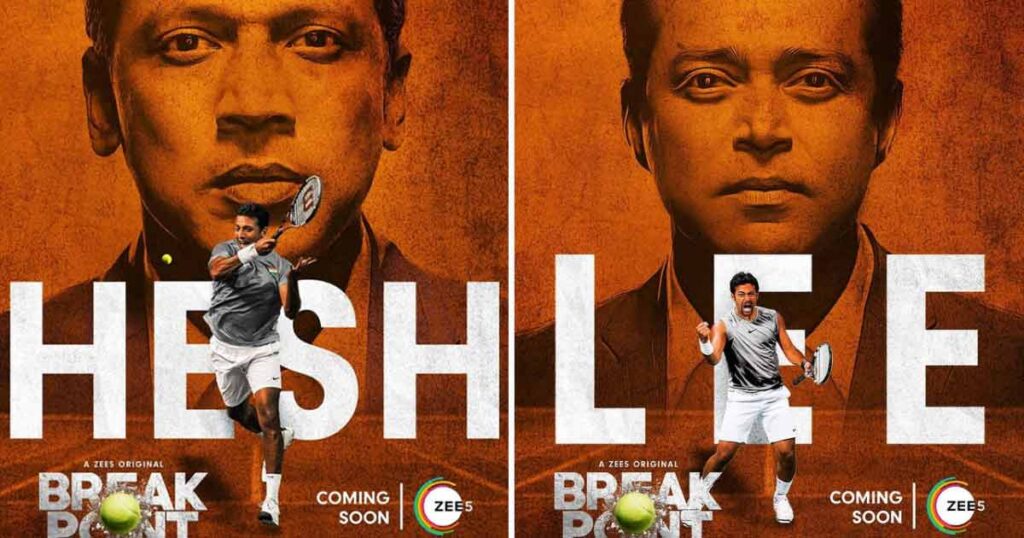
India doesn’t have the sports documentary or docuseries culture as of yet. Other than the Sachin Tendulkar documentary released a couple of years ago, there hasn’t been a docu-series in the vein of “The Last Dance”, or “The Test”. Break Point is one of the firsts of such docu-series and as it stands it is an extremely compelling one.
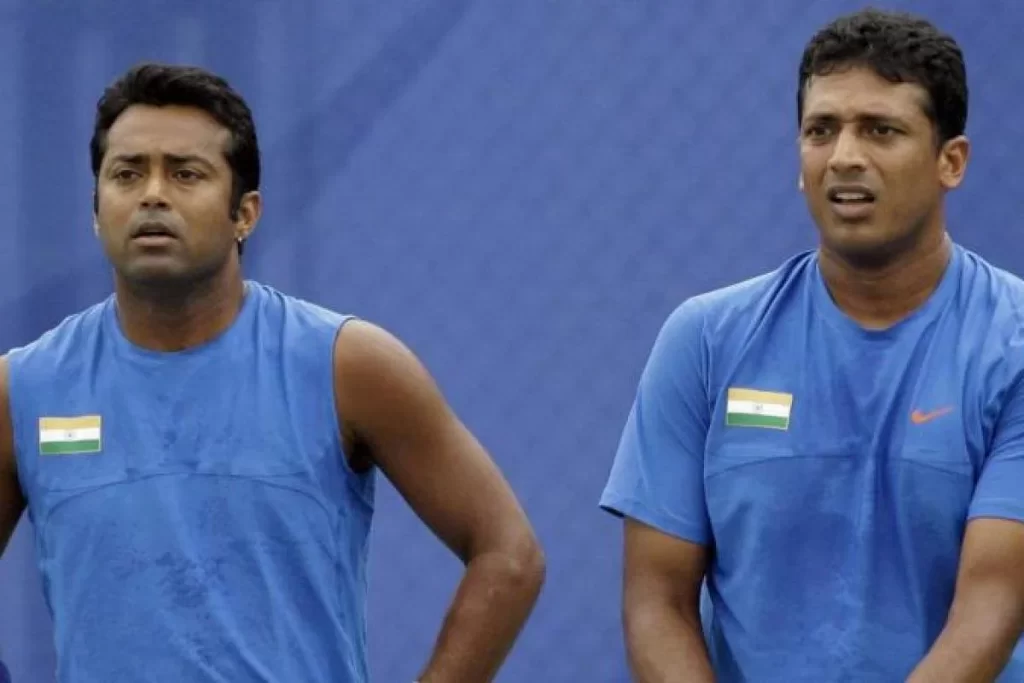
Completely based on interviews and talking heads, from a technical standpoint Break Point stays at a default. But unlike Bollywood biopics of sports people, the interviews and thus the narrative are of real people, with their real personalities coming to the forefront. The rise of the Lee-Hesh friendship, the rise of their partnership in the Doubles stage, dubbed “The Indian Express”, their meteoric rise in popularity, and finally how egos and chinese whispers cause that partnership to come crashing down. In that regard the partnership of Paes and Bhupathi is both an inspiring story as well as a cautionary tale, as it had been quoted verbatim by both friends of the Paes family as well as other athletes and legends of the tennis world.
What filmmaker couple Nitesh Tiwari and Ashwiny Iyer Tiwari does so well is let the principal players of the story speak their minds out, and when honesty and truth is allowed to have their way, true personalities of the key players are allowed to shine through. Leander Paes is a born leader, methodical and to some extent even controlling, while Mahesh Bhupathi is the introvert, the reliable one while Paes is the unpredictable one of the two. And it is fascinating to see how miscommunication and rise of ego and assertion by one party can cause the disruption of said balance. But it also shows how much respect both of these players still have for each other, even as their friendship seems frayed at the seams.
The best aspects of the show are when both Paes and Bhupathi describe specific matches, and both the directors manage to convey that tension to the viewers of this documentary, by making it feel like we are watching that set or that match in real time, while Paes and Bhupathi do commentary on said moments. It is fascinating, both the similarities and the differences these two players have, making you realize that this complimentary viewpoints made them good partners in court, but the off-court drama is sometimes agonizing and sometimes excruciating.
The episode which delves almost entirely into the off-court drama is the most it feels like a soap opera. This isn’t a knock to both Leander Paes and Mahesh Bhupathi who I am sure it is very hard to dredge up such old memories, but the editing and music choices utilized in such moments feel grating and off-putting at points.
While long time fans of “The Indian Express” might not find much new material to uncover, for newcomers and fans of the sports documentary genre, Break Point is definitely a worthy addition to your watch-list, introducing you to both the two players, while also focusing on the humanity of these two souls, which is the sole requirement for viewers not acquainted with the sport to hold interest in said documentary.
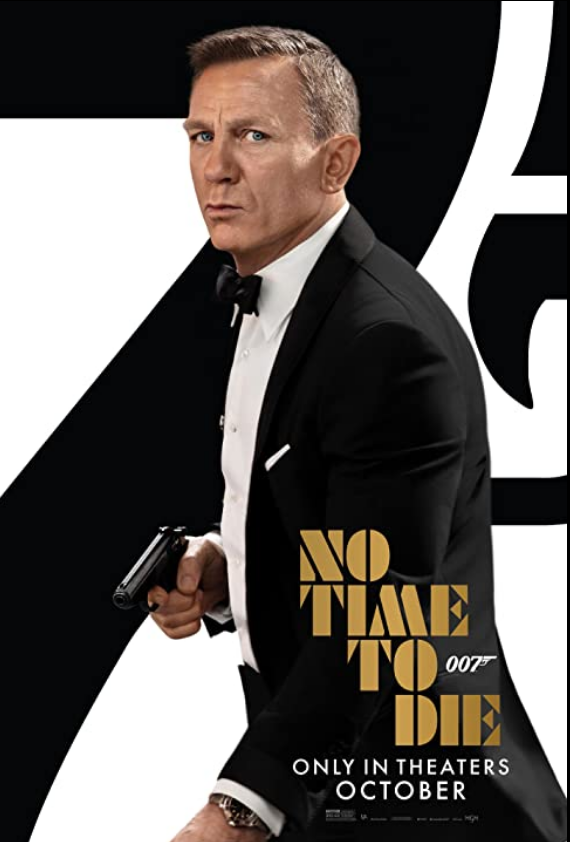
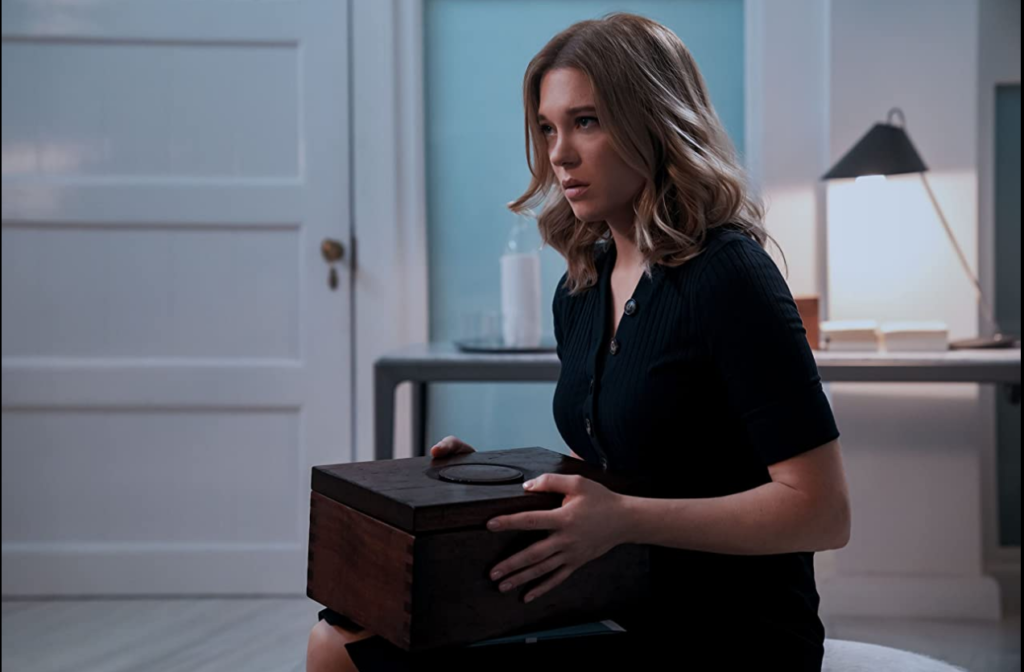
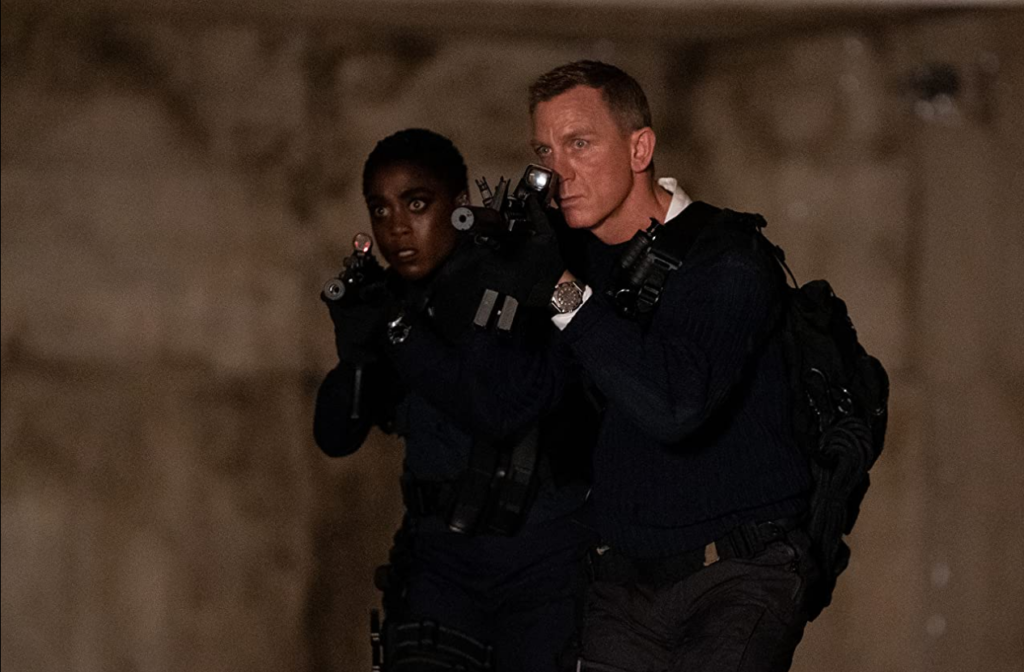
What surprised me while watching “No Time To Die”, the latest in the James Bond franchise, was how much it pulls its musical cues from the 1969 classic Bond film “On Her Majesty’s Secret Service”. Its not just ironic that Bond whispers to Madeline Swann (Lea Seydoux) “We have all the time in the World”, when knowing it is the final mission of this Bond, the same Louis Armstrong song’s rendition by John Barry plays throughout On Her Majesty’s Secret Service and No Time to Die, especially when both Craig and Seydoux’s character are in the same frame. It is not a coincidence that the musical cues are so similar, both films feature a Bond softened by love, emotionally vulnerable, and James Bond of the Daniel Craig era, especially in No Time to Die is allowed to be vulnerable.
If the above paragraph is any indication, yes No Time to Die looks back to its history. It is a throwback in more ways than one. The plot ludicrous as it is, the villain, the hidden lair on an island, its all the trademarks of the Bond franchise one comes to expect. What works in this movie is Bond and Swann’s relationship, with Seydoux finally allowed to spread her wings, becoming the beating heart of the film in the process.
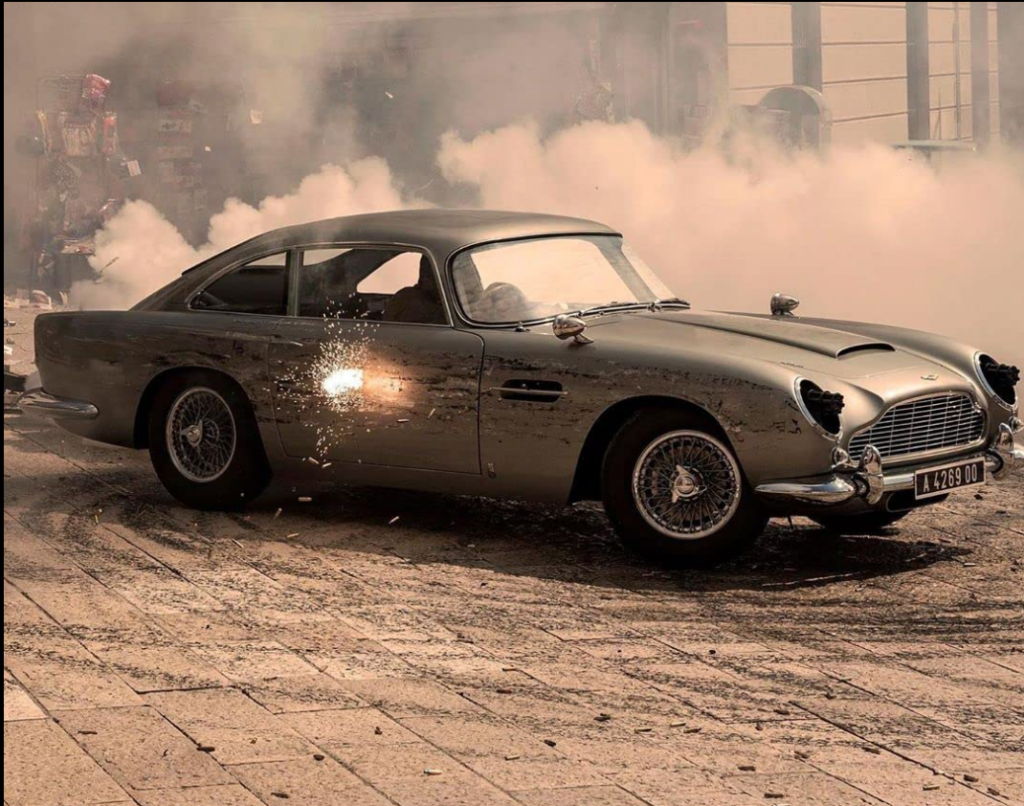
The opening 30 mins of the film is exhilarating, Fukunaga’s handle on the action sequences are almost perfect. The opening moments of an explosion comes to mind, where Bond tries to get his bearings and the voices and sounds are all distorted. Then he gets his bearings back and the action sequence, from a foot chase, to a motocross bike chase, to finally a car chase through the cobbled streets of Italy, ultimately ending in an emotional climax which is just beautiful imagery, that opening sequence raises the stakes for Bond at least emotionally in the movie.
The opening credits design too hearkens back to the past. The little colored dots at the beginning filling the screen culminating in a minimalist revelation of the name of the film is very Dr. No inspired. The opening credits too is far more elaborate than you remember SPECTRE to be. At least the xenomorph motifs of the SPECTRE opening credits is gone.
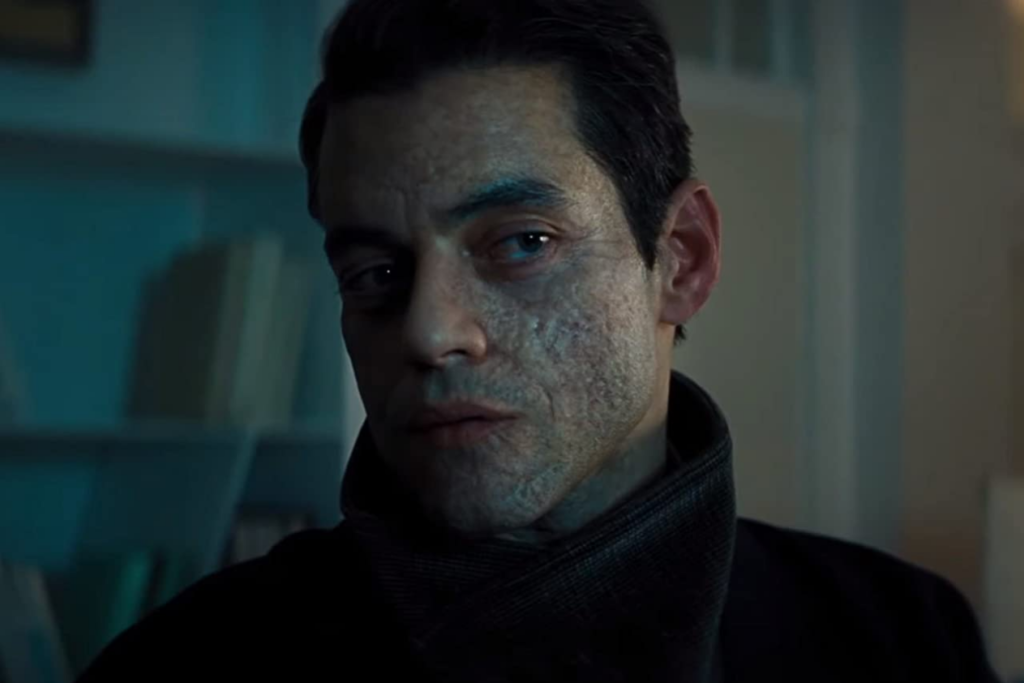
But ultimately at its core No Time To Die’s plot is frankly not its strongest suit. The villain’s motivation and the weapon he is planning to utilize is far more prescient than you would expect, unfortunately. Also Rami Malek billed as the big bad is disappointing because he is the typical Bond villain with the facial disfigurement and the accent. And his connection with Madeline feels tenuous at best, while his motivation feels underdeveloped. Also Holywood’s obsession with associating disfigurement in physicality to deformity of soul is frankly unbecoming, especially in 2021. A majority of the bond villains, have all been deformed in one way or another, and that makes for interesting visuals, but character development is trite.
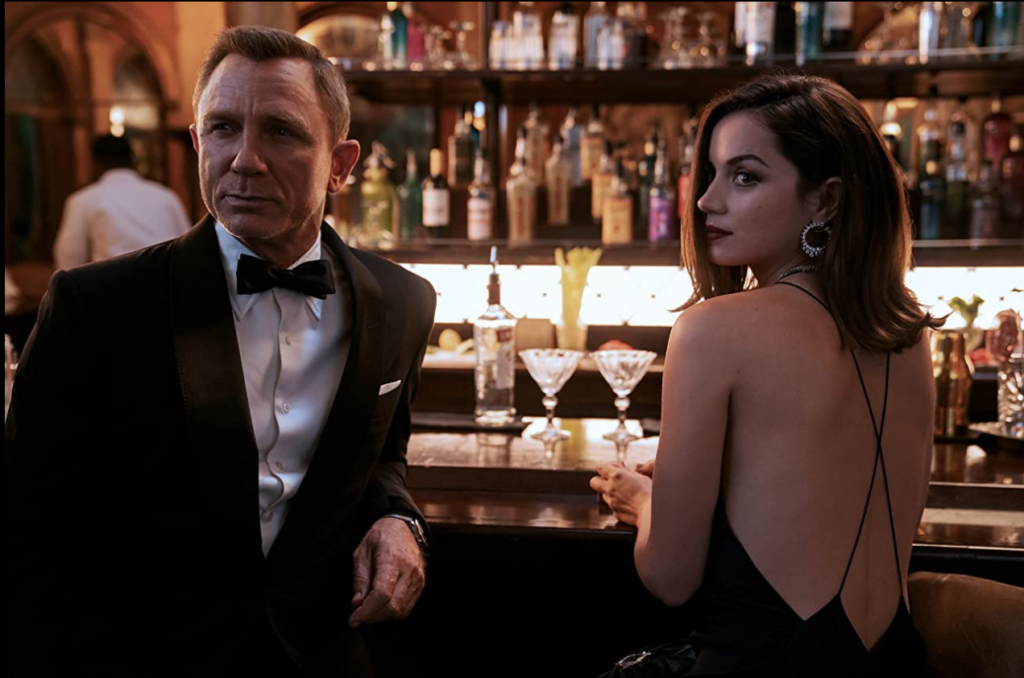
But where No Time to Die succeeds is in the action set-pieces as well as the additions to the supporting cast. Ana De Armas’ Paloma, a rookie CIA agent is fantastic and eye pleasing because she is funny. Lashana Lynch as Nomi is capable as an agent in the MI6 roster, but Lynch is not nearly charismatic enough. The surprising return of Jeffrey Wright as Felix Leiter is very much welcome. As watchable Spectre or as good Skyfall was, the movie did miss Wright’s persona as Felix Leiter, and his relationship with Bond feels impactful, though much of it retconned.
The core supporting cast’s appearance of Q (Ben Whishaw), Moneypenny (Naomie Harris) and Tanner (Rory Kinnear) feel perfunctory. Ralph Fiennes as “M” however does have a far more substantial role, where his character has to reckon with the skeletons in his closet.
It isn’t surprising that Phoebe Waller Bridge’s rewrite doesn’t make No Time to Die one of the all time masterpieces. The female characters do have far more agency here, and they also know how to have fun. But thankfully the screenplay doesn’t use subversion as the only trope of storytelling. Each event that occurs at least character wise makes sense. No Time to Die is not going to be divisive because it is going to start a culture war.
It will invite discussion as to whether Bond’s character development throughout would be okay for fans. While Craig’s Bond still manages to convey the killing machine that he was, the blunt instrument he was famous for in “Casino Royale”, No Time To Die produces a far more vulnerable, a far more sentimental Bond, prone to acknowledging his mistakes. Bond’s relationship with his supporting cast too gives it an air of familiarity, of camraderie and of friendship. His last monologue to Malek’s character will invite discussion as to the brevity of Bond’s character, but personally I liked this take. It feels far more human than the suave Bond we are used to seeing.
The action set-pieces are definitively the strong highlights. The single take fight at the stairs would remind you of the John Wick and Atomic Blonde fight set-piece until you remember Fukunaga did it first in “True Detective”, and it shows. The chase scene through the forests of Norway, the fight at the party in Cuba, these alternate between cool and sometimes breathtaking in their imagery. This is Hans Zimmer’s only Bond score, and honestly it doesn’t really stand out in comparison to Thomas Newman’s score of Skyfall or even David Arnold’s in Casino Royale or Quantum of Solace. The cinematography by Linus Sandgren on the other hand is breathtaking at moments, especially the intimate moments between Madeline and James at dusk, with sunlight filtering through the windows.
However after looking at the movie as a whole the question arises – was a 2 hour and 43 minute runtime necessary? As it stands, in an effort to tie up loose strands and provide an emotional send-off to this iteration of Bond, a longer runtime felt apt. But the movie does feel especially bloated as a result, but never too boring. This however at its core is a send-off, which is a unique thing among the Bond films. None of the Bond actors so far had a final film acting as a swan song for their iteration; they are all effectively replaced. However the inter connectivity of all the Craig films in a single story arc had its advantages and disadvantages. For people looking for escapism and stand alone storytelling, this operatic “saga” form of storytelling can be a turn-off, but even with the weaker plot in it No Time to Die is ultimately a moving and emotional send-off for this iteration of Bond and the actor who plays him, and Craig knows the character intimately at this point, and thus he plays his heart out, especially in the final moments.
Benchmark, diversity media and brand communications agency, Media House, has been shortlisted for the Diversity & Inclusion Excellence Award at the coveted PR Week Awards 2021. Winners will be announced at the award ceremony taking place on Wednesday 20th October at the Grosvenor House Hotel, Park Lane.
The PR Week Awards is the most prominent, industry sector award ceremony to recognise the achievements of the leading, PR and Marketing agencies and their contribution to the global media and communications landscape. Media House has been shortlisted for its unparalleled commitment to ensuring diversity representation and inclusion in the global mainstream, while conversely delivering successful diversity strategies for mainstream brands and organisations.
London-based Media House has become the go-to agency for mainstream brands keen to tap South Asian and diverse audiences across multiple international territories including the UK, USA, Canada, UAE, Australia, New Zealand and Singapore. Additionally, they have established themselves as industry leaders in providing consultancy and strategy for global brands to ensure campaigns are duly inclusive of diverse audiences.
Progressive and dynamic in their campaigns, Media House is now globally recognised as a best practice agency that delivers new innovations in diverse celebrity and influencer marketing; digital and social media; PR and Media Relations; and events to deliver visionary client campaigns that engage diverse audiences.
Media House has also established itself as the leading agency to champion and increase the visibility of South Asian and diverse clients across the global mainstream, while also servicing ethnic and diaspora audiences across international territories. Their work in diversity representation is reflected by their intersectional team, comprising a new generation of industry talent from publicists and brand marketeers to the network of influencers and creatives that they work with from campaign to campaign. The agency promotes and celebrates diversity and inclusion through the work that it does as well as ensuring it is integrated as a key principle in their recruitment process, recognising the valuable contribution each of its team members makes that collectively demonstrate a diversity of talent from respective life backgrounds and experiences.
Media House’s agency sector specialisms include the film and entertainment; celebrity and influencer; arts and culture; music and live event; charity; corporate; fashion; and lifestyle sectors.
Says Media House Director, Arika Murtza, “Diversity must always be encouraged and celebrated. The existence of differences in ethnicity, culture, religion and a variety of other factors has a role in the way we perceive the world as well as feel in the workplace. The practice of ensuring that people with these differences experience a sense of connection and encouragement from media as well as at Media House has always remained at the centre of what we do, working to always alleviate prejudices and promote unity in the media as well as in the workplace. Diversity and inclusion are the grounds of the world we like to see and be in.”
Says Media House Director, Tony Gill,“From the heart of the Media House team, to be recognised by the benchmark award ceremony in our industry sector, the PR Week Awards, is such a huge honour and achievement for us, reaffirming, encouraging and inspiring us to continue doing what we’re doing and celebrating diversity representation and inclusion in the global mainstream, led by our beautifully diverse and talented team. Thank you, PR Week Awards, for recognising our work and its importance in industry and beyond.”
Following the announcement from India’s Chief Minister of Maharashtra, UddhavThackeray approving the reopening of cinema halls and auditoriums in Mumbai, Reliance Entertainment has booked the Diwali weekend to release the Akshay Kumar starrer Soorayavanshi.
Diwali is the perfect time to release the action-packed film to coincide with the fast-paced action shown in the film and will be released on 4th November 2021. The film is directed by Rohit Shetty and produced by Karan Johar, so no doubt that fans are surely eager to return to the cinema to watch this film the way it’s meant to be watched – on the big screen.
Akshay Kumar, who will be playing DCP Veer Soorayavanshi, posted on his Instagram, “So many families would be thanking Sh Uddhav Thackeray today! Grateful for allowing the reopening of cinema halls in Maharashtra from Oct 22. Ab kisi ke roke na rukegi – AA RAHI HAI POLICE” #Sooryavanshi #Diwali2021”
Sooryavanshi is the fourth instalment in Rohit Shetty’s cop universe series, after Ajay Devgn’s Singham and Singham Returnsand Ranveer Singh’s Simmba. Actress Katrina Kaif will be seen opposite Kumar as his leading lady.
Sooryavanshi is presented by Reliance Entertainment and produced by Rohit Shetty Picturez in association with Dharma Productions and Cape of Good Films and is set to release in cinemas this Diwali.





 [2.5/5]