
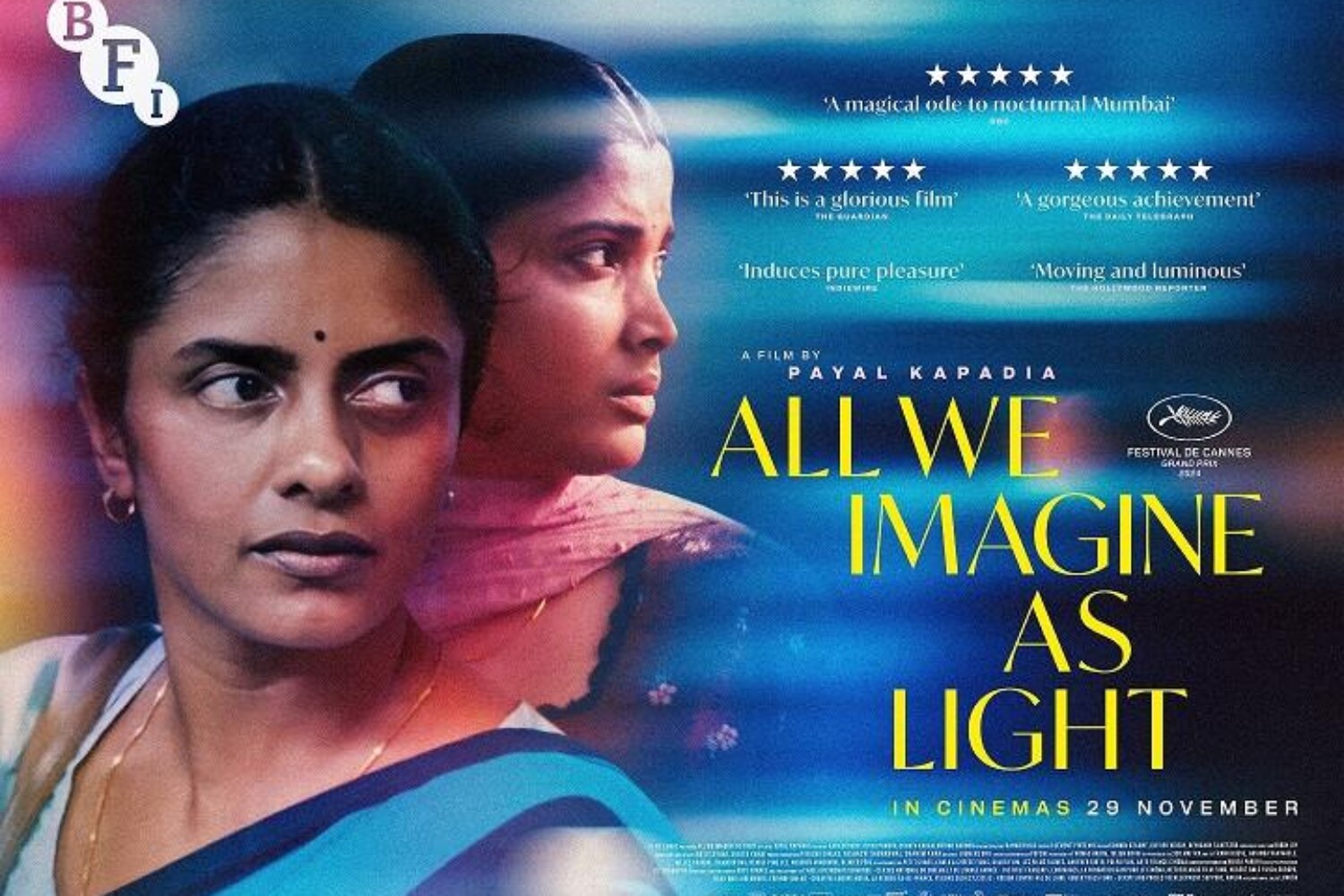
BFI Distribution releases the UK trailer for All We Imagine As Light. The 2024 Cannes Film Festival Grand Prix winner, written and directed by Payal Kapadia, opens in UK and Irish cinemas on 29 November 2024, followed by a BFI Blu-ray and BFI Player release in early 2025. The film recently sold out the 2,200 capacity Royal Festival Hall for its UK premiere at the BFI London Film Festival on 18 October and is already tipped as a strong contender in the forthcoming awards season.
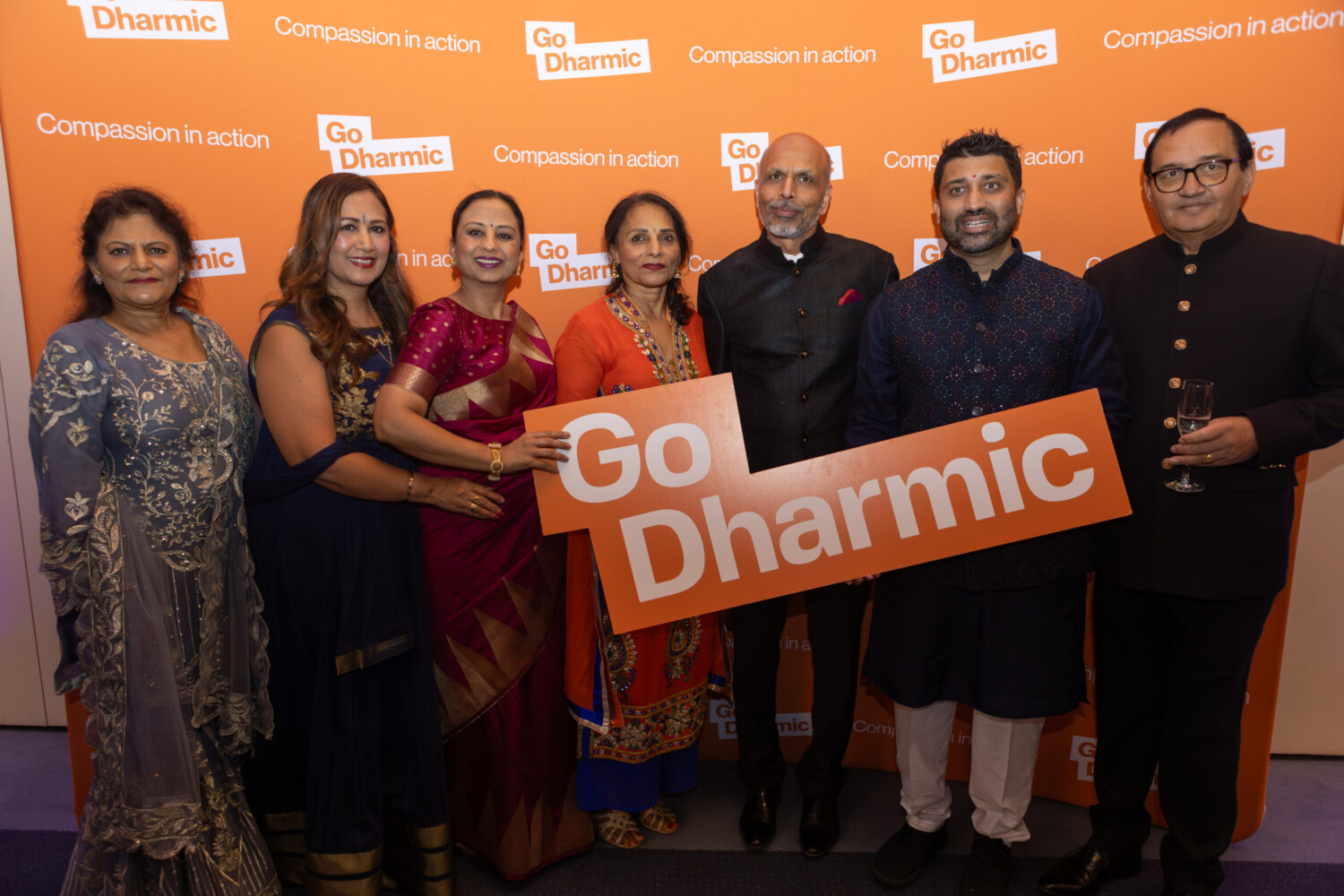
Go Dharmic’s First Diwali Gala in Westminster: A Grand Success
Go Dharmic marked a historic milestone on Wednesday, 23rd October 2024, by hosting the first-ever Diwali Gala at Westminster. The event brought together a distinguished gathering of guests to celebrate the spirit of Diwali with the theme ‘Be The Light’, emphasising a powerful message of peace, compassion, and non-violence toward all living beings. Among the esteemed attendees were Baroness Sandip Verma, Shivani Raja MP, Ed Winters and Heather Mills, who each highlighted the vital mission of Go Dharmic to foster a world where everyone can coexist harmoniously with nature
‘Go Dharmic’ Presents First-Ever Diwali Gala Dinner 2024 at Central Hall Westminster
London, UK — Go Dharmic, a global movement for compassion and action, is delighted to announce its Westminster Diwali Gala 2024, taking place on October 23rd at the iconic Central Hall Westminster. This vibrant evening will bring together the community to celebrate Diwali with joy, culture, and philanthropy, with all proceeds going toward charitable causes.
The event will commence at 6:30 PM and promises an unforgettable evening filled with entertainment, a curated multi-course vegan Indian meal, and opportunities to engage with prominent speakers, VIP guests, and special appearances. As part of the evening’s program, guests will also have the chance to participate in a charity auction, which includes an exclusive item—a Virat Kohli-signed T-shirt—among other exciting offerings.
The gala will provide a unique opportunity for networking and celebrating Diwali in the heart of London while supporting Go Dharmic’s humanitarian work.
Founded by Hanuman Dass in 2013, Go Dharmic is committed to alleviating food poverty, providing education, and delivering disaster relief. The funds raised from this event will directly support these vital causes, helping families and individuals facing humanitarian and environmental crises.
Hanuman Dass, the founder of Go Dharmic says, “Diwali is all about the triumph of light over darkness and the joy of new beginnings. While we celebrate, it’s important to remember those still facing tough times. This Diwali Gala is our chance to spread hope and light to those in need, creating brighter tomorrows together.”
Go Dharmic invites everyone to join in for an evening of celebration, community, and philanthropy, where the true spirit of Diwali—sharing and giving—will be at the heart of the event.
Click here for more information and to reserve tickets.
‘The Buckingham Murders’: A Gloomy Journey Through Grief and Mystery
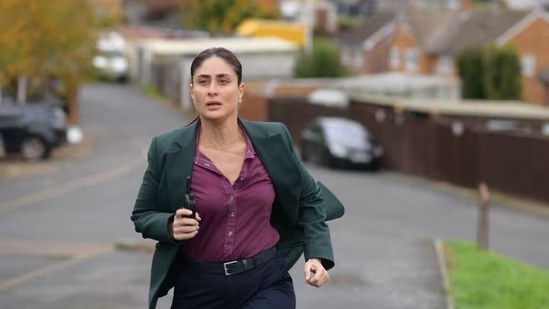
Set in the quaint but chilly town of Buckinghamshire, The Buckingham Murders follows Jasmeet Bhamra (Kareena Kapoor Khan), a grieving mother and a detective, who is on a mission to solve the disappearance of a local child (Ishpreet), who is later found dead, eventually the case becoming a murder mystery. Having recently lost her son, Jasmeet’s loss weighs heavily on her as she delves into the unsettling investigation in Buckinghamshire.
What sets this film apart from a typical whodunit is its exploration of Jasmeet’s internal struggle. This isn’t just about solving a crime—it’s about dealing with grief, guilt, and the emotional toll of loss. The mystery of the missing child almost feels secondary to Jasmeet’s journey, which gives the film a depth you don’t often see in traditional thrillers.
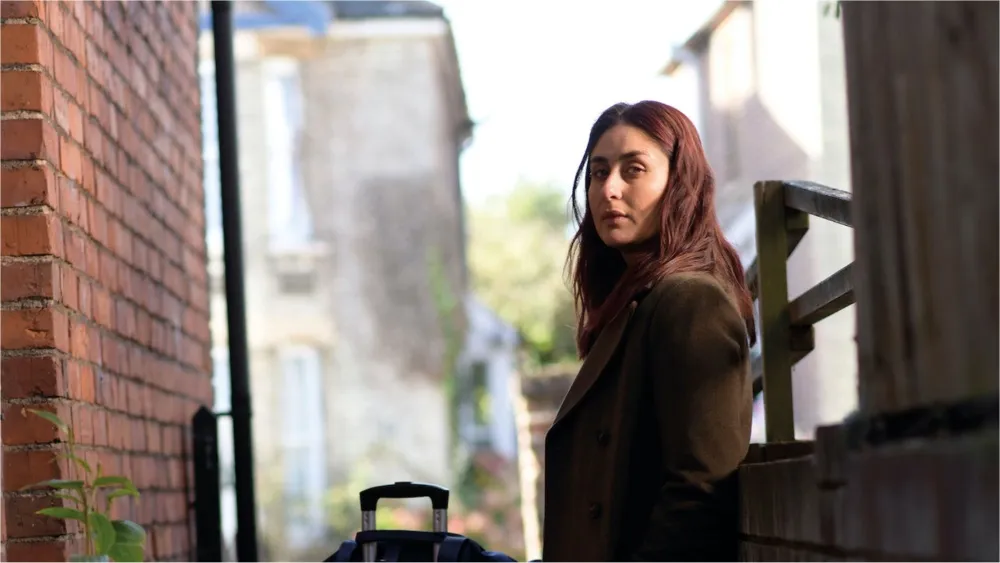
Kareena Kapoor Khan: In Her Element
Bollywood’s Bebo has acting chops, but in The Buckingham Murders, she steps into a role that’s far more subdued and nuanced than her usual glamorous characters. Her portrayal of Jasmeet feels raw, real, and restrained. There’s no over-the-top drama here—just quiet, simmering emotion that pulls you into her world of pain and determination.
She carries the weight of the movie on her shoulders, and boy, does she carry it well. It’s almost like watching her in a Kate Winslet mode, especially reminiscent of Winslet’s performance in Mare of Easttown. Kareena nails that brutality straightforward detective vibe but also lets you see the vulnerability hiding beneath the tough exterior.
Kareena Kapoor Khan’s restrained yet impactful performance is undoubtedly one of the film’s highlights. She doesn’t rely on melodrama to communicate her pain. Instead, it’s in her quiet moments—her expressions, her body language—that you truly feel the depth of her sorrow. This subdued approach is a refreshing change from the often exaggerated portrayals we see in Bollywood thrillers. Honestly, it’s one of her most mature performances to date.
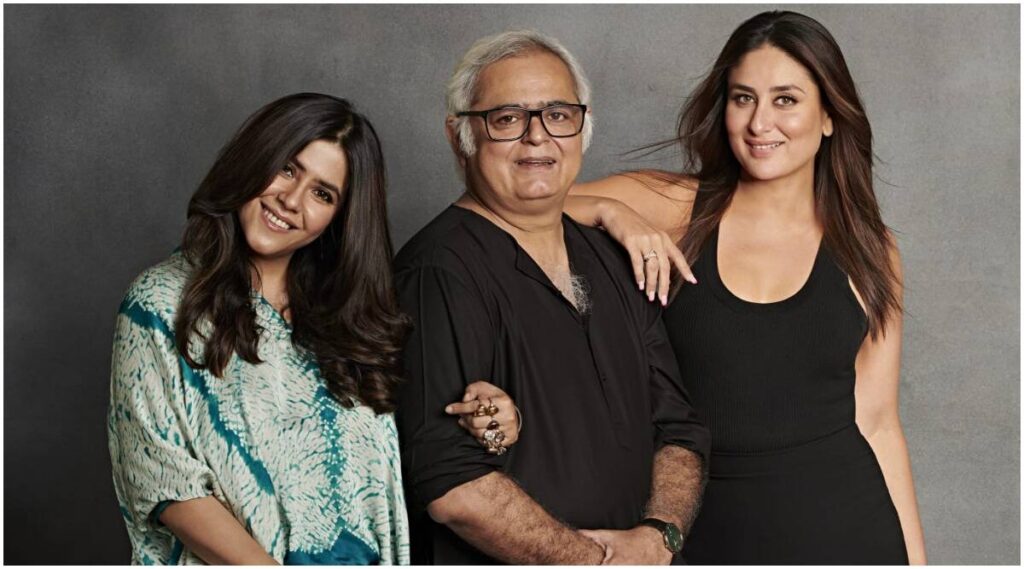
Hansal Mehta’s Masterstroke
Hansal Mehta is known for giving us hard-hitting, realistic dramas, and The Buckingham Murders is no different. The atmosphere is heavy, drenched in melancholy, with a slow-burn pace that gives you time to soak in the emotional layers of the story.
What I loved about Mehta’s direction is how he uses the gloomy backdrop of Buckinghamshire to reflect Jasmeet’s inner turmoil. The grey skies, the rain-soaked streets, and the chilling winds all mirror her state of mind. The film’s cinematography is subtle but effective, never distracting from the story but enhancing the overall mood of despair and isolation.
The emotional complexity of the film is its biggest strength. It’s not just a murder mystery; it’s a character study of a woman battling her demons while trying to find justice for a missing child. Jasmeet is far from a superhero cop—she’s flawed, vulnerable, and deeply human. That makes her so much more relatable, and her emotional journey is something you can’t help but feel invested in.
The director has always had a knack for weaving realism into his films, and The Buckingham Murders is no exception. The dialogues are natural, the characters feel grounded, and the story unfolds in a way that feels genuine. There’s no forced happy ending, no unnecessary romantic angle—it’s a straightforward yet deeply layered narrative.
The Mystery Element
While I personally enjoy slow-burn thrillers, the pacing of The Buckingham Murders was a bit too sluggish for me. The film takes its time setting up the atmosphere and delving into Jasmeet’s psyche, but in doing so, it sometimes drags, especially in the middle sections.
Don’t get me wrong—the mystery at the heart of the story is engaging, but it sometimes takes a backseat to Jasmeet’s journey. While this worked for me, if you are coming and expecting a full-blown detective thriller might feel slightly underwhelmed by the lack of constant twists and turns. The film is more of a psychological exploration than a pulse-pounding murder mystery, which may not be everyone’s cup of tea.
Should You Watch It?
If you’re in the mood for a dark, introspective thriller that dives deep into grief and personal loss, then The Buckingham Murders is worthy enough for you to go and spend some time. Kareena Kapoor Khan’s stellar performance and Hansal Mehta’s grounded direction make this film stand out from typical Bollywood mysteries.
While it may not have the fast-paced thrills some might expect, it more than makes up for it with its emotional depth and atmospheric storytelling. The Buckingham Murders isn’t just a murder mystery—it’s a haunting, thought-provoking film that lingers with you long after the credits roll.
‘Beetlejuice Beetlejuice’ is stuck in the past. It lacks substance and entertainment
The reboot of old classic films often makes good business-sense as it guarantees a footfall of audience who love nostalgia.
But it’s also critical to revive the film keeping the present in mind, and its relevance to the world at large.
Unfortunately, Beetlejuice Beetlejuice is stuck in the past. It lacks substance and entertainment.
The dark fantasy comedy horror picks up 40 years later, from where its prequel ended and re-introduces us to the beloved / cult characters for Beetlejuice 1988, except it’s all too childish.
If you haven’t watched the original (or don’t remember it), none of it will make sense because everything feels rushed, unfunny and dated.
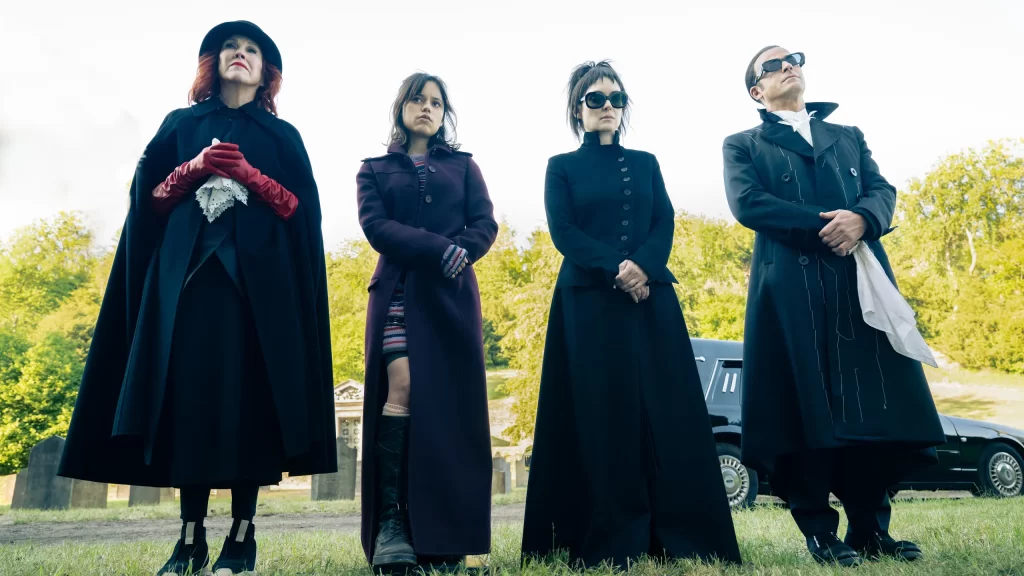
Lydia Deetz (Winona Ryder) is a quirky host of a supernatural talk show, producer by her boyfriend, Rory (Justin Theroux). During the taping of an episode, Lydia is spooked by visions of the ghost Betelgeuse in the audience, which alarms her of his revival.
The family reunites in the home for the funeral of Lydia’s father, which is where we’re introduced to her estranged daughter Astrid (Jenna Ortega), who is a typical teenager defying her mom and blaming her for all inconvenience.
What follows is chaotic and incoherent turn of events from the mortal world to the afterlife, with a Tom & Jerry – esque chase sequences between Beetlejuice (Michael Keaton), his minions, Lydia, Astrid, Delia Deetz (Catherine O’Hara), and an extremely underutilised Delores (Monica Bellucci).
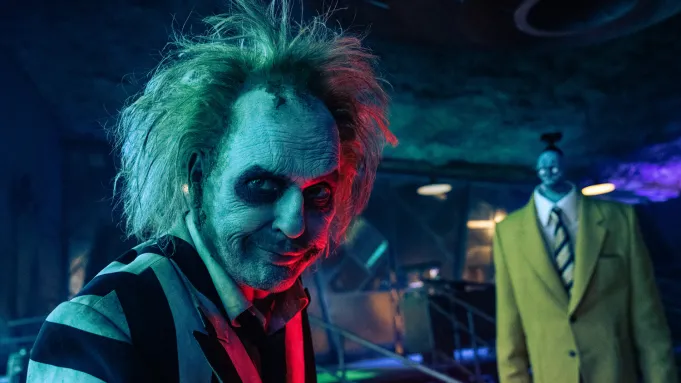
I desperately wanted to enjoy the film, but I’m not quite sure who is its target audience – is it the original viewers of the classic or the new generation? Because the audience’s palette for dark comedy horror has evolved. However, the film’s has not.
Overall, the reboot of the franchise seems to be a good business opportunity with Halloween around the corner, giving everyone a new set of costumes to enjoy this holiday. Last year the world turned pink with Barbie and this year it will be an influx of black & white striped Beetlejuice and “Bobs” in oversized yellow blazers, and perhaps a few black widows with staples across their faces.
Other than that, Beetlejuice Beetlejuice doesn’t offer anything memorable and lacks the charm of its predecessor.
‘Blink Twice’ is a psychological thriller that seeks to address accountability
There’s a lot of conversation around the unfair advantage that Zoe Kravitz has as a “Nepo baby”. However, we need to also talk about “Nepo babies” who create remarkable works of art such as the new psychological thriller Blink Twice.
Zoe Kravitz makes her directorial debut with this film, which she co-wrote with E.T. Feigenbaum, and it is a fantastic joy ride.

Blink Twice centres around Frida played by Naomi Ackie and her fascination with tech Billionaire Slater King played by Channing Tattum.
Frida is a waitress lucky enough to meet and be love bombed by Slater at his event. She is captivated with his enigmatic allure, and his circle of friends as she agrees on a whim, to travel with them to his private island for a getaway.
What I particularly enjoyed is how Blink Twice explores some issues in our society, as it addressed themes around patriarchy, sexual assault, the importance of sisterhood and trauma. It also uses a lot of symbolism such as colours like red, white and green that play a significant role in the telling of this story.
Another interesting use of symbolism if the presence of a snake as the catalyst to spark their awareness, as it gives reference to the biblical story of Adam & Eve & the serpent. While in the bible the serpent is a symbol of chaos, here, the narrative begs to ask the question – what if the influence of the serpent is what sparked our awakening? Like a form of rebirth.
Kravitz and E.T. have created a piece of art that seeks to address accountability by everyone because trauma has become a fad lately, that everyone uses as an excuse for bad behaviour.
The choice of Channing Tatum to play the role of Slater King is quite interesting because of his boyish charm, he successfully disarms Naomi’s character, Frida & the audience, because before we know it, we are thrust blindly into the rabbit hole.
Blink Twice is the kind of movie you watch over again; I will not be surprised if it gained a cult following.
You can watch the trailer here:
“Stree 2” : A mixed bag of spooks and laughs. It’s an entertaining sequel but not a groundbreaking one
Stree 2 picks up a few years after the events of the original film.
The small town of Chanderi is once again haunted by the mysterious spirit, Sarkata (headless ghost). This time, the stakes are higher, and the backstory is deeper.
Our beloved trio—Rajkummar Rao’s Vicky, Aparshakti Khurana’s Bittu, and Abhishek Banerjee’s Jaana—are back, trying to unravel the mystery while dealing with their struggles.
Shraddha Kapoor also reprises her role, adding layers to her enigmatic character.
What Works in Stree 2
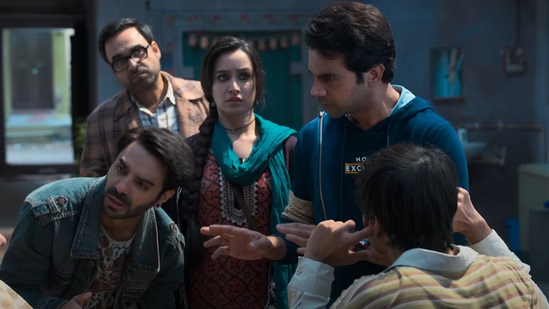
One of the best things about Stree 2 is that it doesn’t lose the humour that made the original so enjoyable. The comedic timing, especially between Rajkummar Rao and Aparshakti Khurana, is as sharp as ever.
Their banter feels natural and continues to be a highlight, providing much-needed levity amidst the horror elements. The film does a great job of blending humour with horror, keeping the audience entertained throughout.
Rajkummar Rao once again proves why he’s one of Bollywood’s most versatile actors. His portrayal of Vicky, the reluctant hero, is both endearing and hilarious. Abhishek Banerjee as Jaana also stands out, delivering a performance that balances comedy with genuine fear. Shraddha Kapoor brings a mysterious allure to her role, keeping us guessing about her true intentions.
Stree 2 dives deeper into the folklore of Stree, offering more insights into her origin and motivations. This added depth helps in making the story more engaging and gives the characters more to work with. It’s interesting to see the filmmakers expand the lore, which was hinted at in the first film.
Where Stree 2 Falls Short
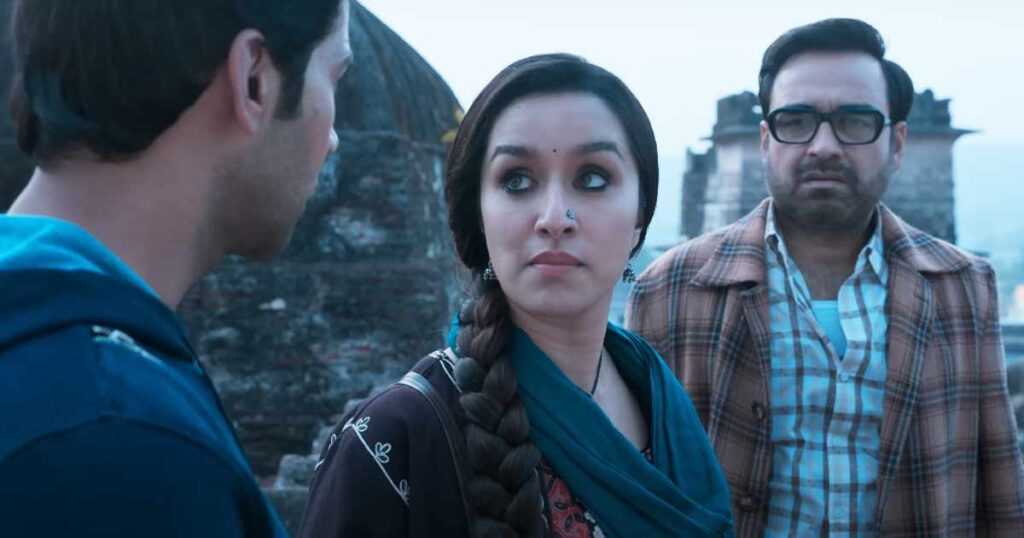
While Stree 2 tries to capture the magic of the original, it doesn’t quite reach the same heights. The freshness and novelty that Stree (2018) brought to the table are somewhat missing here. The sequel feels more formulaic, following the beats of the first film without bringing anything significantly new to the table. The sense of surprise and originality that Stree had is less potent this time around.
One of the issues with Stree 2 is its pacing. The film starts strong but loses steam in the middle, with some scenes dragging on longer than necessary. The horror elements, while effective, don’t pack the same punch as they did in the original. There are moments when the film struggles to maintain the tension, which can make the viewing experience feel uneven.
Stree 2 tries to juggle multiple subplots, and while it’s ambitious, it sometimes leads to a cluttered narrative. The plot lacks the origin of its title and often misses the “Stree-ness.” There are moments when the film feels overstuffed, with too many threads vying for attention. This can make the story feel a bit disjointed, and some characters don’t get the screen time they deserve.
The Film is a fun ride, especially for fans of the original. It retains the humour and charm that made Stree such a hit, with strong performances and a deeper dive into the lore. However, it falls short of capturing the same magic that made the first film a standout.
The novelty of blending horror with comedy isn’t as fresh, and the pacing issues can make the film feel a bit uneven.
Should You Watch It?
If you loved Stree and are curious to see where the story goes, Stree 2 is worth a watch. It has moments of brilliance, especially in the humour, and the performances are solid across the board.
Just don’t expect it to fully recapture the lightning-in-a-bottle that was the original. It’s an entertaining sequel but not a groundbreaking one.
BFI Distribution announces release of Cannes’ Official Competition Grand Prix Winner ‘All We Imagine As Light’
BFI Distribution is excited to announce the release of the 2024 Cannes Film Festival Grand Prix winner, All We Imagine as Light (2024), written and directed by Payal Kapadia, in UK and Irish cinemas on 29 November 2024. A BFI Blu-ray and BFI Player release will follow in early 2025.
Featuring Kani Kusruti (Prabha) Divya Prabha (Anu) and Chhaya Kadam (Parvaty) in the lead roles, All We Imagine as Light was the first Indian film to be selected in an Official Competition at Cannes in three decades. Payal Kapadia also made history as the first female Indian filmmaker ever to have a film in this prestigious section of the festival. After dancing down the red carpet, the director and her cast saw the film receive an eight-minute standing ovation; worldwide critical acclaim and 5-star reviews followed.
An Indian feature with the look and feel of a European arthouse classic, exploring the complexities of female friendship, this beautiful, sweeping, emotional film brilliantly captures the frantic pace, the vibrant colours and the heady atmosphere of modern Mumbai. In Mumbai, thoughtful Nurse Prabha’s routine is upset when she receives an unexpected gift from her estranged husband. Her younger, flightier and rebellious roommate, Anu, tries in vain to find a spot in the city to be intimate with her secret boyfriend.
Their colleague Parvaty fights to stay in her home without any requisite paperwork left by her late husband. A trip to a beach town allows them each to find a space for their desires to manifest. Payal Kapadia is a Mumbai-based filmmaker who studied Film Direction at the Film & Television Institute of India. Her short films, Afternoon Clouds (2017) and And What Is The Summer Saying (2018), premiered at the Cannes Cinéfondation and the Berlinale respectively.
Her first feature film, A Night of Knowing Nothing (2021) premiered at the 2021 Cannes Directors’ Fortnight, where it won the Golden Eye Documentary Prize.
Kapadia has commented:
“Although All We Imagine as Light is my first fiction feature, it’s still very important to me that
fiction and documentary can exist together. What I try to do is approach fiction in a
non-fiction way. I find the juxtaposition of the two very interesting and I strongly believe that it
makes the non-fiction more fiction and the fiction more non-fiction.”
All We Imagine as Light is a France-India-The Netherlands-Luxembourg co-production. The producers are Thomas Hakim and Julien Graff of Petit Chaos in Paris, and Zico Maitra of Chalk & Cheese Films in Mumbai. Additional partners are Arte France Cinéma, Baldr Film (Netherlands), Another Birth (India), Les Films Fauves (Luxembourg) and Pulpa Film (Italy). European development funds, including Rotterdam’s Hubert Bals grant and the Cannes Cinéfondation Residency, enabled Kapadia to reside in Europe and develop the film with her French producers, before beginning production in her native India.
You can watch the trailer here:
ALL WE IMAGINE AS LIGHT will be released in UK & Irish
‘The Queen Of My Dreams’ by Fawzia Mirza is set for UK release on 13th September
Peccadillo Pictures is proud to announce that it will release Fawzia Mirza’s award-winning feature directorial debut The Queen Of My Dreams in UK cinemas on 13th September. The film, which features outstanding performances from the entire cast, is joyful, funny and affecting.
The Queen Of My Dreams is a semi-autobiographical film by writer/director Fawzia Mirza about her experiences as a queer Canadian woman of south Asian heritage.
1999, Azra (Amrit Kaur) travels from Toronto to Karachi after her father Hassan’s (Hamza Haq) sudden death, forcing her to confront her complicated relationship with her mother Mariam (Nimra Bucha).
The film flashes back to 1960s Karachi, portraying a booming, groovy period where the young Mariam (also played by Kaur) rebelliously pursues her own path in life. When a chance meeting with Hassan occurred, it was love at first sight.
In the modern-day storyline, Azra must navigate mourning her idealised late father while trying to understand her equally complex living mother. The film explores the dangers of putting loved ones on pedestals rather than seeing their full humanity. It’s a story about intergenerational divides, culture clashes, and the messy reality of mother-daughter relationships.
While paying homage to the classic Bollywood film and song “Meri Sapno Ki Rani” (literally The Queen of My Dreams), the movie’s heart lies in Mirza’s very personal look at her own family dynamics and quest for self-discovery. It’s an insightful, comedic, and moving examination of South Asian identity.
Fawzia Mirza says, “The Queen Of My Dreams is a dramedy spanning 30 years in the life of a Pakistani-Canadian family. It’s an exploration of the intergenerational connections between mothers and daughters, East and West, home and away, infused with humor, romance, music and Bollywood fantasy. Inspired by personal experiences, some of my mother’s stories, intertwined with Pakistani history and collective memory. The film shows the expansive journey of women, seeking to define and decide their own paths, while simultaneously learning – and remembering – how to love. And it explores the question I find myself asking in all my work, “How do we become who we are?”
To answer that question, I turned to my conservative mother, a woman who seems so different from me, and yet, we are so similar. She told me some stories of her past, which made her sound like a movie star, like the iconic actress Sharmila Tagore. But the past still felt like a mystery. I wanted to know more. I found myself nostalgic for her youth in 1960s Pakistan, ‘The Golden Era’ of the country. That was a place I’d never been, but I found myself yearning to visit. It didn’t sound anything like the Pakistan I knew. And I just wanted to understand my mother better. It’s why the 60s was such an important era in this film. Who I am is impacted by who my mother is, but also who she was. And who her mother was – our intergenerational connection. Inspired by this, and the South Asian cinematic device of “doubling,” I made the creative choice to cast the same actor who plays Azra at 22 to play her mother at the same age in 1969.
Music evokes memory and nostalgia and the music throughout the film is intended to do just that. In fact, the film’s title is inspired by the 1969 Sharmila Tagore hit film, “Aradhana” and one of its classic songs, Mere Sapnon Ki Rani (The Queen of My Dreams). It’s a song about a man finding the love of his life, the queen of his dreams. I grew up in a heteronormative patriarchal society, so I always fantasized some man would sing this to me. When I came out as queer, I thought the song no longer applied, or rather, maybe a woman would sing it to me. But I realized I am the queen of my own dreams. And in Azra’s journey in the film, she realizes she has the agency to step out of the generational mistakes made by her mother and her mother before her. Azra is the queen of her own dreams.
This film is my way of traveling to the past, to imagine a world my mother might have lived in. A world that blends genres — rich, technicolor, heightened scenes inspired by Mere Sapnon Ki Rani amidst the realities of grief and loss. This film folds those ideas into the storytelling through flashback, comedy, fantasy sequences, qawaali-inspired music set in the places that I’ve romanticized through memory: 1969 Karachi, Pakistan and 1989, Sydney, Nova Scotia, Canada.
Much like our lives, making this film has been a journey. It began in 2012 as a short film (also titled) The Queen Of My Dreams and then a play Me, My Mom and Sharmila in 2014, after which I worked on the screenplay for seven years, in various iterations and collaborations, before entering pre-production, Summer 2022.”
The Queen Of My Dreams explores not putting loved ones on pedestals and the reality of navigating mother-daughter relationships. It examines intergenerational divides, culture clashes and self-realisation. The film’s heart lies in writer/director Fawzia Mirza’s personal look at her family dynamics and her journey as a queer Canadian woman. It’s an insightful and humorous examination of South Asian identity.
Watch The Queen Of My Dreams distributed by Peccadillo Pictures set to release in the UK cinemas on 13th September.