Indian cinema is famous for films based on the core theme of patriotism and the struggle for independence.
Some of them glorify the various battles fought in the name of our motherland, which elevates the characters of freedom fighters to the status of superheroes without explaining the core motives or perspective of such unrealistic humans.
However, there are some films that portray the battle for independence where freedom fighters fought without arms or ammunitions against ruthless foreign rulers. The 1996 Malayalam film Kaalapani is one of them.
On the 25th anniversary of this unforgettable masterpiece, let’s revisit how Kaalapani is different from other films that depicted the struggle for freedom and independence for Indians!
Kaalapani, directed by Priyadarshan and produced by Mohanlal, was originally made in Malayalam, and later dubbed and released in Hindi as Saza-E-Kala Pani, in Tamil as Siraichalai, and in Telugu as Kaala Pani.
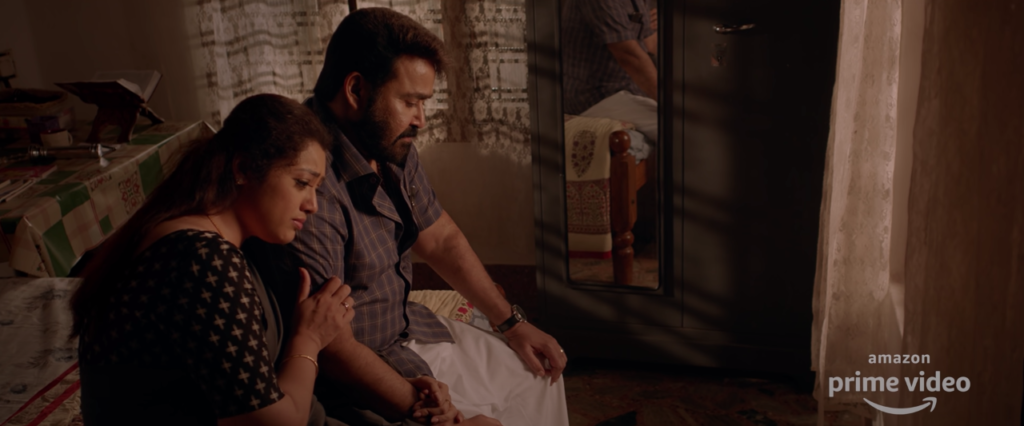
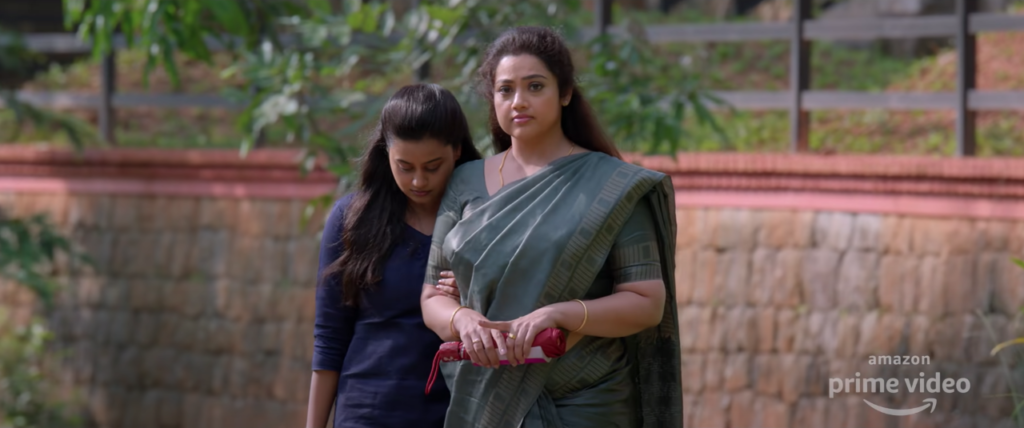
Set in 1915, Kaalapani focuses on the lives of Indian freedom fighters.
They are serving a prison sentence in the Cellular Jail in Andaman and Nicobar Islands during the British Raj.
The story of Kaalapani is about a young doctor, Govardhan (Mohanlal) who is accused of bombing a train carrying 55 people including British officials.
As a result, he is jailed at Port Blair, Andaman and Nicobar Islands by the British.
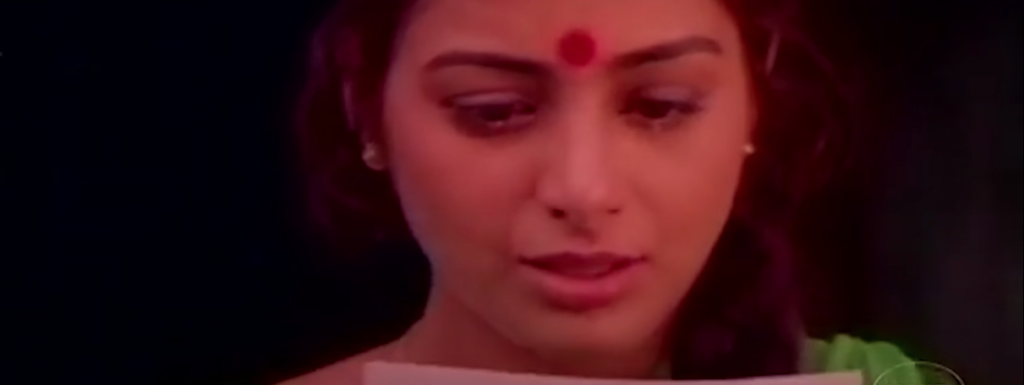
Parvathy (Tabu), Govardhan’s wife suffers a mental trauma upon hearing the news, but remains patient and awaits his return from prison.
During his time in Jail, Govardhan befriends Mukundan Iyengar (Prabhu Ganesan), a Tamilian revolutionary. He is serving his sentence for committing terrorist activities in Calcutta.
The cellular jail is under the supervision of David Berry (Alex Draper), a sadistic jailor of Irish descent.
Berry gets assistance from the ill-willed jailer Warden Mirza Khan (Amrish Puri), a Pathan who served the Afghan Army. He is responsible for brutally beating the prisoners till and killing them.
The jail also has a kind hearted English doctor, Len Hutton (John Kolvenbach) and Veer Savarkar (Annu Kapoor) who tries to maintain the spirit of the prisoners going through a torture wreck.
Kaalapani revolves around the brutality faced by innocent freedom fighters who committed theirs lives for their land. It is a story about their strength, courage, brotherhood and patriotism.
It was able to portray the harsh reality of the British rule and their atrocities in visuals that are perhaps too graphic and triggering for today’s viewers.
Kaalapani depicts that anguish, helplessness and the never-ending desire to attain freedom and independence for one’s country with near perfection.
And it’s undoubtedly ahead of its time.
Fun Fact: The film introduced Dolby Stereo to Malayalam cinema.
Writer/Director: Priyadarshan Cast: Mohanlal, Prabhu Ganesan, Amrish Puri, Tabu, Nedumudi Venu, Sreenivasan, Tinnu Anand, Annu Kapoor, Alex Draper, Sankaradi, and Vineeth Runtime: 178 minutes
NOTE: THE VIEWS AND OPINION EXPRESSED IN THIS ARTICLE ARE THOSE OF THE AUTHOR. Edited by Nidhi Sahani
Research shows that there are typically five stages of grief: Denial, Anger, Bargaining, Depression and Acceptance.
But what if there are more? What if someone experiences emotions different from the ones listed above?
What if you feel numb… not shocked, but numb. You feel sad, but not loss. You feel anxious and distressed, but also relieved.
… what if?
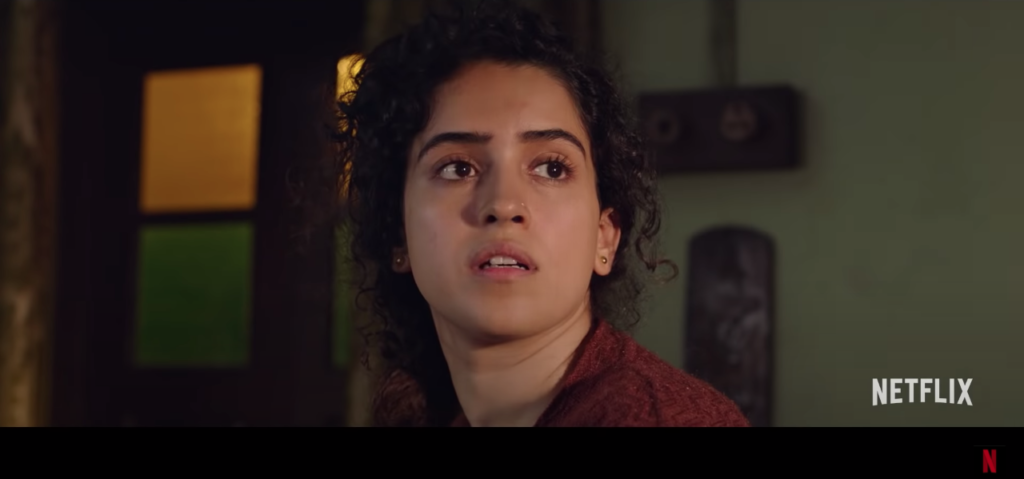
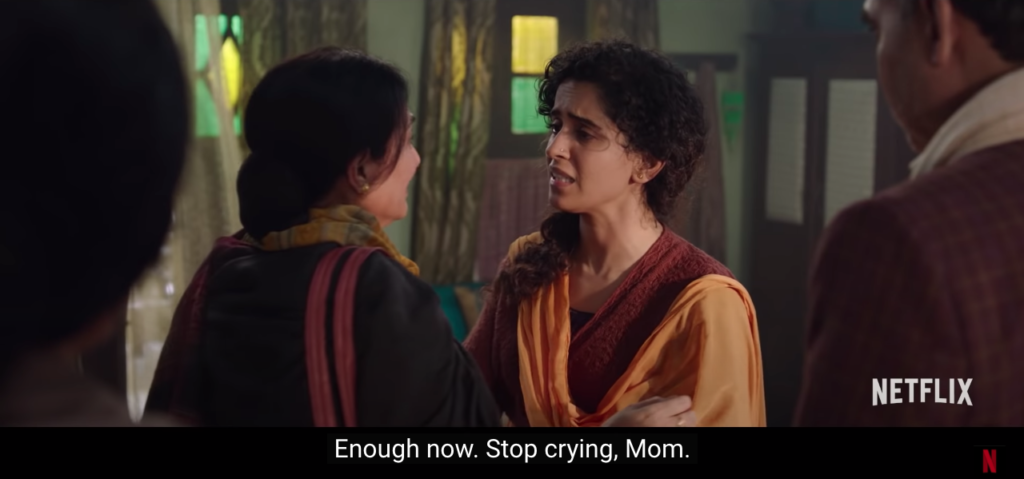
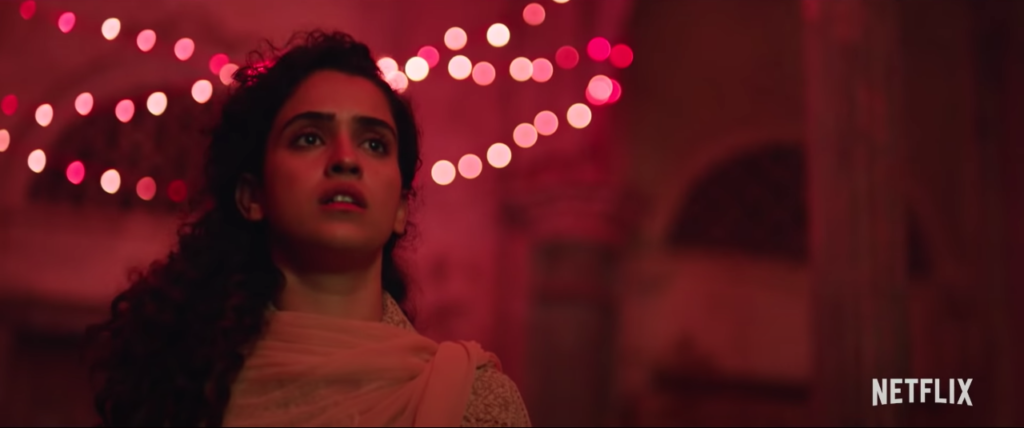
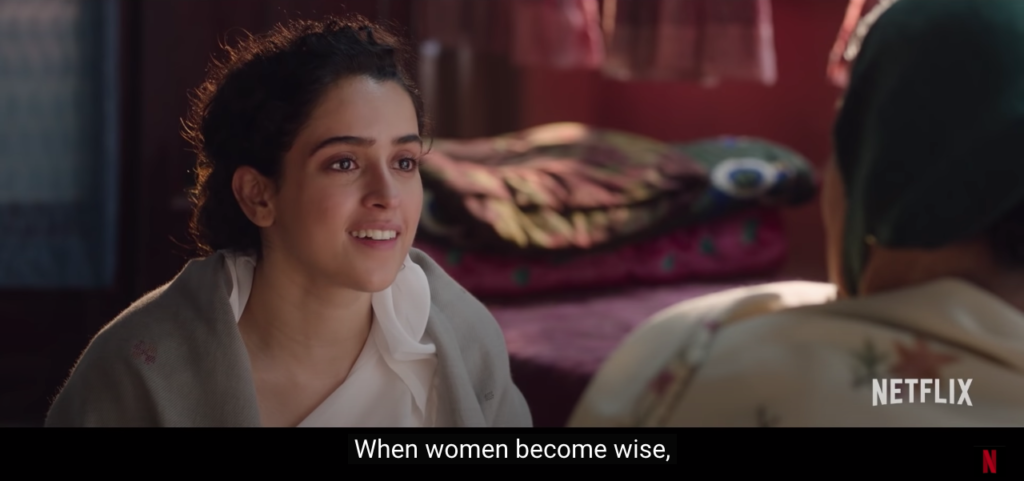
That’s the premise of Pagglait, starring Sanya Malhotra as Sandhya Giri who is about a young widow whose husband Astik died within five months of their marriage.
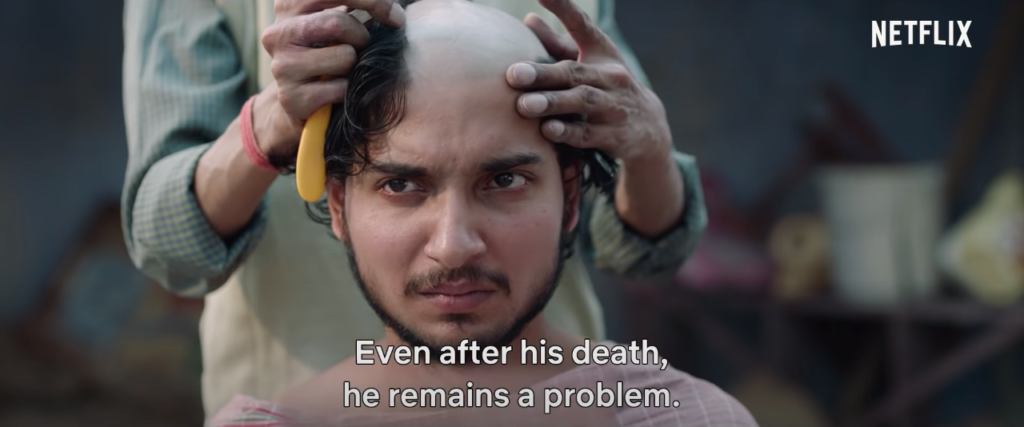
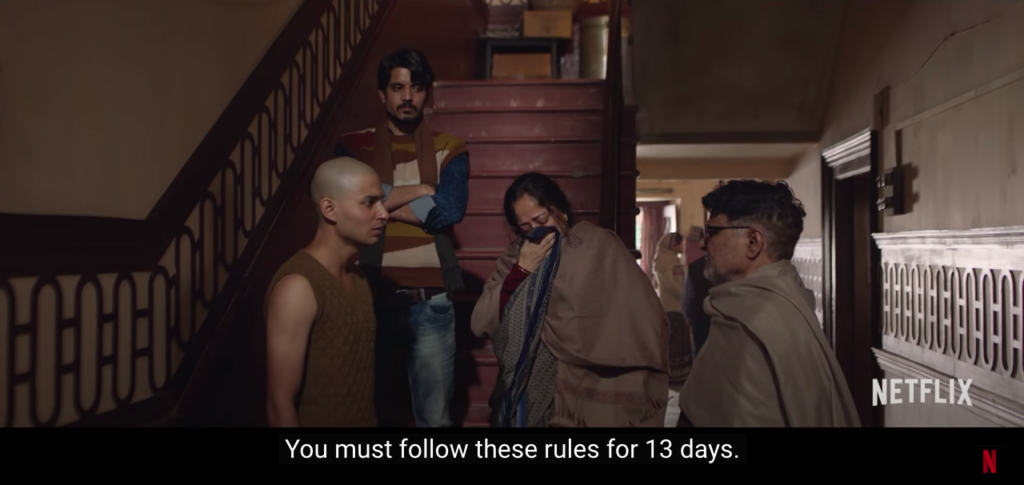
The film follows the 13 days Hindu funeral rites of Astik, performed by various members of the family.
While the rituals take place like clockwork, Sandhya finds herself in a strange situation where she’s unable to grieve at the sudden demise of her husband.
Everyone looks out for her and give her space to come to terms with the episode. However, there isn’t much left for her to acknowledge or even react to.
Or so we think – till the story unfolds the various aspects of her relationships, her upbringing and even her outlook on life.
Writer-Director Umesh Bisht has delicately crafted a charming and wholesome experience in a film that gives a glimpse into a typical dysfunctional Indian family, without getting preachy.
Pagglait introduces us to family members and friends who are familiar to us all.
There’s a pretentious uncle who loves to boast about his worldly knowledge, an aunt who doesn’t miss an opportunity to taunt, a cynical son who reluctantly obeys the elders, a best friend who refuses to give up on you, and even a nagging mother who means well but is stuck in her orthodox ways to protect her child.
You may encounter situations that are ordinary in society, but will make you uncomfortable.
You will be nudged to question the status quo that have become a norm for far too long – but only with a hint of judgement.
The practice of patriarchy in a “modern” household, casual religious intolerance, family elders who impose regulations for everyone to follow, the foundation of an unhealthy marriage and even a woman’s financial independence – the makers give the viewers an opportunity to simply ponder over the issues without being too dramatic.
The magic of Pagglait lies in its simplicity and the moments shared in silence – the moments between characters as well as the ones shared by Sandhya with herself.
It is essentially about Sandhya navigating through the different stages of grief and loss.
NOTE: This is not a film review but my thoughts and emotions felt while watching Pagglait – Spoilers ahead !!
Numbness:
Sandhya’s feeling of numbness isn’t from her lack of emotions, but lack of purpose and depth in the relationship with her late husband.
She feels indifferent with the absence of her husband because he was hardly present when he was alive.
Relief:
Sandhya had suppressed her emotions of love, romance and intimacy in her marriage, that it involuntarily controlled her. Perhaps it also controlled her appetite for something more in life.
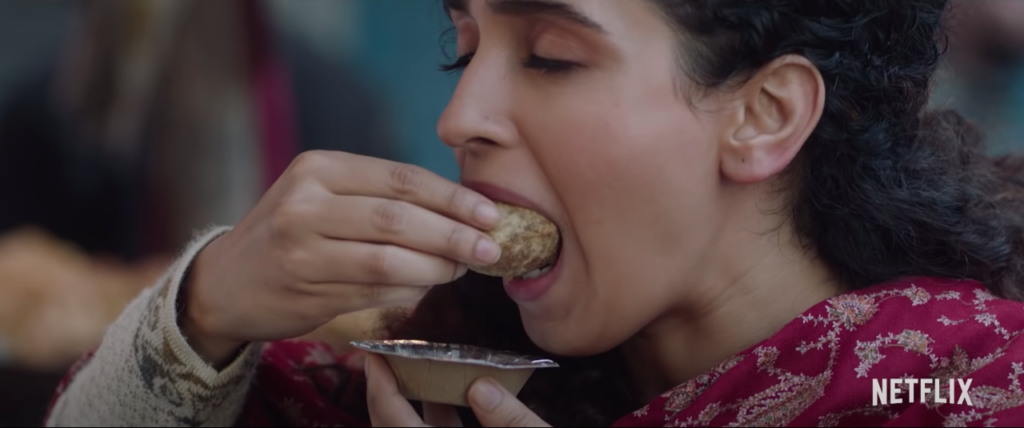
The death of her husband somehow provided an outlet to set her free from the obligations of her circumstances and archaic notions of marital responsibilities … and made room for some “pleasure-inducing” cravings.
Anxiety & Agitation:
Sandhya feels anxious and agitated when she learns about Astik’s love affair / past relationship that was more intimate than the one she shared with him.
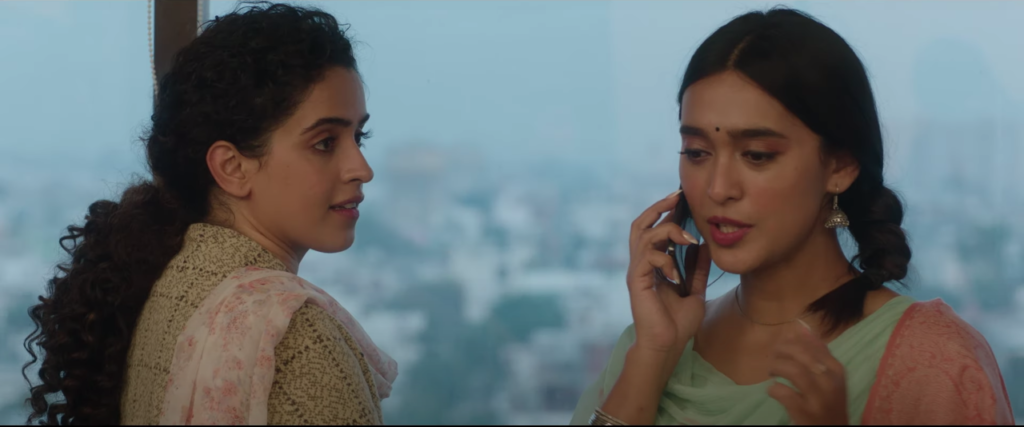
When she comes face-to-face with his ex-girlfriend Aakanksha Roy (played by Sayani Gupta), her instant reaction is of jealousy and hate.
She feels exactly how a wife would – she feels cheated by her life partner, resentful, and even hopeless because she can’t quite confront the (dead) culprit.
Bargaining:
Sandhya realizes there was more to Astik than the detached relationship they shared. And the only way to make peace with her present is to find out about his past, to possibly get to know a side of him she couldn’t.
She befriends Aakanksha, who could’ve or would’ve been “the other woman”, but for Sandhya she became her guiding light – more on this later…
Guilt:
Sandhya never saw Astik the way Aakanksha did. She never experienced his love the way Aakanksha did. She never appreciated him or was appreciated by him.
She may have wanted to know more about Astik through Aakanksha’s memories, but it opened a can of worms which pushed Sandhya from a state of numbness to inconsolable guilt and regret.
A highly qualified woman with the ability to be independent had inadvertently chosen to be constrained within the confines of patriarchy.
She was conditioned to allow others to make her decisions and plan the course of her life.
Even her marriage to Astik was nothing more than an achievement for successfully completing all the prerequisites to find a “suitable” partner with “security”.
She storms out of Aakanksha’s home learning more about herself than Astik; she is suddenly aware of her flaws and faults as well.
Acceptance:
As mentioned earlier – the magic lies in the moments shared in silence that speaks louder than any dialogue… and that’s how Sandhya finally accepts her fate.
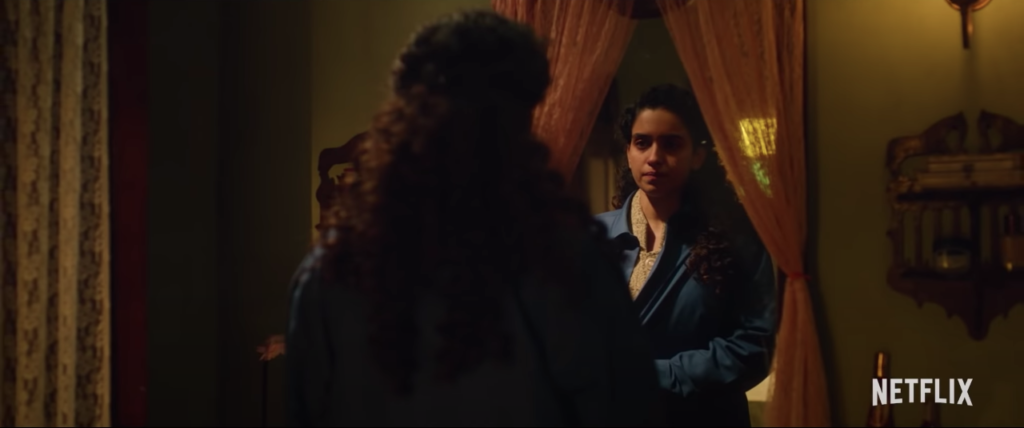
There’s a scene when she wears Astik’s blue shirt for few minutes and then takes it off, looking deep into the mirror.
There is no exchange of words or tears, but in those few seconds she feels the closest to her husband.
In a way, she shares a moment of silence to reconcile with him, forgive him for never loving her, and maybe even forgive herself.
Sandhya moves into the state of acceptance as though a foggy cloud has been lifted off her mind, finally clearing out her vision.
Calm:
Though acceptance is typically the final stage of grief, Sandhya possibly experiences a bonus – state of calmness !
What seemed like an odd friendship between Aakanksha and Sandhya actually helped our protagonist get closure and grow.
Sandhya sees Aakanksha as a financially independent woman with poise, polished nails, promising career and a partner who loved her, all of which encouraged her to break away from her self-imposed boundaries.
She probably even sympathizes with her – a woman who appears to have it all at the surface, was refused the right to marry a man she loved.
Perhaps no one can truly have it all …
[I won’t reveal much here – you have to watch the film to see how it ends ! ]
Whenever film viewers discuss about the legacy of Telugu cinema, they will never forget mentioning Mayabazar [1957].
This epic fantasy film is undoubtedly an iconic one in the history of the Telugu film industry.
It stars some of the biggest names from the business such as NTR, Akkineni Nageshwara Rao and Savitri.
Source: Scroll.In
Mayabazar was a super-hit dramedy when it was released and remains a classic now!
Today, on the occasion of the 64th release anniversary of Mayabazar, let’s dive deep into the fantasy world of this cinematic extravaganza!
Characters and plot summary
Directed by Kadri Venkata (KV) Reddy, Mayabazar was released on 27th March 1957, in Telugu as well as Tamil.
It is a fictional take on one of the segments of Mahabharata, where Nandamuri Taraka Rama Rao, popularly known as N.T. Rama Rao, played the role of Lord Krishna.
Samarla Venkata Ranga Rao, also known as S.V. Ranga Rao, enacted the role of Ghatotkacha; Superstar actress Savitri Ganesan essayed the role of Sasirekha.
While Akkineni Nageswara Rao played the character of Abhimanyu in the Telugu version, actor Gemini Ganesan played the same role in the Tamil adaptation.
The story is an adaptation of the folk tale Sasirekha Parinayam, which itself is based on the epic Mahabharata.
It focuses on the roles of Krishna and Ghatotkacha who try to reunite Arjuna’s son Abhimanyu with his love Sasirekha.
Source: IMDB
Decades before when the term “multi-starrer” was introduced in Indian cinema, Mayabazar illustrated what the term actually meant for film viewers.
Each and every character in the film had its moment of glory.
Interestingly, no deliberate attempts were made to allocate specific screen-time for every character. They all come organically and were almost perfectly aligned with the film’s screenplay.
A discussion on Mayabazar is incomplete without mentioning about the songs. In particular, two of its most memorable songs Aha Naa Pelliyanta and Vivaha Bhojanambu, that have stood the test of time and are still popular among fans.
Critical reception and legacy
At the times of its release, Mayabazar received nationwide critical acclaim from the audience. Since than, it has remained a successful venture at the Indian box office.
Despite the lack of CGI, the production value and the visual effects are evidently ahead of its time. This makes its presence known as a landmark piece in Indian Cinema.
In 2010, the film was re-released in a remastered colour version.
Source: IMDB
Whether it is the acting, cinematography, production scale or even the writing – Mayabazar is a pioneer in cinematic history.
Fun Fact: A 2013 poll conducted by CNN-News18 for the IBNLive poll selected Mayabazar as the greatest Indian film of all time.
Mayabazar is streaming on Amazon Prime Video
NOTE: THE VIEWS AND OPINION EXPRESSED IN THIS ARTICLE ARE THOSE OF THE AUTHOR. Edited by Nidhi Sahani
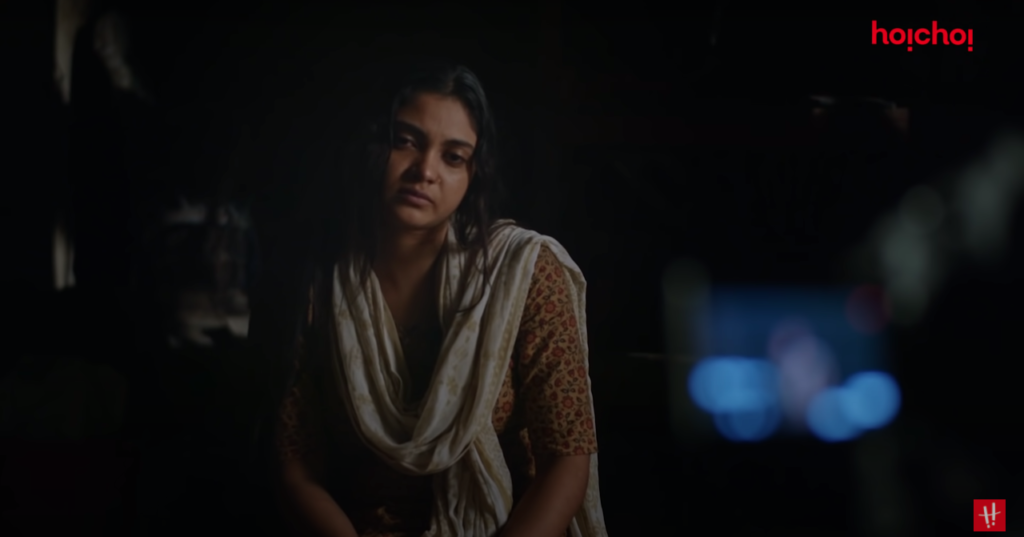
Scene 1 – A woman is interviewed in a moment similar to the opening scene of The Godfather, the camera focuses on her face and pulls back slowly as she describes herself being raped, while all the houses around her burn down.
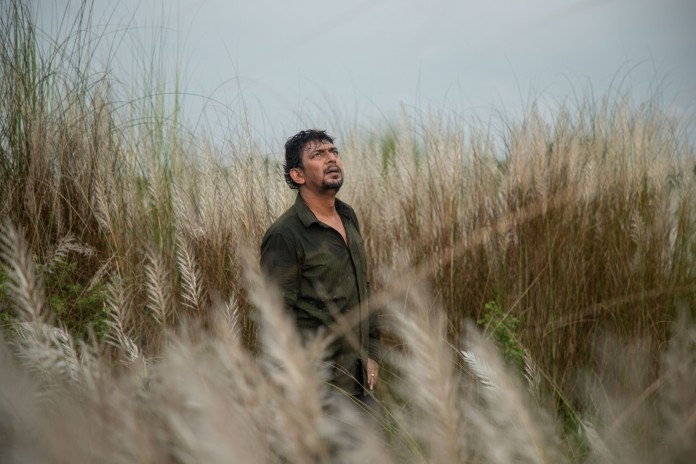
Scene 4 – Taqdeer, a freezer hearse van driver gets the shock of his life when he discovers the corpse of an unclaimed and unidentified woman. He has a chequered past and tries to stay clear of the law, but destiny and manipulations far higher up the food chain will upend his simple life.
Director Syed Ahmed Shawki crafts a world, comprising of parallel storylines from the above two scenes and forces the viewer to go through the life of a blue-collar man stuck in an impossible situation.
Chanchal Choudhury as Taqdeer is mesmerizing.
His facial muscles contorting in anguish or befuddlement selling his plight more than words could.
This Bangladesh import never compromises on the bleakness of the situation – neither Taqdeer nor his assistant Montu are clever or geniuses, but rather normal people trying to deal with the cards they are dealt.
And like any noir, the cards dealt are suitably complicated. And like any noir, the ending isn’t pretty.
The complicated case is solved with our protagonist achieving a semblance of win, but at the cost of his life uprooted.
The screenplay is tightly paced with 8 episodes, each 23 mins each; The shorter runtime helps to make it a highly binge-able content. However, what makes Taqdeer stand out from the rest of the normal oeuvre of Hoichoi content is its inherent maturity in dealing with serious themes like death.
There is almost a spiritual questioning mixed with the black humor, as Taqdeer asks Montu, “We are going to cremate the body, without giving it a bath?”
For Taqdeer, there are rituals and rules which make the world run and every event changes his perspective on these rules.
Shohel Mondol as Montu is the scene-stealer of the show; He has the choicest dialogues and the most relatable in terms of attitudes.
In contrast Barua Partha as a quirky hitman works as an oddity in this world, but the resolution of his storyline feels too neat.
Similarly, the maverick reporter storylin – a crusader trying to right the wrong isn’t as interesting as Taqdeer’s storyline.
Sanjida Preeti is forced to play a character who is very much trope heavy for a character befitting a journalist.
Syed Ahmed Shawki though, ensures that you are watching a show that feels inevitable and bleak, a pervasive sense of realistic cynicism in every frame.
This helps the storytelling to sparkle even as the cinematography is focused on muted shots and nighttime scenes. The dark visuals are successful in showing the grittiness of what both, Taqdeer the show and Taqdeer the character is trying to portray.
A fascinating miniseries which should be watched by all.
Streaming on Hoichoi, and MX Player (Hindi Dubbed)
NOTE: THE VIEWS AND OPINION EXPRESSED IN THIS ARTICLE ARE THOSE OF THE AUTHOR. Edited by Nidhi Sahani
From the director of Lipstick Under My Burkha and Dolly Kitty Aur Woh Chamakte Sitare, comes the Netflix India show Bombay Begums.
It follows the lives of five women from different walks of life in Mumbai, who try to hustle their way across the patriarchal society.
They are segregated by India’s socio-economic status as well as the privileges that stem from it.
All of them are interlinked in their individual struggles for staying afloat in Mumbai. However, the series is more than just a story of survival in the Indian metropolis.
Bombay Begumsis a highly compact series of six episodes. Each episode is nearly 50 minutes long.
Director Alankrita Shrivastava, who has also cowritten and co-directed it, is able to illustrate a fairly vast canvas that thematically explores different themes with nearly six hours of run-time.
The storyline
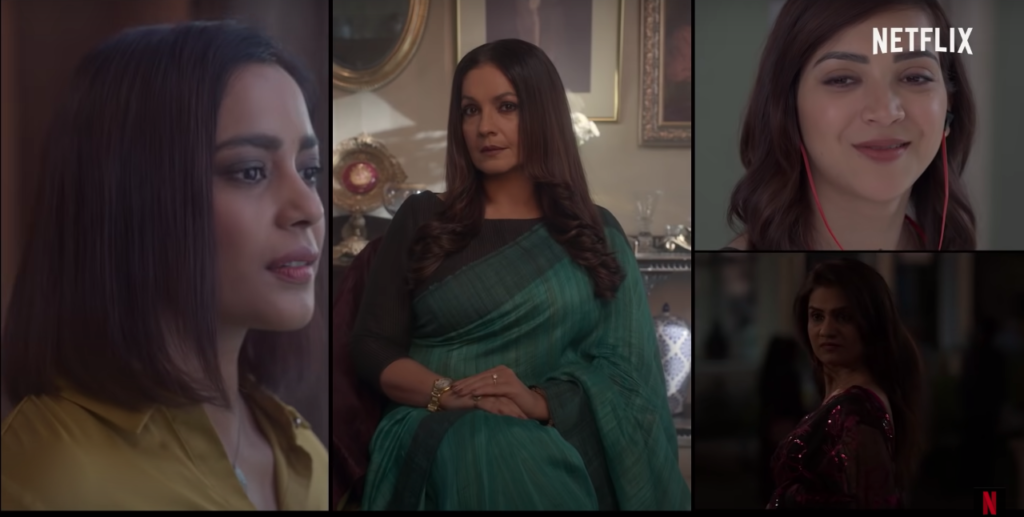
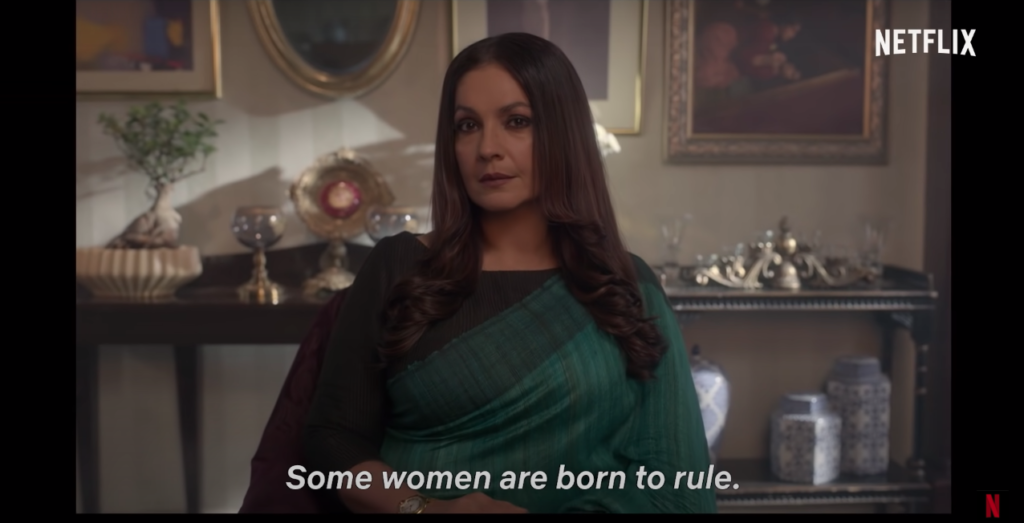
Bombay Begumsrevolves around Rani (Pooja Bhatt), the CEO of Royal Bank of Bombay. The show’s other protagonists include Fatima (Shahana Goswami), Ayesha (Plabita Borthakur), and Lily (Amruta Subhash).
Fatima is soon offered the role of the deputy managing director of Royal Bank of Bombay. She is highly motivated to accept the offer.
However, Fatima’s husband, Arija (Vivek Gomber), expects her to look after the baby.
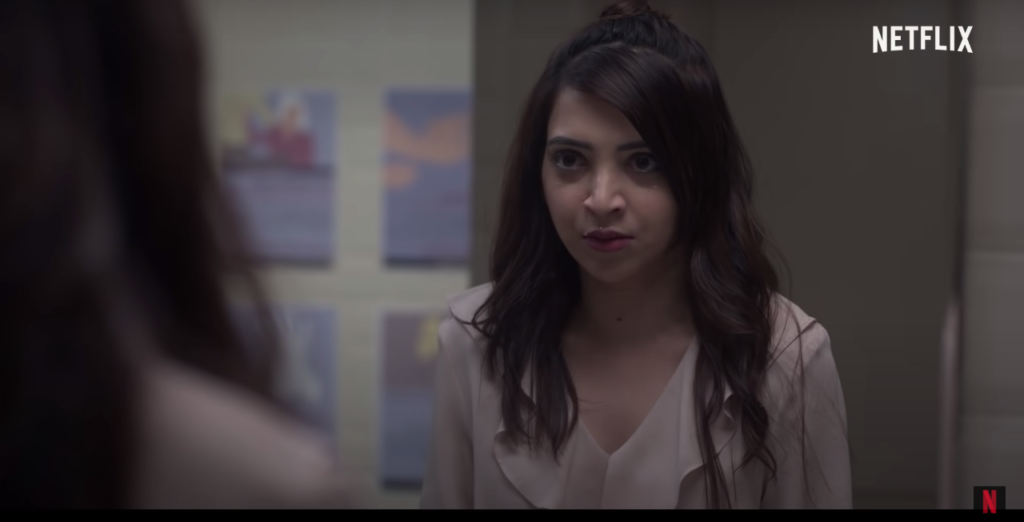
Ayesha, a hard working and ambitious young lady hailing from Indore, was initially fired by Fatima. However, she is then given a chance by Rani to work in the Royal Bank of Bombay’s Corporate Social Responsibility (CSR) division.
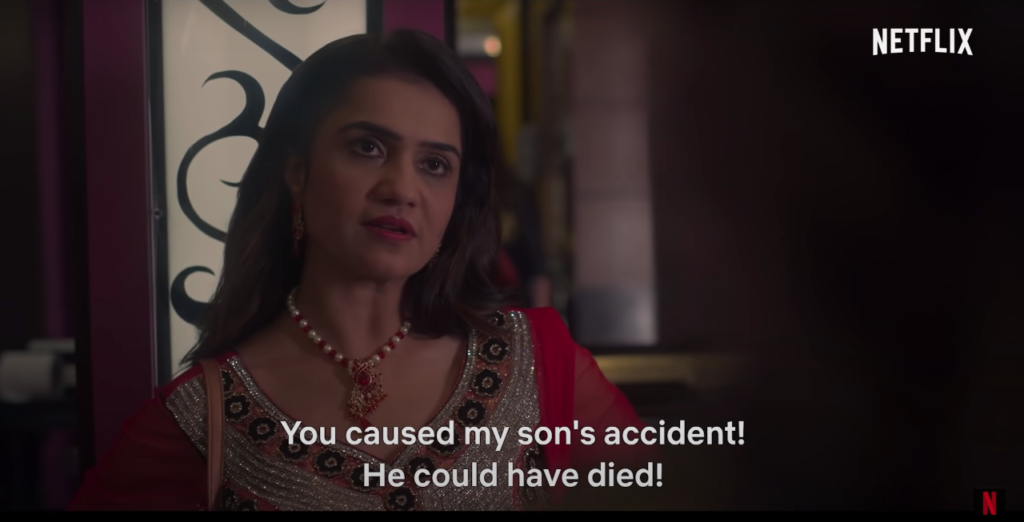
Lily, a bar dancer turned sex worker, blackmails Rani as the CEO’s stepson was responsible for injuring her son in a road accident.
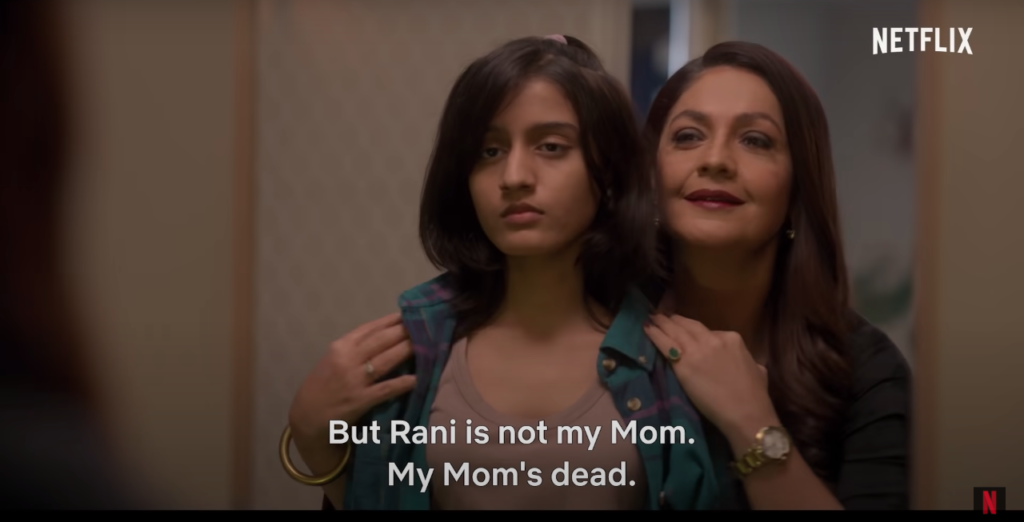
The series also illustrates the life of Rani’s stepdaughter, 12-year-old Shai (Aadhya Anand), who is also the narrator of the series. Her voice sheds light on the lives of other adults in the series.
Still from Bombay Begums
Key themes of the show
Office politics, sexual harassment in the workplace, the relentless pressure on a woman to adhere to conventional expectations and also the harsh reality that women can be patriarchal too, are some of the different themes that Shrivastava weaves into the narrative.
But all of these elements have been only briefly discussed upon and not explored in detail.
The series addresses some extremely important points and provides some impactful moments, thanks to its ensemble cast.
However, the show doesn’t really leave an emotional impact on the viewers. It is evident that the director got the characters to verbalise far too much about their struggles as women.
With regards to the technical aspects of Bombay Begums, the background music and cinematography of the show creates a great ambience for a relatively serious drama.
All the romantic scenes have been shot artistically.
Performances
Pooja Bhatt, Shahana Goswami, Plabita Borthakur and Amruta Subhash have all performed their roles sincerely.
Other supporting actors including Aadhya Anand, Rahul Bose, Mahesh Rao, Imaad Shah, Vivek Gomber, Danish Husain, Nauheed Cyrusi and Vivek Tandon have also enacted their parts well.
In summary, we can certainly say that Bombay Begums is an engaging drama that shouldn’t be missed.
NOTE: THE VIEWS AND OPINION EXPRESSED IN THIS ARTICLE ARE THOSE OF THE AUTHOR. Edited by Nidhi Sahani
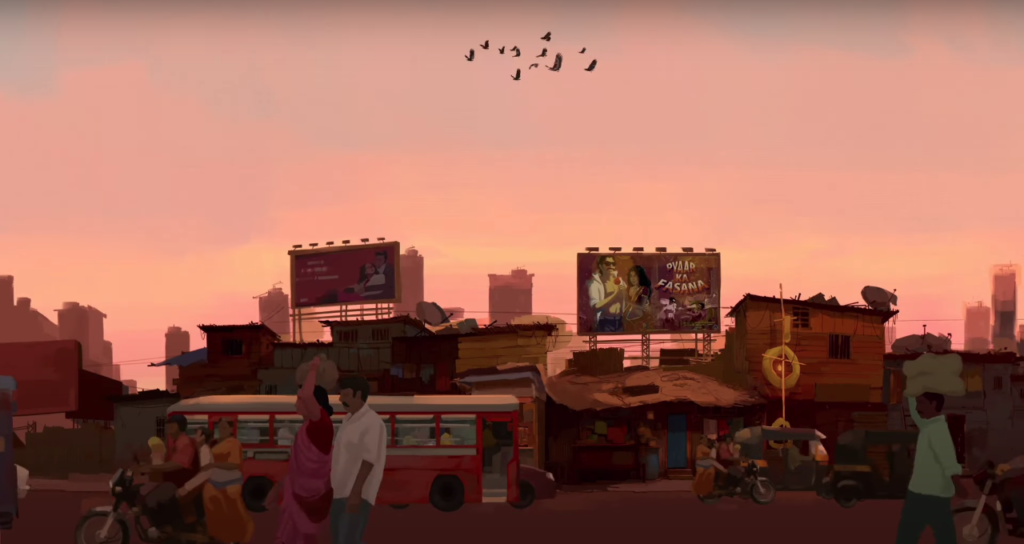
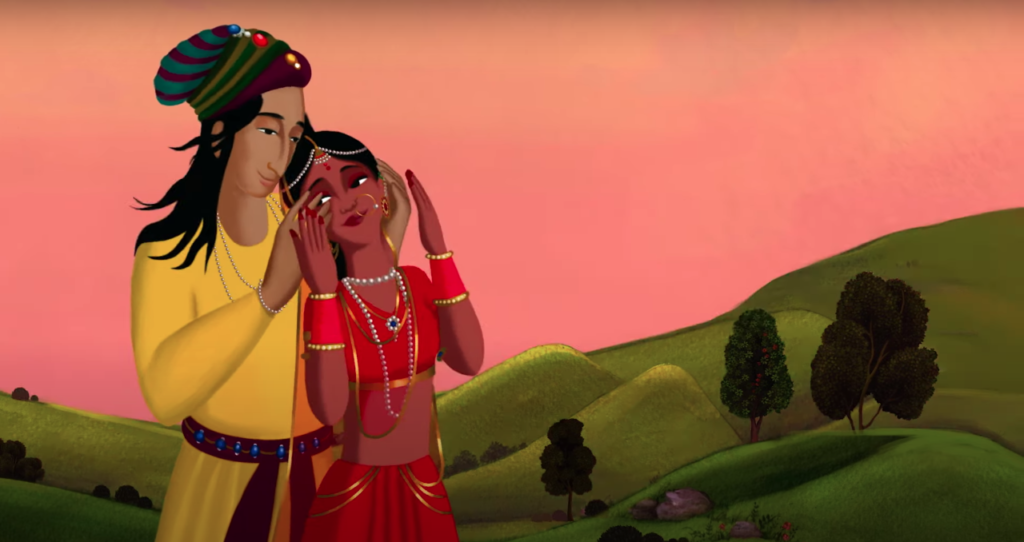
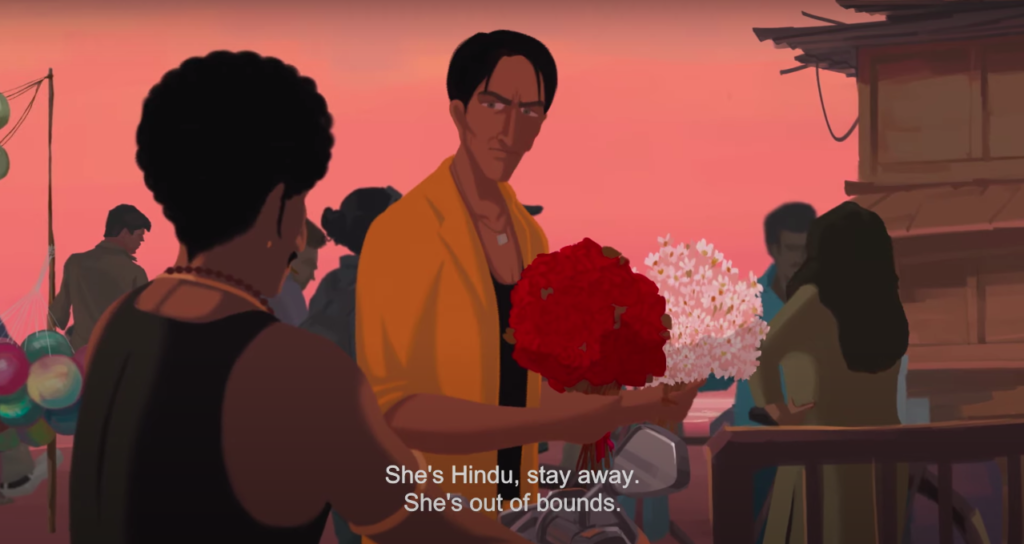
Bombay Rose is an animated film about three stories running parallelly in the city of Bombay – One is about forbidden love, second about forgotten love, and the third about unconditional love.
Written and directed by Gitanjali Rao, the film is a poignant celebration of colors, music and nostalgia with the backdrop of Bombay.
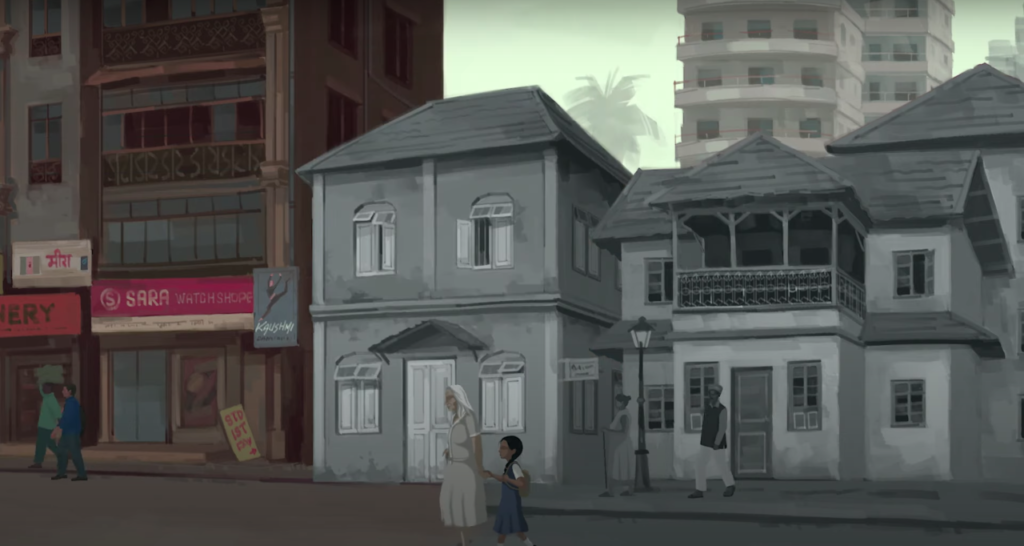
The detailing of the city’s infrastructure exquisite. It cleverly use popular lanes, shops and brand names to familiarize the viewers with the setting. And it’s a delight to watch especially if you’re well-versed with Bombay – the locations feel like home.
The film touches upon subtle elements and gems that are synonymous to Bombay and Bollywood that make it likeable. It feels like an ode to the city and its culture.
Bombay Rose opens in a movie theatre filled with men watching a Bollywood film with a muscular hero rescuing a damsel in distress.
While all the men are hooting and cheering during the climax, one man is deeply engrossed in the moment. He is the hero of Bombay Rose, Salim.
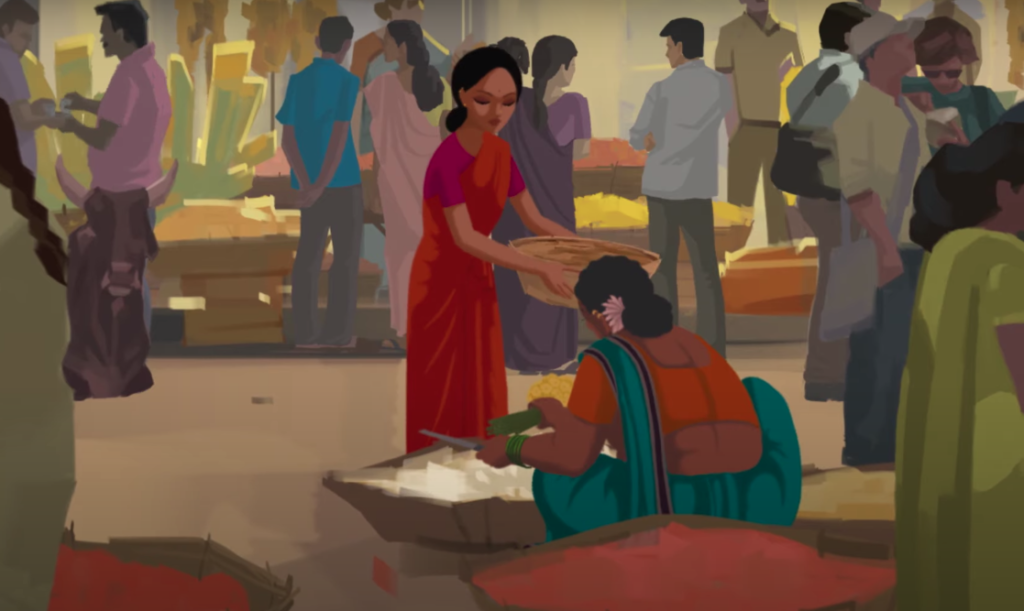
Later we see a woman, Kamala in a busy market (mandi) buying flowers from a seller. She is the heroine of Bombay Rose – dressed in a vibrant red saree; She’s anxious, somber and simply getting through the day.
Parallelly, we are introduced to Ms. D’Souza, a senior citizen living alone in a bungalow with her cat… and her love for roses.
The story oscillates between these characters, their lives and their moods with brilliant use of music and animation.
Which brings us to what worked in the movie…
The good:
Bombay Rose is a game-changer for animation films in India. Animated by PaperBoat Design Studios, each frame is so beautifully artistic and inspired like a carefully painted canvas.
The background score by Sound Design by PM Satheesh along with old Bollywood classics such as Dil Tadap Tadap Ke Keh Raha Hai and Aaiye Meharbaan blend wonderfully and are a joy to watch traveling through time in the city of dreams.
The one melody that plays in bits throughout the film is achingly beautiful. Sung by Cyli Khare and written by Swanand Kirkire, Rewa is a song portraying the deepest emotions of hope, despair and desires of Kamala – a girl who’s trapped by her circumstances.
The Not-So-Good:
Though the film is a visual delight, the story fails to leave an impact.
I don’t usually pen down negative reviews because it seems hardly constructive and borderline disrespectful to efforts of artists and creators involved.
But once in a while comes a film that so utterly flawed and shoddy, that I can’t help but scrutinize it and call a spade a spade.
Unfortunately, The Girl on the Train is one such train-wreck, no pun intended.
I had high hopes from this film.
No, let me be more specific – I has high hope from a Parineeti Chopra starrer film because I truly believe she’s a great actress; She has simply been lost in the past five-six years (or perhaps got lost trying to find her niche).
I read the book few years ago and know how it ends, so I didn’t bother watching the Hollywood adaptation.
However, the Hindi version was appealing only for my appreciation of Chopra. Alas, it’s nothing but a HOT MESS !
I won’t dwell too much into the synopsis, but I would like to highlight some key aspects of the film that were so excruciatingly disjointed that I was irritated for being subjected to such a product.
NOTE: Spoilers ahead.
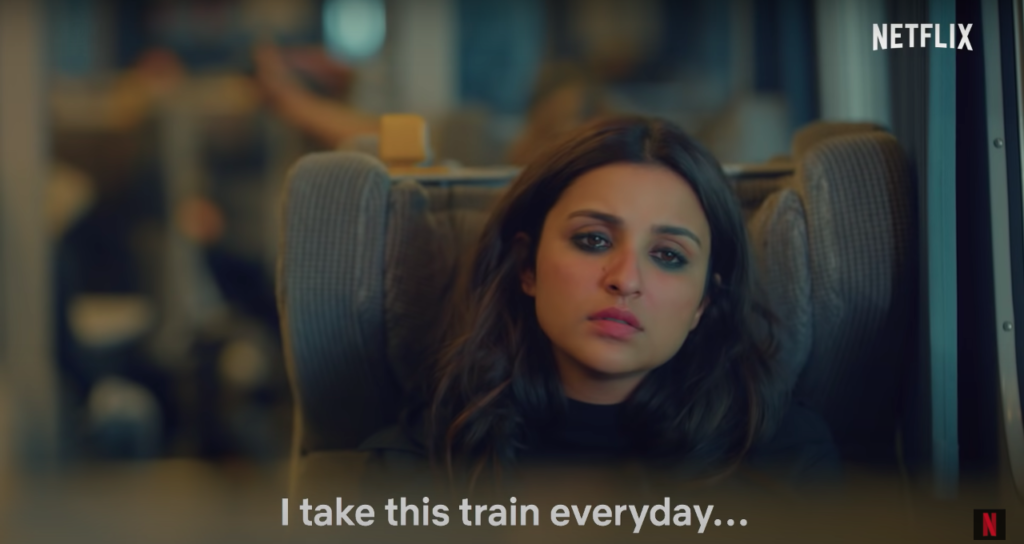
Character development Mira Kapoor (played by Parineeti Chopra) is introduced as a high-profile criminal lawyer determined to bring justice to her clients. But not before showing her nervously panicking over a stalker threatening her to withdraw from a case.
Post an accident that led to her miscarriage and divorce, we see no character development or logical progression of the same to validate her actions. Let’s just say, all is narrated by the protagonist in words, not in action (or rather poorly in performance).
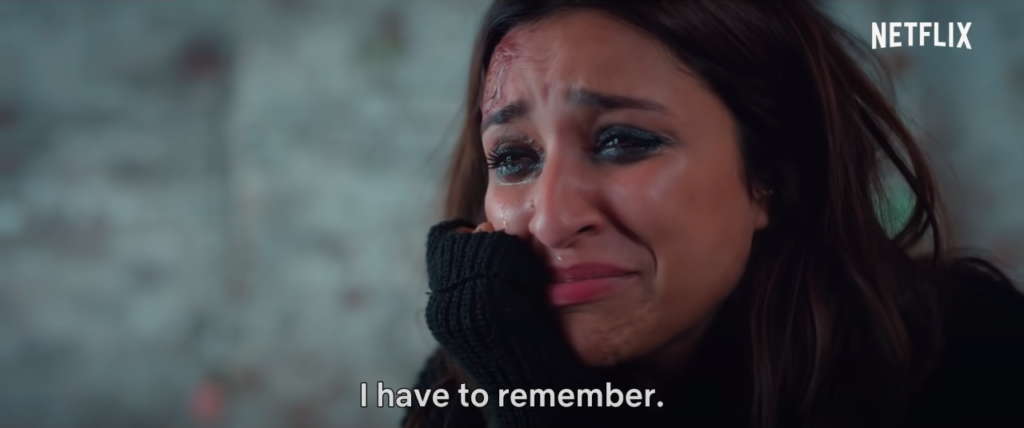
How does a woman of such indomitable spirit fall apart instantly and spiral down with no control (granted there are some issues that unravel in the last 15-20 minutes of the film, but none justify Mira’s condition of turning into an overly sensitive alcoholic obsessed with a stranger’s life).
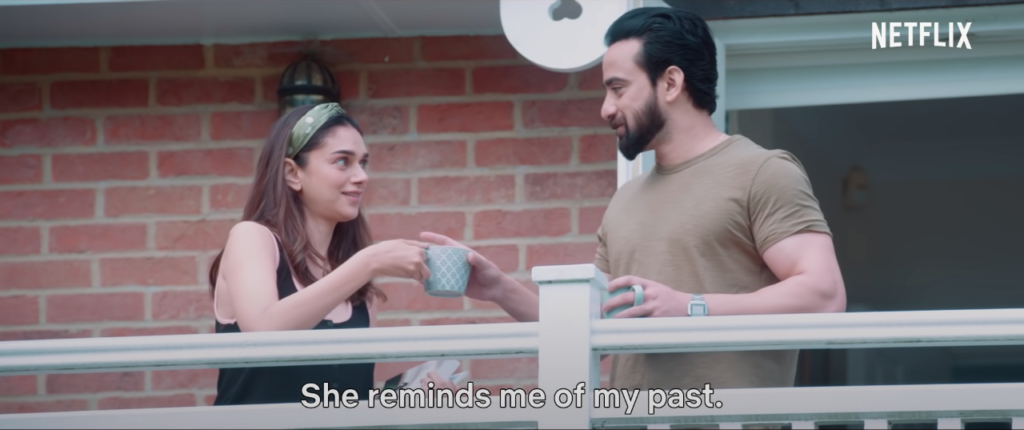
Same goes for Nusrat John (played by Aditi Rao Hydari) and her husband Anand who should’ve had a backstory to explain their relationship.
Why were they seen as a happy couple on the balcony before the “incident” ? What changed? Why is the husband suddenly not bothered to find his “missing” wife?
There’s no explanation.
Chronology of events The film doesn’t follow a linear chronology… or even a logical one.
While the story unfolds from various character’s point of view, the focal point is to find a ‘missing’ person who we later discover has been murdered.
But everything leading to that point in the film is a hotch-potch of characters popping out in random sequence of events, some completely disconnected from the main plot.
For example, the cops go around town senselessly interrogating friends and acquaintance upon receiving a ‘missing person’ inquiry.
Flip to approximately 30 minutes later when the film finally shows Mira’s involvement in the case via a CCTV footage at Nusrat’s house on the day of her murder, the cops realize it being a critical lead.
But wouldn’t checking the victim’s house and video evidences be the first step? What is this botched up investigation?
Well, more on this later …
Backdrop of London The original story, as per the book, is set in London and the story plays out seamlessly given the detailing in the writing. However, that same setting has no bearing in the film whatsoever.
There are some location references to indicate Mira’s whereabouts on the day of the murder, but the film doesn’t provide any explanation to understand why or how those are relevant.
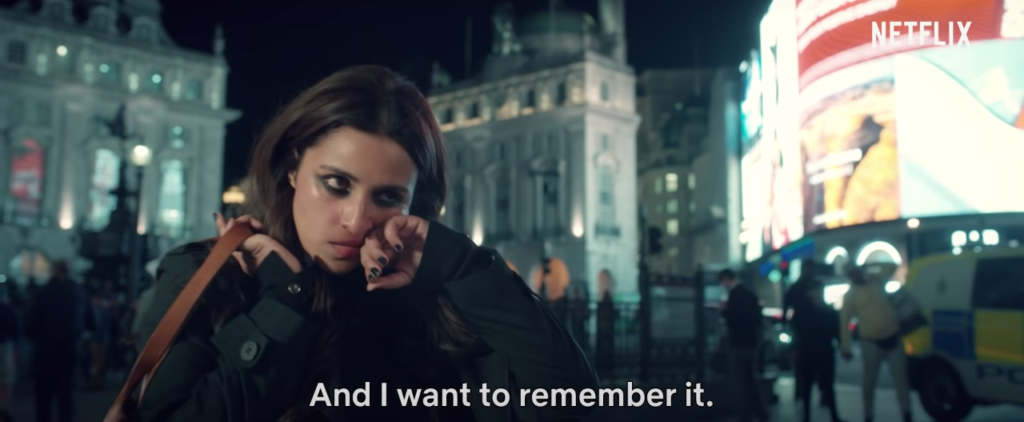
We see Mira drinking and crying her guts out in Central London a few times – that’s perhaps to show her loneliness in a bright and busy world. But that could be in any part of the world.
Moreover, the film doesn’t quite utilize any of the supporting cast members played by local South Asian artists from London. They are merely used as props with limited to no dialogues, only for the main leads to take center-stage.
For example, the opening scene of the film is at wedding ceremony plugged-in simply to show a meet-cute between Mira and Shekhar Kapoor (played by Avinash Tiwary)… and they are dressed better than the couple getting married played by Nisha Aaliya and Rajiv Chabria.
Another scene where this was obvious is when Mira has a breakdown at a bar’s washroom – we don’t quite see her friend trying to console and comfort her, we only hear her voice.
Sure, this may be in efforts to edit a crisper screenplay but screams against the narrative of “representation of South Asians” abroad. But I digress…
All of them (expect three – I counted) are South Asian, Hindi-speaking characters who are perhaps citizens of United Kingdom. Again, making me question as to why was it necessary to set the film in London?
The filmmaker certainly took massive creative liberties with the end; Could’ve done the same for the setting.
This leads me to the next point —
Police procedures If you’re going to set a story in a country and incorporate law and order as an integral part, shouldn’t it be important to make it relevant to the land?
There was absolutely no research done on the interrogation methods that apply in the UK.
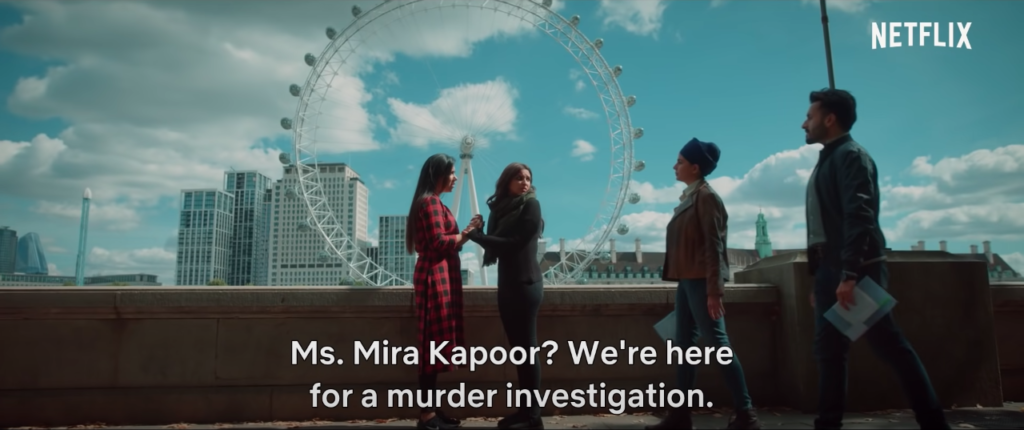
Cops turn up in parking lots to speak to a “prime suspect” (i.e. the husband of the victim) or by the river to question another key suspect (i.e. Mira Kapoor) and start questioning in broad daylight.
Storytelling The trailer of the film describes it to be a story of ‘Mira Kapoor’ but in actuality it revolves around the life and murder of Nusrat John, which eventually gets Mira involved.
However, the makers tremendously under-utilized all the characters to properly stress on any one narrative.
Though it underlines Mira’s need to solve the mystery and prove her innocence, there is no real sense of urgency or guilt shown.
There are some choppy montages of her weeping with intercuts of unclear visuals that supposedly serve as clues to solve the case, but they’re just shoved in from dramatic effect.
Another disastrous flaw were the dialogues, especially those defining Mira’s character and its arc.
She thinks in odd poetry when she’s obsessing over Nusrat’s life, her own life and even when she’s venting out at a group therapy class, visibly consisting of non-Hindi speaking people.
The dialogues are out of a textbook – they neither resonate with the milieu nor with viewer.
Even the songs don’t match the mood of film – Matlabi Yariyan is an exampleof one that is supposed to represent the crushing pain of Mira for being deceived, but why is the rhythm and tone is so upbeat?
Inconsistencies & lack of attention to detail I’ll make this quick:
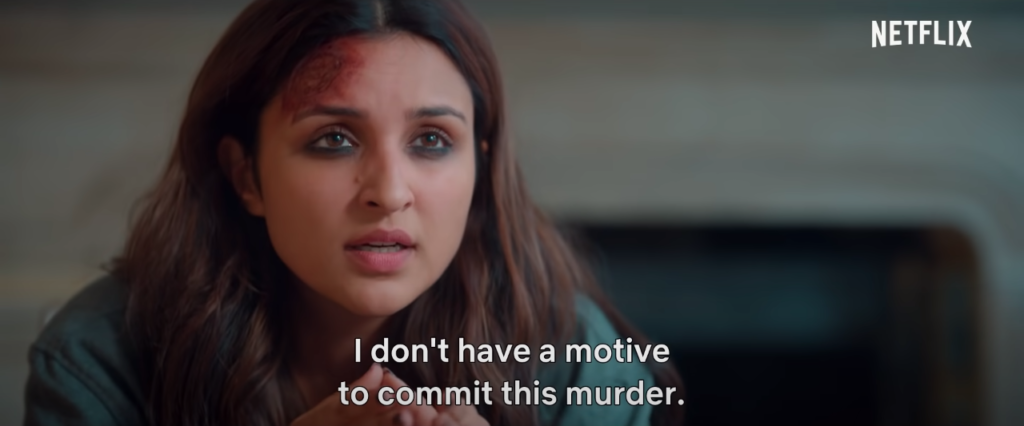
Mira forehead injury is apparently only prominent for the viewers and not everyone she encounters. Nobody cares to mention it or dress the wound.
Mira’s make-up with running eye liner and black nail polish to depict her depressive state is the most stereotypical and unauthentic portrayal of her situation. And while everything around her is falling apart, her hair is never mismanaged – always set in perfect soft wavy curls.
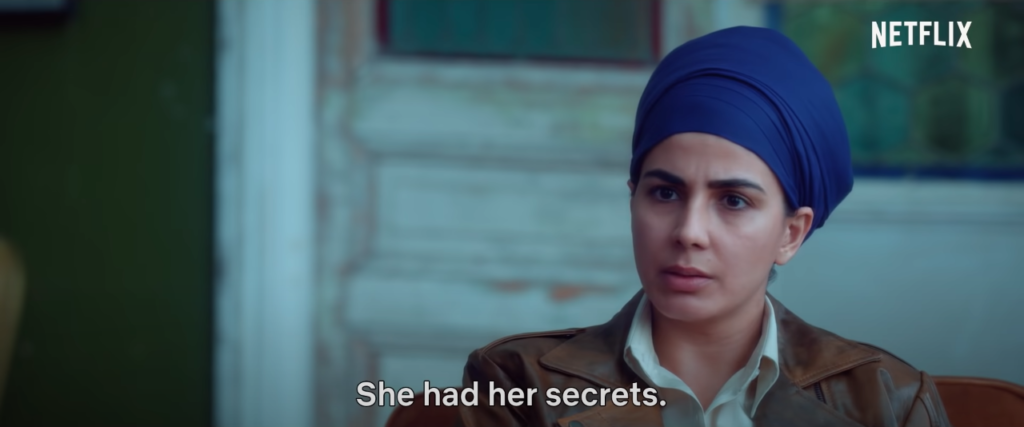
When Inspector Dalbir Kaur Bagga (played by Kirti Kulhari) watches Nusrat’s therapy tapes, why and how are we seeing glimpses of what’s going on in Nusrat’s head? That’s some “inception-istic” way of solving the case …?!
Overall, TGOTT didn’t attempt to involve the viewers in solving a murder mystery.
Several crucial elements from the book are either omitted or casually sprinkled from one sequence to the next that made it harder to decipher the plot or feel its intensity.
Perhaps the direction and story writing are to be blamed for this disaster. Or maybe the choppy editing that does a terrible job of telling a complex multilayered story.
Unfortunately, TGOTT is a disappointment with a screenplay that derailed far too many times in its runtime – pun intended.
For a movie like Drishyam – a well plotted crime thriller, the idea of making a sequel comes with a baggage, mainly whether the said sequel was necessary or whether it actually reaches the heights of the original.
Drishyam 2 is one of those rare sequels – it almost surpasses the original.
Still from Drishyam 2
Director Jeethu Joseph and his team craft a sequel which feels like a logical succession of the original events.
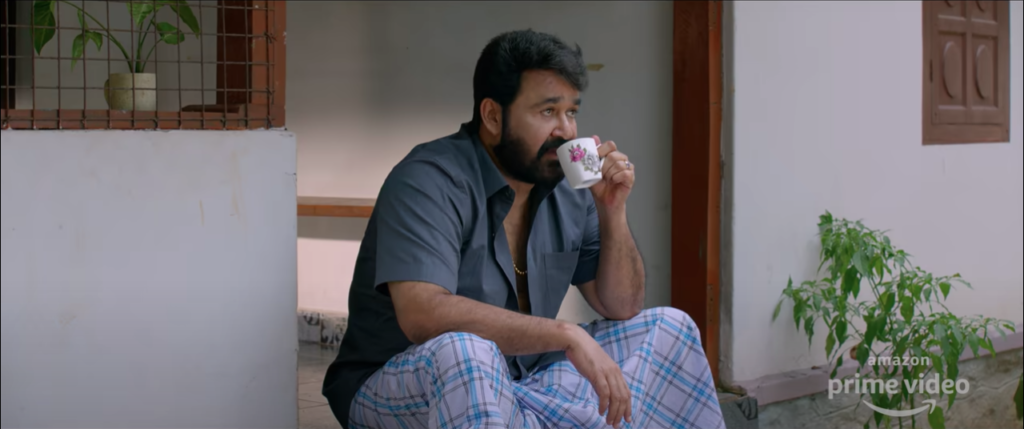
Taking place six years after the original film’s events, Georgekutty [played by Mohanlal Viswanathan] by has now become a theatre owner with dreams of making it as a filmmaker in the Malayalam film industry.
And while it has been six years since that fateful night, Georgekutty family still suffers through that mental trauma, coupled with the fact that the residents of that town know that Georgekutty is responsible, but are unable to prove it, thus have varied opinions about him.
Still from Drishyam 2
Some find him as the ultimate rebel, the man successful in circumventing authority. Others find him as a machiavellian trickster, a villain who should face punishment.
Into this volatile cocktail of a situation comes trouble knocking in the form of a serious investigation in the case which could threaten everything Georgekutty has ensured to continue the peaceful life he has been living for the past six years.
Unlike the first movie, Drishyam 2 uses the long buildup to explore the lingering effects of trauma as well as introduce new plot threads which later come into play.
And unlike its predecessor, Drishyam 2 feels more polished and less clunky.
Still from Drishyam 2
There are moments where the movie feels like it stopped dead in its tracks but those are few and far between, and in this situation the longer runtime wasn’t too much of a hindrance.
There are moments where exposition feels clunky, but context clues help the it to feel as part of a smoother narrative.
It also helps that Joseph and his team does try their best to experiment with filmmaking techniques. Though they sometimes couldn’t help themselves from devolving Drishyam 2 into a complete soap opera.
Mohanlal’s performance as usual is the anchor on which the movie rests and this time the supporting cast too feels inclusive instead of ancillary.
Still from Drishyam 2
The convoluted plot threads could be taken as the meta-commentary for audiences inclination for enjoying such twists and turns. But Drishyam 2 takes itself too seriously to do that effectively.
As a sequel, Drishyam 2 had every reason to feel unnecessary and a cash grab, but Jeethu Joseph and his team craft a true sequel.
It’s a logical progression of the original story with conflicts while hearkening back to its predecessor and still manages to feel fresh.
And in an environment of IP stuffed movies, such a sequel is a rarity and should be applauded.
Drishyam 2 is streaming on Amazon Prime Video.
NOTE: THE VIEWS AND OPINION EXPRESSED IN THIS ARTICLE ARE THOSE OF THE AUTHOR.
Javed Hassan [Irrfan Khan] is a noted filmmaker, often mobbed by philographists. His wife Maya [Rokeya Prachy] is a lecturer.
With his two children – Saberi [Nusrat Imrose Tisha]and Ahir [Rashad Hossain] – Javed is purportedly in a happy space.
All hell breaks loose when Javed falls for Nitu [Parno Mittra], Saberi’s childhood friend and moves out. Might sound too mundane !
Well, director Mostafa Sarwar Farooki deals with this tale of separation and its subsequent aftermath with his unique style that really makes you sit up and take notice.
Trust Farooki and he never ever veers into a single risqué moment. The entire drama oscillates among the four key players – Javed, Nitu, Maya and Saberi – and their turbulent emotional journey that’s never borders on melodrama.
Farooki hardly ever hints at the exact point that sparks the rift in Javed’s relationship with Maya, neither is Nitu painted as the ‘other woman’, though Saberi accuses her of nurturing childhood jealousy and rivalry.
In this entire ‘unmelodramatic’ narrative, Farooki retains everything simple and to the point. The languid pace perfectly compliments the inner turmoils and conflicts, its key characters are thrown into.
Javed Hassan comes across as a complex character who is both compelling and extremely vulnerable at times. And Irrfan Khan makes Javed’s losses, yearnings, despairs so palpable that you wonder why he had to leave us in such a hurry !!
I just can’t imagine any other actor in Javed’s shoes other than Irrfan [Khan].
But what Farooki really strikes gold at is with his unusual shot compositions and impressive sound design [Dipankar Chaki and Ripan Nath].
The non-linear narrative is presented as a series of tableau where characters enter and exit the frame. Considerable amount of off-screen space has been created to fruitful effects.
Farooki wants us to not only ‘see‘ but also ‘listen to‘ when we are not allowed to see ! Cinema isn’t called audio – visual medium for no reason.
An admirer who comes to work under Javed is unceremoniously thrown out. A few moments later, Javed draws him in and asks to log into his Facebook account. We see a cropped image of Javed and his fan as his profile picture. Javed lambasts him for editing out his wife’s image from the actual photo. This single sequence is enough to provide new dimension to Javed’s complex character that strictly maintains the private /public dichotomy. The same issue recurs in another sequence where we see Javed and Nitu at a live chat show.
We see Javed and Nitu in a soft embrace. As the camera starts to pan left, the soundtrack is abuzz with chants from the holy koran.
Next we see Javed’s brother and with other members in the next room. Camera again pans back to its former position where we see Nitu, crying inconsolably holding her child.
In the very next scene, we see Maya breaking the news of Javed’s death to her children. Camera is static. A work professional is seen sitting in the drawing room. Maya goes out of frame into the kitchen and informs them. After a brief pause, Saberi requests her mother to make a different variety of poached egg with mushroom. Maya enters the frame and goes to attend the professional (both remain out of frame) to discuss about her impending coaching class. What all remains is the empty space.
So Doob: No Bed of Roses, chiefly becomes a study of characters in isolation, more than its plot, that’s exquisitely photographed by Sheikh Rajibul Isla.
Special mention for the haunting Tagore song Purano sei diner kotha, used as instrumental by music composer Pavel Arin.
Doob: No Bed of Roses is streaming on Netflix.
NOTE: THE VIEWS AND OPINION EXPRESSED IN THIS ARTICLE ARE THOSE OF THE AUTHOR.