After the resounding love for the song ‘Laal Peeli Akhiyaan,’ the anticipation continues to mount as Dinesh Vijan and Jio Studios release the official trailer for their upcoming family entertainer extravaganza, ‘Teri Baaton Mein Aisa Uljha Jiya.’ This film marks the first-time collaboration between the charismatic Shahid Kapoor and the vivacious Kriti Sanon, promising a delightful on-screen chemistry, entwined in an ‘impossible love story’ that is set to captivate audiences worldwide. Joining the young duo, legendary actors, Dharmendra and Dimple Kapadia also add their seasoned depth on-screen.
The trailer offers a glimpse into the roller-coaster ride of emotions, laughter, and an impossible love, seamlessly blending in essences of humor, romance, and relatable family moments, making it a must-watch for audiences of all ages.
Backed by Producer Dinesh Vijan’s banner Maddock Films, he says, “At Maddock Films we take pride in bringing forward unique stories with mass connect be it Hindi Medium, Stree or Luka Chuppi and this time we look forward to bringing out a family entertainer with a great combination of romance and humour perfect for the valentine week.
An impossible love story that has never been told before with a never seen before exciting pairing of Shahid-Kriti adding an extra layer of charisma and freshness to the world of romance.”
Prepared to tickle some funny bones, Directors Amit Joshi and Aradhana Sah add, “With Teri Baaton Mein Aisa Uljha Jiya, we hope to tap back into the love-genre, sprinkled with lots of comedy for a perfect family watch during the valentine week. Working with Maddock and bringing this film to life has been a fantastic experience, making this one a truly memorable project!”
Directed by Amit Joshi & Aradhana Sah, a Maddock Film’s production, Teri Baaton Mein Aisa Uljha Jiya is produced by Dinesh Vijan, Jyoti Deshpande & Laxman Utekar.
This eagerly awaited movie is scheduled for a release, leading to Valentine, on 9th February, 2024!
Lia Vollack, John Branca and John McClain, producers of the acclaimed Broadway musical MJ, announce casting for the UK premiere production which begins performances at the Prince Edward Theatre, London from Wednesday 6 March 2024.
As previously confirmed, Myles Frost, who originated the role of Michael Jackson in New York and for which he won the Tony Award® for Best Actor in a Musical, will bring his star-making performance to the West End.
He will be joined by Ashley Zhangazha as Joseph Jackson / Rob, Mitchell Zhangazha as Michael, Philippa Stefani as Rachel, Phebe Edwards as Katherine Jackson / Kate, Matt Mills as Berry Gordy / Nick, Rohan Pinnock-Hamilton as Tito Jackson / Quincy Jones, Matt Gonsalves as Alejandro, Jon Tsouras as Dave, Kieran Alleyne as MJ Alternate & Standby for Michael, Kwamé Kandekore Standby for MJ & Michael.
The full cast will include Derek Aidoo, Morgan Baulch, Milan Cacacie, Spencer Darlaston-Jones, Hanna Dimtsu, Aden Dzuda, Marie Finlayson, Christopher Gopaul, Kalisha Johnson, Grace Kanyamibwa, Travis Kerry, Dianté Lodge, Simeon Montague, George Ross, Lydia Sterling, Toyan Thomas-Browne, Taylor Walker, Charlotte-Kate Warren and Tavio Wright.
MJ will also introduce Jaydon Eastman, Elliot Mugume, Ethan Sokontwe and Dylan Trigger as Little Michael, Cristiano Cuino,Sekhani Dumezweni, Khanya Madaka and Aidan Oti as Little Marlon.
For full cast and creative team biographies and further information, see www.mjthemusical.com
He is one of the greatest entertainers of all time. Now, Michael Jackson’s unique and unparalleled artistry comes to the West End stage direct from Broadway in the multiple Tony Award®-winning new musical MJ.
Centred around the making of his 1992 Dangerous World Tour, MJ goes beyond the singular moves and signature sound of the star to offer a rare look at the creative mind and collaborative spirit that catapulted Jackson to legendary status.
MJ delivers a theatrical experience like no other, electrifying audiences with dozens of the most iconic songs in music history, including Billie Jean, Beat It, Man in the Mirror, Thriller and Smooth Criminal.
Imagine if you woke up one day and realize your memory was slowly fading away, and there’s no cure. Would you hold on to the present and try to remember as much as possible for the future, or revisit happier times from your past and relive them?
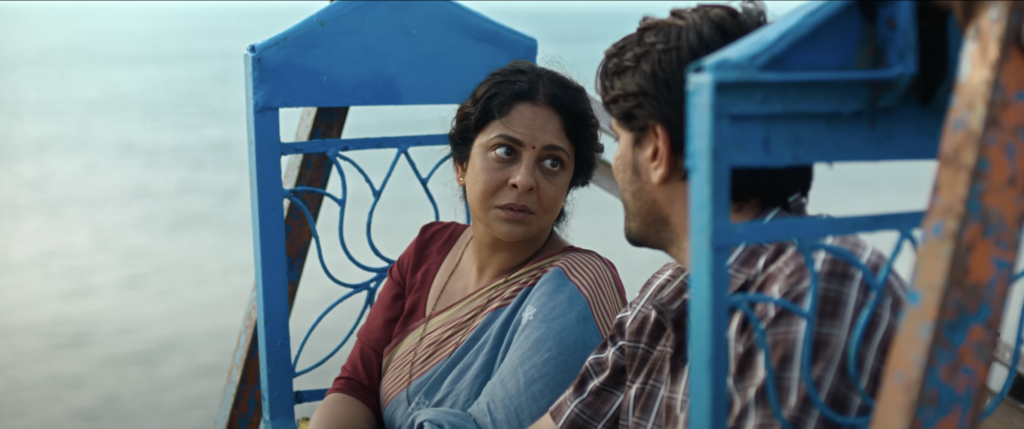
Three of us is story about Shailaja Desai (Shefali Shah), who has been diagnosed with dementia and is grappling with the uncertainty of the disease, and what that means for her and her identity.
Instead of stressing about the future, she chooses to revisit her childhood in a town called Vengurla, where she grew up, went to school, learned to dance, and made friends –perhaps in the hope of reuniting with one friend with whom she shared a special bond with, Pradeep Kamat (Jaideep Ahlawat).
What first appears to be a woman’s hunt to find a long-lost love, soon becomes a heartfelt journey down memory lane with Shailaja, her supportive husband Dipanker Desai (Swanand Kirkire), and a poetic Pradeep.
Shailaja’s past and present explore Vengurla with her, as she reconnects with her roots, her home, the landscapes, her dearest friend and even her trauma.
What’s remarkable about Three of Us, directed by Avinash Arun, is how most of the film plays out in silence, yet conveys a plethora of emotions from beginning to end.
A huge credit for that goes to writers Avinash Arun, Omkar Achyut Barve and Arpita Chatterjee for penning a complex story about relationships and portraying it with such simplicity.
The film is also blessed with a stellar cast that make acting look easy. I couldn’t take my eye off Shefali Shah who emotes with her eyes, body language, and her silence.
Watch out for a scene where she visits her old dance teacher and watches the students perform. She reluctantly joins them to test her memory, which sparks a childlike spirit and evokes a burst of emotions. I cried.
Three of Us starts off as a story about its three central characters, and ends on a poignant note about cherished memories, acceptance, and surrender.
The anticipation reaches new heights as the much-awaited trailer for India’s Biggest Aerial Action film, ‘Fighter,’ takes flight today. Helmed by blockbuster director Siddharth Anand and presented by Viacom18 Studios in association with Marflix Pictures, ‘Fighter’ is set to redefine cinematic excellence with a thrilling combination of adrenaline-pumping action sequences along with the spirit of patriotism, offering a perfect blend of entertainment and emotion.
Featuring a compelling script and a stellar cast, including Hrithik Roshan, Deepika Padukone, and Anil Kapoor’s powerhouse performances, ‘Fighter’ trailer takes the audience on an epic journey with the elite unit of the Indian Air Force – the Air Dragons. The squad members embark on a mission to safeguard India’s skies and the nation by confronting looming threats. The trailer beautifully encapsulates the camaraderie, courage, and sacrifice of these heroes, making ‘Fighter’ a must-watch for everyone across generations.
The trailer, unveiled today, promises an unparalleled visual spectacle filled with stunning visuals and heart-stopping moments. Packed with state-of-the-art visual effects in 3D and 3D IMAX formats, ‘Fighter’ guarantees to deliver a fully packed entertainment extravaganza for viewers.
Scheduled to hit theatres on the eve of India’s 75th Republic Day, January 25th, 2024, ‘Fighter’ is a cinematic spectacle that audiences cannot afford to miss.
Get ready to witness a journey of courage, sacrifice, and triumph, as ‘Fighter’ soars to new heights of cinematic excellence. ‘Fighter’ releases in cinemas and IMAX 3D on 25th January.
If you’ve seen Succession Season 4, Episode 3 – then continue reading. The rest of you, watch the series and come back here… because major spoilers ahead.
Succession is the perfect example of how to marry a gripping and crisp narrative with brilliant actors.
And Episode 3 in Season 4 is a masterclass in the art of storytelling and giving the audience an extremely emotional immersive experience.
It starts with the sudden demise of Logan Roy, the father.
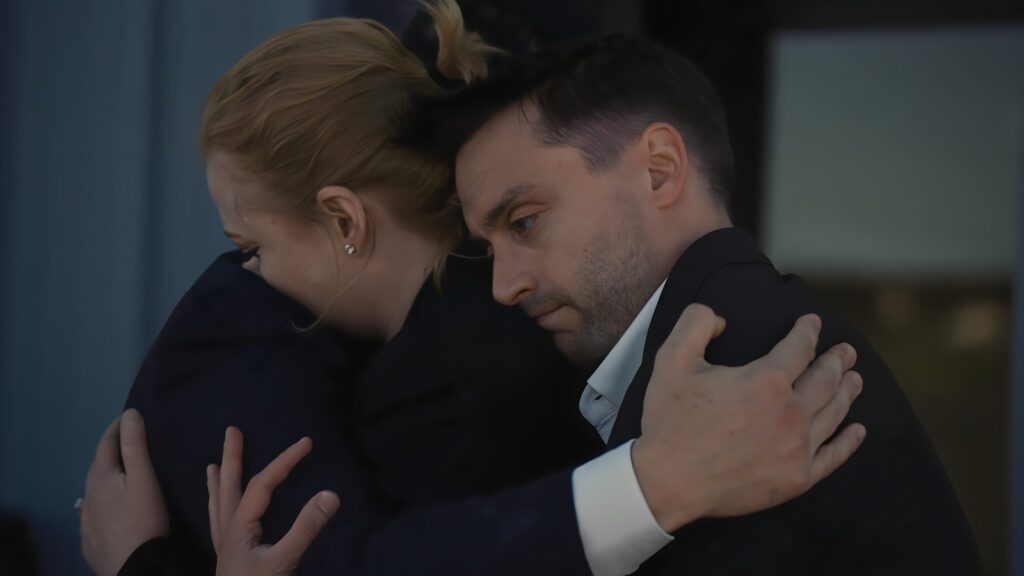
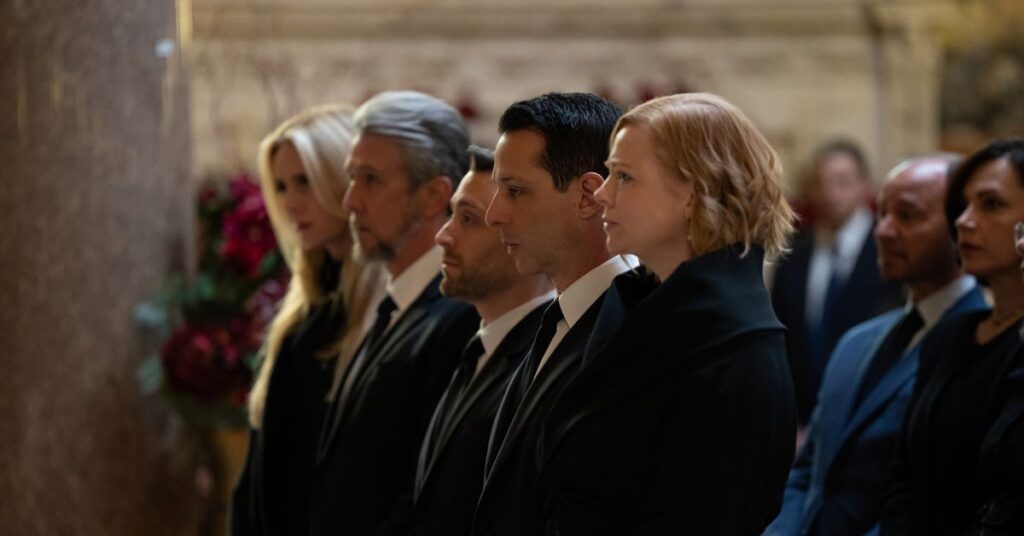
All 4 siblings are seen together at Connor’s wedding. However, each is informed about their father’s passing in turns and given an opportunity to, in their own way, say their piece, make amends and bid him goodbye, except Connor. The viewer is made to experience the event from the perspective of primarily Kendall, Shiv and Roman, the “rightful successors”, who’ve been central to the conflict with Logan in the whole series.
First is Roman who deeply cares for his father but tends to hide behind filthy humour and perhaps even self-harm, begins by reassuring Logan of being a good father before he breaks down into tears.
Then is Kendall, who is a rebel without a cause constantly butting heads with his dad to prove his self-worth. His last words to Logan reflect his conflicting emotions of love and resentment.
Followed by Shiv, a daughter simply reacting against her father out of spite even though she inherently finds comfort, warmth, and protection in his presence. And then there’s was Connor
The entire sequence is basically a summary of their respective relationship and conflict with him, and the fact that they ultimately just sought his validation and approval.
But did it feel odd that we, the viewer, didn’t get to see Logan’s face while he was collapsed on the aircraft? We heard Tom describing the events and activities to the Roy siblings, and we saw a staff member doing chest compressions. But at no point do we see Logan’s face.
In that moment, the viewer was reduced to a state similar to that of the Roy kids, feeling the same sense of denial, panic, helplessness, grief, and gut-wrenching loss.
Just like Kendall, Shiv and Roman, we too are robbed of any chance of seeing or communicating with Logan ever again. We too are left with the distress of processing death of a parent. Hence, feeling sympathy for the kids.
The viewer has to learn to cope with this devastating turn of events, just like every character in the series.
Even in the later episodes, only Connor visits Logan’s body which is not revealed to us or witnessed by any other character. Once again, showing the narrative from the POV of Roman, Kendall and Shiv.
It’s one of the greatest episodes I’ve ever seen that makes the audience a part of this world.
The biggest curse for a filmmaker is to be tagged for a style/school of filmmaking. Rajkumar Hirani has finally hit saturation. The phase where your legacy becomes your personal prison.
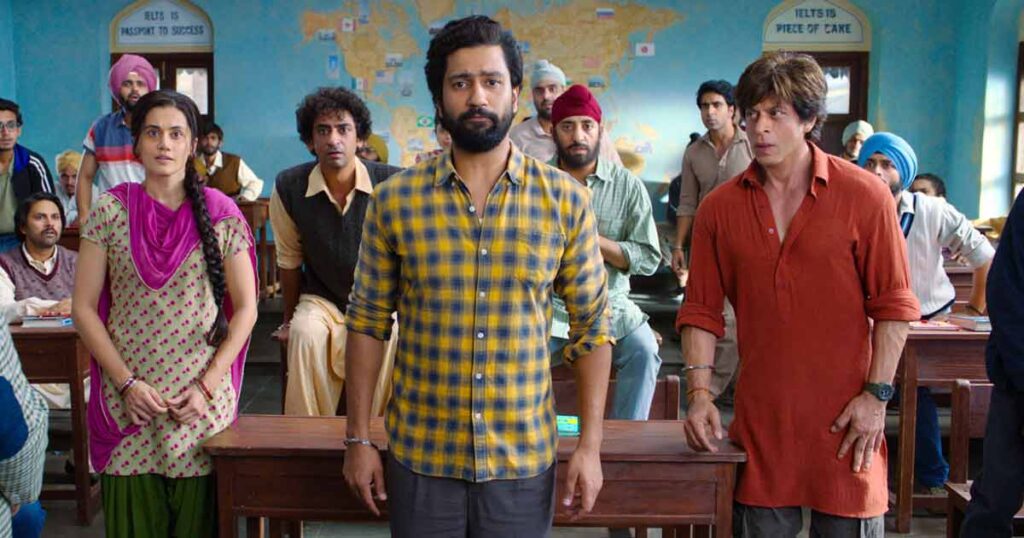
With Dunki, Hirani flaps his wings and tries to scape new skies of storytelling, to an audience still fixated to his old world. Resulting in an involvement dip in the viewing experience.
The viewer is there to watch “The Hirani Film” – an imaginary blueprint of storytelling defined by two facets – comedy and messaging. Thus, making the film an afterthought in its own preserve, a bystander in its own victory parade.
In this age of dilapidated discourse, Dunki is never given a chance to dissuade it’s detractors. Somehow, the biggest talking point excluded from the discussion is the film itself. Nobody is concerned about the film but Shah Rukh’s hattrick, Hirani’s style and all other optics that doesn’t and shouldn’t matter to either critics or audiences.
Dunki is a good film dwarfed from greatness by its dated humor and uneven pace.
Hirani and Abhijat Joshi have attempted to let their storytelling flair evolve. This isn’t their archetype toon-turns-to-film tomfoolery outing but a rather try out at a slightly more grave, sprightly style of storytelling.
And with the addition of Kanika Dhiilon to the writing crew, the trio seems to get into groove slowly. This is a new writing team with completely different sensibilities from the one that gave us our mass sweetheart Munnabhai.
What this trio falters in is building a coherent and clear universe.
Every story rests on the bedrock of what? Why? How? And occasionally to spice things up, a where? The why in Dunki is never fully addressed.
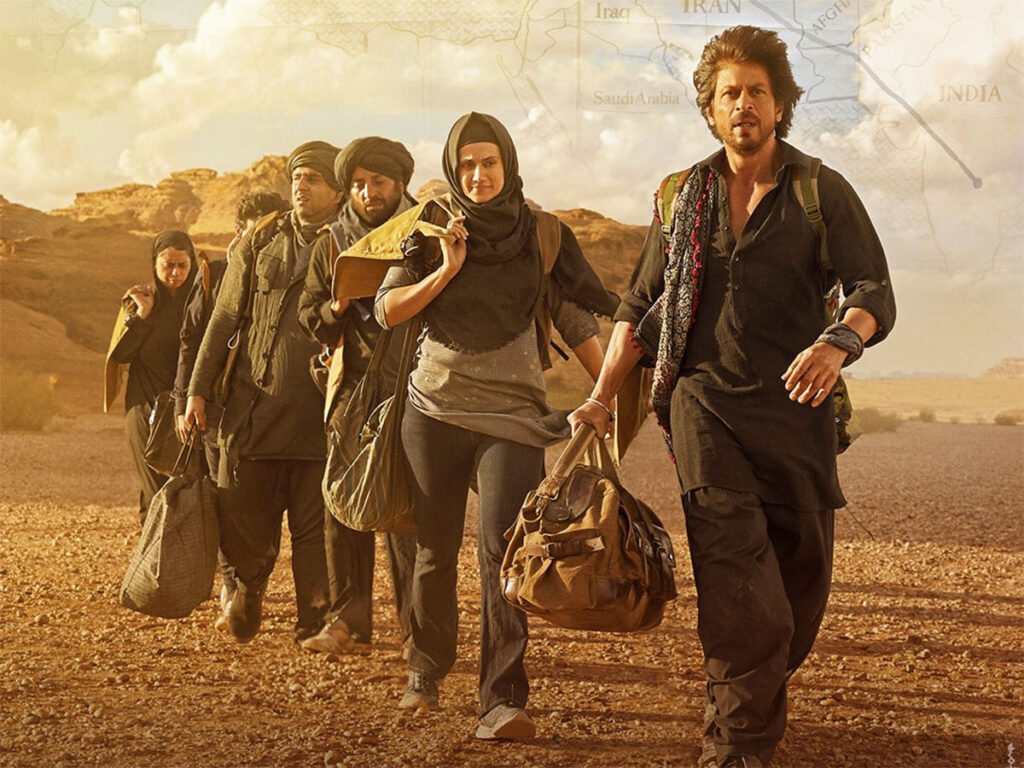
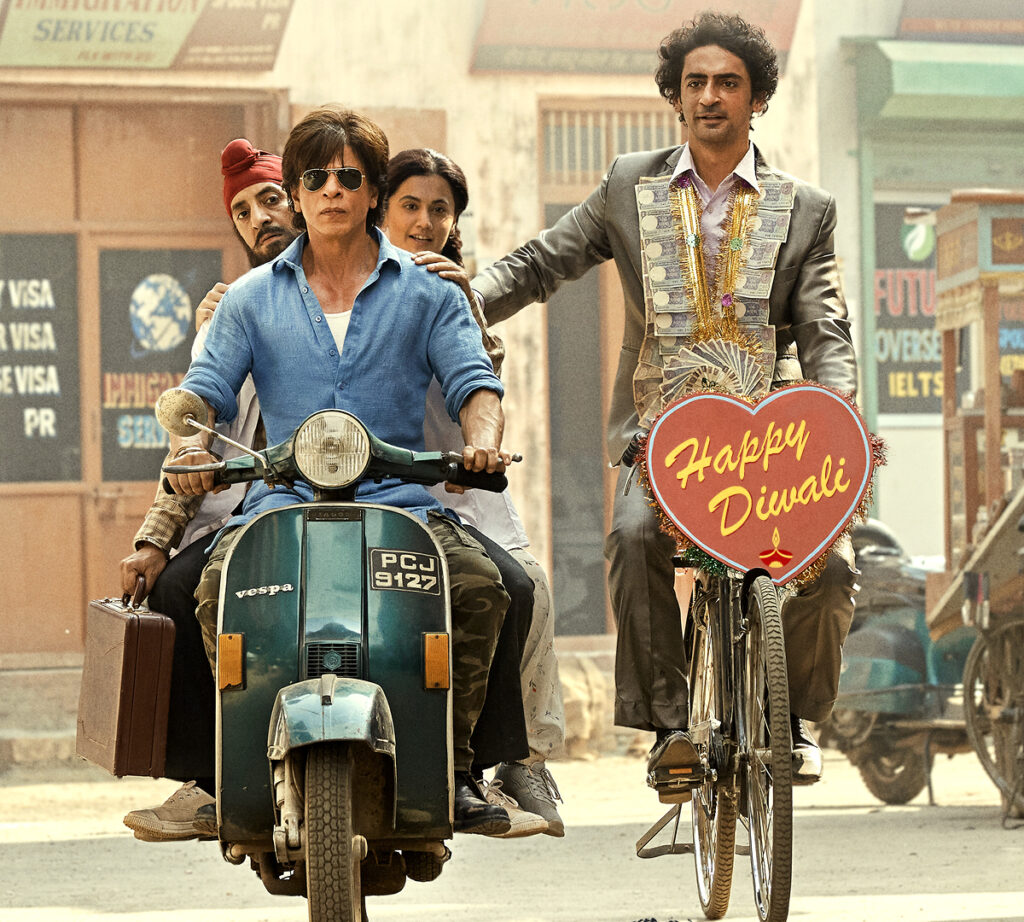
The four hopeful musketeers want to relocate abroad but their motivations are never clearly defined or understood. A story placed in the 90s, UK couldn’t be the only hopeful hand for fetching greener pastures. The backdrop, core of these characters aren’t thought through and forced into acclimatisation through sloppy humour.
With not much emotional precedence at stake, the eventual thrill-ride doesn’t really enthuse the viewer to invest a pound of emotion or response either.
Reasons why solely Vicky Kaushal’s character has been raking in rave reviews for its backstory isn’t meddled down by comedy or needless jocular treatment. His portrayal, while bearing it’s own light hearted and faint footed moments, isn’t as caricaturish as the rest.
Hence you feel a stab when his chapter concludes. But couldn’t care less. For the uneven pace of the film lags in depth and rushes in width. The narrative has a inherent hurry to hop to the next moment.Alike an excited child amping to unveil all presents at once.
Which brings us to the central flaw.
The “DUNKI” itself is rushed and clogged.
The whole migration diatribe doesn’t exert enough unrest to latch onto your nerves. Losses don’t count, deaths don’t matter seconds later. All the pace and long run up to eventually deliver a half volley.
See, Hirani’s body of work mostly consists of character driven films. This is his first plot driven affair where he tries to blend the patented “Raju Hirani” old world charm with a new world gaze. And that just works in parts. The tactic of resolving pressure situations with comedy doesn’t really help the cause here.
The filmmaker’s tried, tested and triumphant trope of injecting the protagonist into a grim and shaky world as a resolute external force, a saviour lacks impetus as Shah Rukh Khan’s character is not author-backed enough.
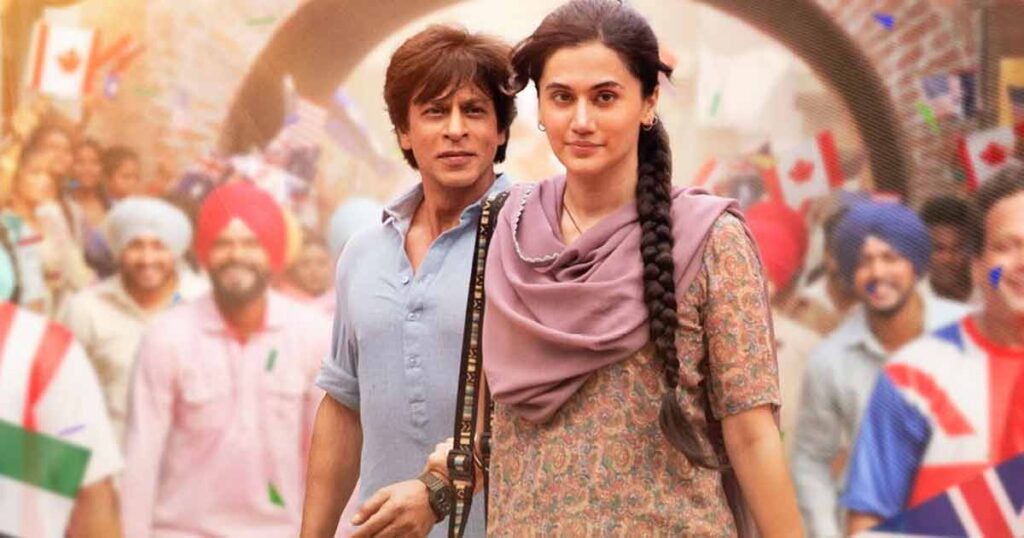
The angel from nowhere shtick has worn out and run out of it’s novelty period. I would however like to see more of Tapsee Pannu and SRK together, perhaps in a full fledged comedy or romance movie for it is their sincerity and prowess the saves Dunki from being a dud.
Dunki is a victim of it’s own hype. Hirani is that one class topper, first bencher you don’t expect to flunk. Forget flunk, even a moderate score for him is akin to a failure.
When Virat Kohli had conditioned the nation to him scoring centuries every other sunrise, even his 50s and 60s made him look out of touch.
SRK, Hirani, Kohli, these are folks whose 10% equals rest of the industry’s 90%. So them not going bonkers seems a bit meh and morose but doesn’t make their outing a failed crusade.
If films like Jawan, Pathaan and Gadar 2 are considered good films in today’s climate, Dunki too deserves it’s own standing. For the stigma that only upbeat, pulsating action will work on big screens is slowly robbing the audiences of variety.
Dunki could’ve been another HiraniHeera if written better but has to settle as a good, one time watch. Atleast Hirani falters by trying something new and not succumbing to his stereotypes. Making Dunki the bullet that Rajkumar Hirani bit to initiate change in his course.
Funny, how a story about homesickness and homecoming now warrants the maker to find a new home, a new voice and a new Rajkumar Hirani universe. And it’s just a matter of time.
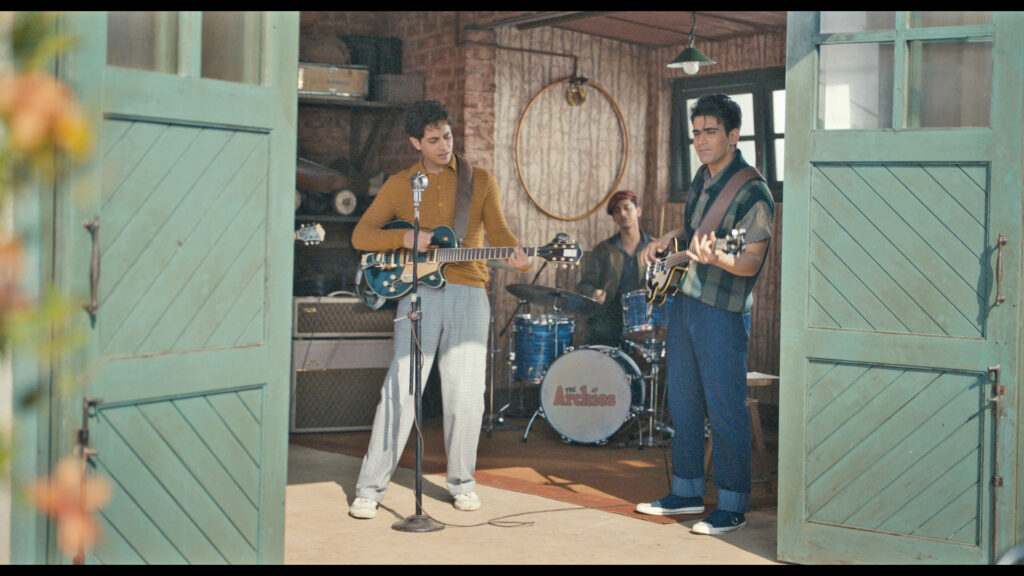
Directed by Zoya Akhtar, The Archies is undoubtedly a dream project made with immense love, care and loads of passion.
However, it doesn’t quite live up to the filmmaker’s brand of storytelling. It’s fresh and imaginative, but also dull. It’s subtle and breezy, but also soporific. It’s inspired, but also lackadaisical.
Adapted from the popular American comic book series Archie Comics, the film follows the lives of a young group of friends navigating through some teenage and some “grown-up” troubles.
Set in post-independent India in a fictional city called Riverdale, The Archies welcomes us into world developed by Anglo-Indians filled with love and harmony. The vibrant community is rich in culture, social responsibility, and sustainability.
And this is where the film struggles to find a fine balance between developing a great concept and delivering it in a fresh and nuanced package.
At first, what seems like a typical teenage musical film about childish love triangles and friendship drama in a happy-go-lucky small town, soon takes a strong turn to highlight some essential social issues worthy of debate. But not soon enough.
There are themes of social responsibility, nature preservation, the power of free press and democracy and even a perceptive song about everything driven by politics.
But most of it falls flat due to the lacklustre pacing of the film, especially in the first half and the overly restrained performance which doesn’t do much to provoke any urgency or interest.
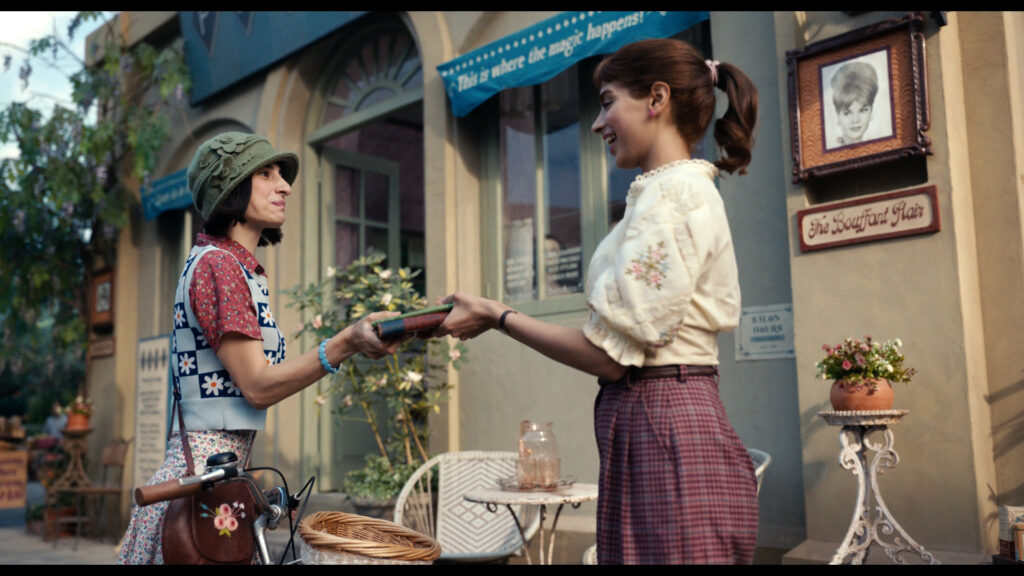
Credit where credit’s due: the attention to detail with all the technicalities carefully crafted to build Riverdale in the mid-90s is the real showstopper. From production design to costumes, from styling to choreography, and simple dialogues – it immediately makes the viewer familiar with the world.
Releasing a film like The Archies on Netflix for home viewing was certainly a good idea as it doesn’t offer the conventional “theatrical” zing. However, that does come with the disadvantage of convenience where viewers may be tempted to pause or switch off too soon. I was certainly guilty of that.
The Archies seems to be a fun experiment that perhaps would’ve worked better as a short series, or a live theatre show but doesn’t quite have the “va va voom” for a feature film.
We all have an evil within. The difference is extent, not the kind.
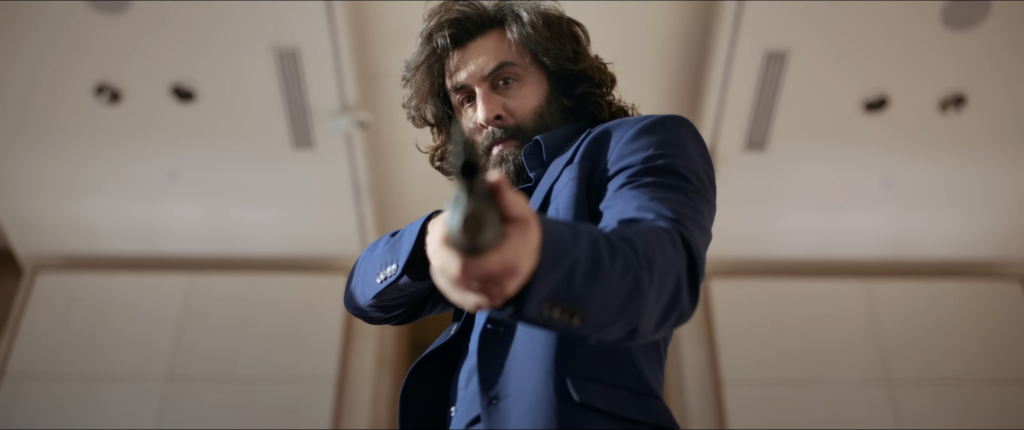
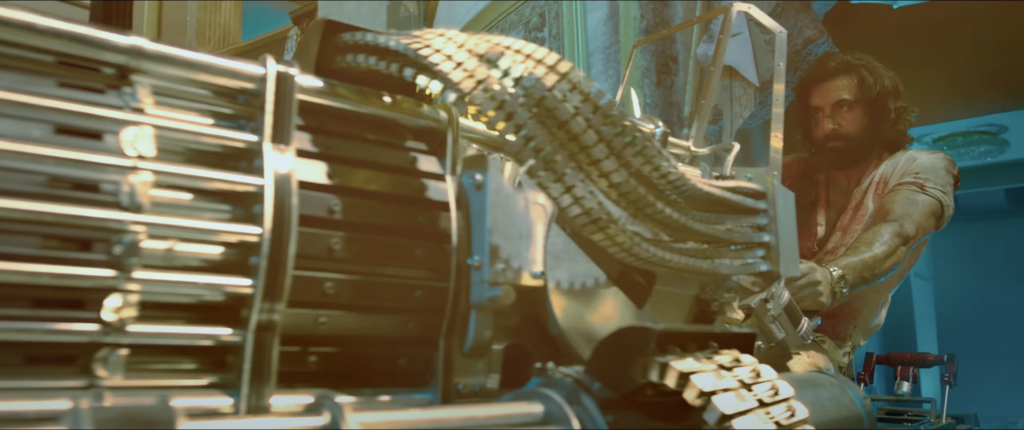
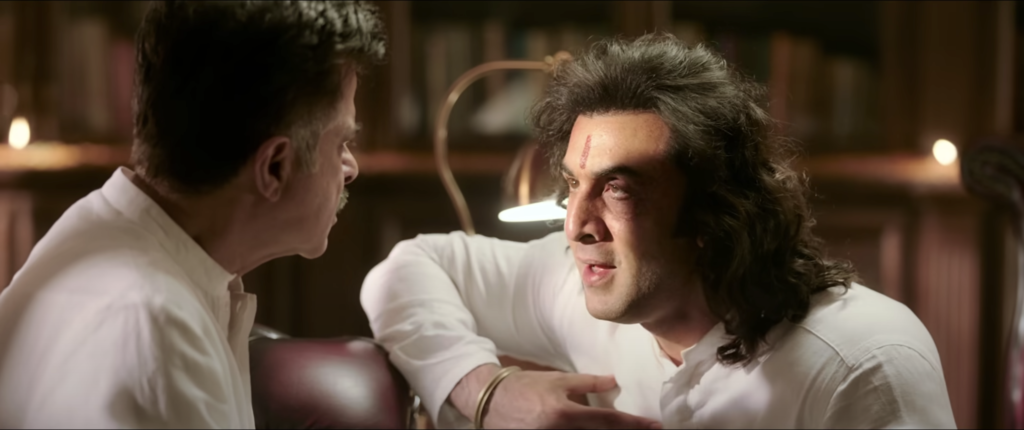
Animal by Sandeep Reddy Vanga is a derby of all things evil. A dry universe where everyone is like broken glass; clear yet edgy. In it, Ranbir Kapoor plays the spoilt brat of a billionaire industrialist, inches of mental equilibrium-short of being the heir apparent.
An openly dysfunctional family, their backdrop is the recipe for conspiracies of the combustible kind.
Yes, the film is presented as a father-son tough love saga but in the grander schemes of things, it doesn’t matter. We’ll come back to this is in a minute.
Every filmmaker has a prerogative of making films. Vanga’s latest Animal is a statement made to critics and detractors alike who dismissed his last outing Kabir Singh and it’s polarizing values. Here Vanga is more invested in baffling his self assigned opposition with an action spectacle rather than nosediving into the meat of the conflict.
Vanga seems to have no plans of winning hearts but crushing them with a blade-laden roadroller. Hence, rather than being a saga of the most underrated and complicated relationship in the world of a father and son, Animal becomes 3 hrs+ long crusade of revenge porn.
It is a world of heightened drama, where emotions are tuned up to twenty. Girl falls for the guy who makes hard passes at her, they make the rare decision of kissing each other at peak of disagreement. The romance here is steamy, compassionate and cranky like a evening person woken up at dawn.
But what the audience fails to comprehend is the nature of communication of such films. When Vanga or any maker present a troubled character like Kabir Singh or this, the undercurrent, outlook or the message is to not be inspired or be one. The unsaid advice is that this is what you shouldn’t be.
Films like Animal are a warning, not a guide.
Moments of a character calling it a man’s world, physically abusing a woman doesn’t normalise but rather warn the audience.
For Animal at no point empathises with its protagonist. Every new conflict is a facepalm of self, advocating further why the protagonist’s skewed worldview is a bigger nemesis than the nute nomad lurking around the rafters with gunmen and a kitchen knife. The writing is on the wall.
The film is titled Animal because the character is not be idolised but to be loathed upon. Films as such thrive on the audiences condoning the acts of the protagonist. For every lead character doesn’t need to be the download of a saint but the reflection of an average, vulnerable human sitting either next to us or within.
Whenever films are made on themes and outlooks as wicked and contentious, the ideal approach is to accept them as warnings and not user manuals of life guides.
The space where Animal completely falls apart is in understanding it’s core. Never through the film does one empathize for the father-son duo as there’s no emotional investment staked into their arc. Vanga doesn’t seem keen on providing any food for thought on a broken relationship and it’s repercussions. He rather uses it as a licence, a gate-pass for toxicity and acidic behaviour for his prime intent appears to be creating impact and intensity with the gore and bloodshed at disposal.
This is not a film that internalises pain or acknowledges the grief sprouting out of it. But rather an exaggeration of the most self defeating response to pain – revenge. And with no high ferocity of emotions involved, you submit yourselves to the one peg that Vanga aces in, throughout the film. Violence.
Sandeep Reddy Vanga treats his film like a prime time news debate. Pitting two forces against each other, speaking for or at the powers above and making them yell at each other without saying much. For that’s where you stop using rational. Cos when we get angry or emotional, the first thing we do is stop thinking. And when you stop thinking, you start feeling things.
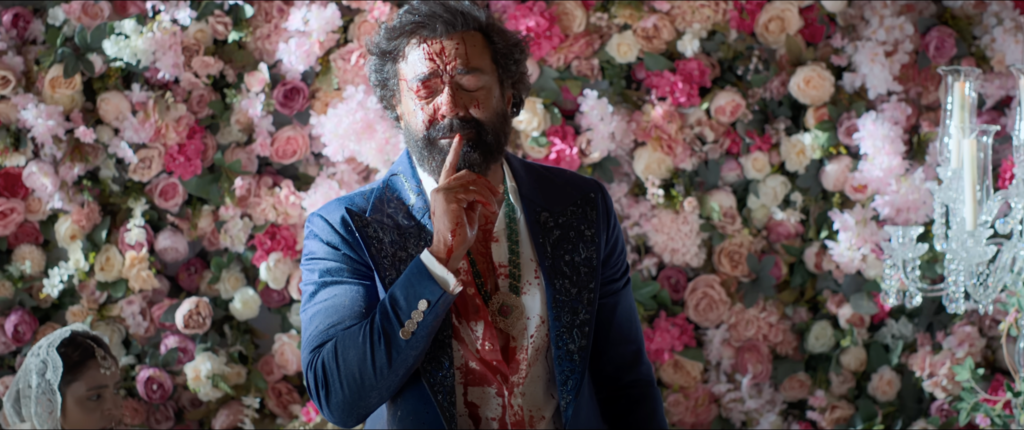
Vanga doesn’t want you to think how gunmen roam freely around Delhi -NCR but wants you to feel the wrath of an unhinged brat grow into a self-destructive monster. And just like a prime time news debate, he keeps the most vital contributor of movie, Bobby Deol’s Abrar Haque on mute. An extended cameo, a sacrificial lamb of a character used as the foundation for possibilities of a franchise.
The problem with modern day discourse is the evasion and complete bypass of the concept of discretion.
Just like watching pornographic content doesn’t turn one into a sex offender or consuming content on killers doesn’t inspire one to turn into a criminal, watching the story of a misogynist doesn’t turn one into that.
Films of these kind are given adult certificates for grown up individuals are expected to reflections and infections. The silent chuckles on the sexist dialogues and physical abuses in the film are ploys with which Vanga exposes the society in which we live today. He, with every film, promises a painting but sells a mirror.
Just for the fact that Vijay, Ranbir’s character in the film goes roughshod across continents with guns and goons followed by no legal or administrative action against him is enough to not take this film seriously and just witness the slasher drama unfold.
Animal isn’t a film about masculinity or manhood but the delusion of it. Stylised by Harshvardhan Rameshwar’s thumping BGM and Sonu Nigam’s eerily brilliant Papa Meri Jaan, the film is Vanga’s juvenile vendetta against critics and nor a sincere cinematic recital. I reiterate, films as such are warnings. Not life guides.
Amidst all the kerfuffle, Vanga, the smartest chap in the room, is laughing all the way to the bank by using the oldest trick in the societal playbook. Create a dispute, pull a crowd, make a it a ticketed affair, run thick and green to the bank. Even though it makes him the enemy #1.
Bura Jo Dekhan Main Chala, Bura Naa Milya Koye Jo Munn Khoja Apnaa, To Mujhse Bura Naa Koye.
We all have an evil within. The difference is extent, not the kind. Sandeep Reddy Vanga’s Animal doesn’t sell out to evil. But rather cashes-in.
NOTE: THE VIEWS AND OPINION EXPRESSED IN THIS ARTICLE ARE THOSE OF THE AUTHOR.
Animal is a perfect example of how to make an utterly distasteful, outrageously violent, obnoxiously regressive and illogical film for the sake of entertainment.
And that’s not even the worst part!
Films are, first and foremost, a medium of entertainment. This is where visual storytelling and crisp writing plays a key role to reshape perspectives and challenge ingrained mindsets. It can instigate empathy by inviting viewers to walk in the shoes of characters, fostering a deeper understanding of cultural nuances and relationships.
Here’s where Animal miserably falters as it lacks a coherent plotline.
The premise of the film is set from the opening scene which shows a young boy excited to wish his father, Balbir Singh (played by Anil Kapoor) on his birthday, only to be disappointed by an absent parent who’s too busy to build a successful business empire.
The teasers and trailers leading up to the film’s release indicated the crux of Animal and its protagonist, Ranvijay Singh (played by Ranbir Kapoor) to be based on an unhealthy and traumatic father-son relationship. The negligent father has left a void in his son’s heart, leading to an obsession for validation from the former.
Seems like an interesting plot, right?
However, the film barely touches upon the nuances of a toxic relationship for the viewers to justify the character’s “animalistic” actions. None of the characters are developed enough to understand their journey.
The film is a collection of incidental sequences ranging from slapstick comedy, revenge drama, gory action, and then some, stitched together haphazardly for 200 minutes.
This leads me to another disturbing and awfully problematic aspect of the film – misogyny and casual sexism.
The excessively graphic violence in the film seems more palatable than the vile and irresponsible portrayal of and attitude towards women. Much like other characters in the film, women have zero agency in Animal.
While it can be argued as a work of fiction where the purpose is to perhaps challenge the mindset of the audience, but the fact that a huge section of the audience enjoyed and cheered at the mistreatment towards women was appalling, to say the least.
Not all stories and films have to make a moral point, but they must have some vision and an intention.
What was the vision of the film Animal?
If Sandeep Reddy Vanga’s filmography is any indication, the vision and intention of the film is to create chaos, filth, and push the audience to their limits in the most hostile way.
Watching an overtly macho “alpha male” (as defined in the film as well) misbehaving with women and others, committing heinous crimes under the garb of protecting his family, playing with his big boy toys, and creating havoc without any remorse or consequence is sadly received with immense admiration at the cinemas.
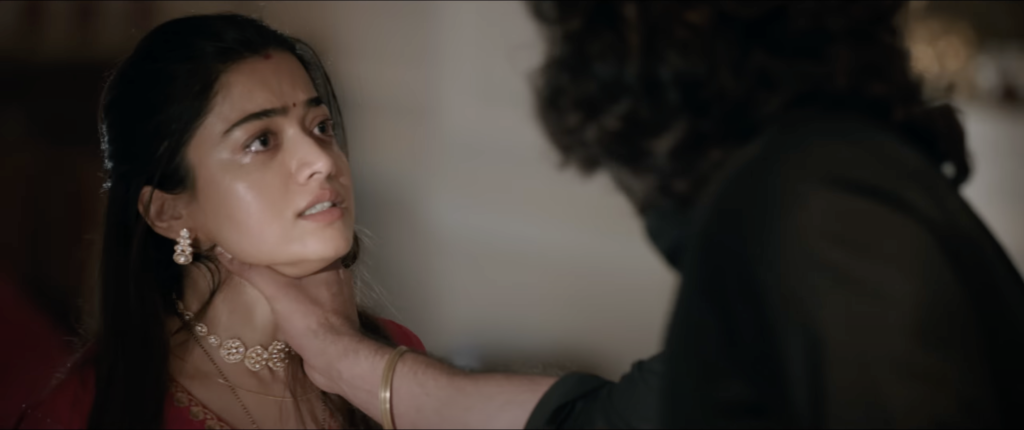
One such sequence is a prime example of careless storytelling when the audience chuckled at Ranvijay’s comment to slap his wife Geetanjali (played by Rashmika Mandanna) for being too controlling, but the same audience gasped when she slaps him.
Is it mirroring society? Perhaps. Is it responsible storytelling? No. Was it entertaining? Also NO.
No amount of acting chops, directional prowess and skilfully crafted action sequences justifies making an eye-gouging film like Animal.
The half-baked story, choppy writing and shoddy editing not only makes it unbelievable but also an unbearable watch. It’s all show, no substance.
I’ve never wanted to walk out of a movie theatre faster.