Stories

THE ROYAL SHAKESPEARE COMPANY’S THE EMPRESS TRANSFERS TO THE LYRIC HAMMERSMITH THEATRE THIS AUTUMN

This autumn the Royal Shakespeare Company brings their acclaimed play The Empress by  Lyric Hammersmith Theatre Artistic Associate Tanika Gupta to the Lyric for four weeks only from 4 October.

Transferring directly from the Swan Theatre in Stratford-upon-Avon and directed by Pooja Ghai, Artistic Director of Tamasha, this new production of The Empress takes you from the rugged gangways of Tilbury docks to the grandeur of Queen Victoria’s Palace, whilst unveiling the long and embedded culture of British Asian history.

The Empress was written by Tanika Gupta. The production is directed by Pooja Ghai with Design  by Rosa Maggiora. Lighting is by Matt Haskins, Music and Sound by Ben and Max Ringham, Movement by Wayne Parsons, Dramaturgy by Pippa Hill, Fights and Intimacy by Rachel Bown- Williams and Ruth Cooper-Brown, and Casting by Matthew Dewsbury CDG and Martin Poile.

Rachel O’Riordan, Artistic Director of the Lyric Hammersmith Theatre said: “We’re so excited to be welcoming the Royal Shakespeare Company’s production of The Empress by our very own Artistic Associate, Tanika Gupta and directed by Pooja Ghai. This is an exciting time for West London, we are so pleased to host the RSC here in Hammersmith for this sweeping story through British Indian history.”

The Empress is another impressive play in Tanika Gupta’s ever-growing canon of work. Tanika’s acclaimed adaptation of Ibsen’s A Doll’s House opened my first season here at the Lyric in 2019. We are honoured to be the London home of this epic production that unveils the long and embedded culture of British Asian history in nineteenth century Britain and we cannot wait for audiences to see this story come to life in our beautiful Victorian Frank Matcham Theatre.”

Spanning 13 years over the ‘Golden Era’ of Empire, this story blends the experiences of Indian ayahs (nursemaids) and lascars (sailors) who worked on the ships carrying trade goods, alongside the first Indian politician to be elected as a Member of Parliament.

It is 1887, the year Queen Victoria celebrates her Golden Jubilee.

Sixteen year old Rani Das, ayah (nursemaid) to an English family arrives at Tilbury docks after a long voyage from India, to start a new life in Britain. On the boat, Rani befriends a lascar (sailor), Dadabhai Naoroji, an Indian politician, and Abdul Karim, a royal servant destined to serve the Queen. Full of hopes and dreams of what lies ahead, they each embark on an extraordinary journey. 

Will their expectations come true or will they have to forge a different path in their new country?

Tanya Katyal plays Rani Das. Her theatre credits include When Mountains Meet at Cottiers Theatre, Glasgow. Television credits include Netflix’s Eternally Confused and Eager for Love.

Raj Bajaj plays Abdul Karim. Raj’s previous RSC credits include Tamburlaine, Tartuffe and Much Ado About Nothing. Other recent theatre credits include Wildfire Road (Sheffield Crucible), Tartuffe (Birmingham Rep), Hobson’s Choice (Royal Exchange Manchester), Rapunzel (Stratford East), Lions & Tigers, The Merchant of Venice (Shakespeare’s Globe), East is East (Northern Stage/Nottingham Playhouse) and Bend It Like Beckham (Phoenix Theatre).

Alexandra Gilbreath plays Queen Victoria. She is an Associate Artist of the Royal Shakespeare Company, where her credits include; The Provoked Wife, The Rover, Shakespeare Live!, A Midsummer Night’s Dreaming, The Merry Wives of Windsor, Twelfth Night for which she received an Olivier award nomination-for Best Supporting Actress, Merry Wives – The Musical, The Taming of the Shrew, The Tamer Tamed, As You Like It, Romeo and Juliet, The Winter’s Tale, Cyrano de Bergerac, Ghosts, The Country Wife, Love’s Labour’s Lost. Other theatre includes; The Sugar Syndrome at the Orange Tree; The Fever Syndrome, Mother Christmas at Hampstead Theatre Downstairs; The Lie at Menier Chocolate Factory; Dessert at Southwark Playhouse; The Wars of the Roses, Hayfever at the Rose Kingston; The Invisibles at the Bush; A Midsummer Night’s Dream for Hong Kong Philharmonic; The Village Bike, Disappeared at the Royal Court; Shallow Slumber, God’s Dice at Soho Theatre; Othello at Sheffield Crucible; and Playhouse Creatures at Chichester Festival Theatre.

Screen credits include; Becoming Elizabeth, EastEnders, Father Brown, Casualty, WPC56, In Search of Shakespeare, Rites of Passage, Inspector George Gently, The Commander, The Waltz King, Happiness, The Project, Trial and Retribution, Midsomer Murders, Absolute Power, Life Begins, The Bill, Monarch of the Glen, Out of Hours, A Wing and a Prayer, The Art of Love, Lair, Warhol, Dead Babies, The All Together, A Hundred Streets and Tulip Fever.

Completing the company are: Francesca Faridany (Lady Sarah), Aaron Gill (Hari), Anyebe Godwin (Serang/Lascar), Miriam Grace Edwards (Charlotte/Susan), Oliver Hembrough (Lord John Oakham/William/Painter), Avita Jay (Firoza), Tom Milligan (Freddie/Ensemble), Sarah Moyle (Mary/Susan Matthews), Chris Nayak (Jinnah/Singh), Lauren Patel (Ruby/Asha), Simon Rivers (Dadabhai Naoroji), Anish Roy (Gandhi/Lascar), Nicola Stephenson (Lascar Sally), Premi Tamang (Lascar/Ayah), and Joe Usher (Lascar).

Tanika Gupta has written over 25 stage plays that have been produced in major theatres across the UK. Her critically acclaimed adaptation of Ibsen’s A Doll’s House set in colonial Calcutta launched Rachel O’Riordan’s first season as Artistic Director of the Lyric in 2019. She was awarded an MBE for Services to Drama and is a Fellow of the Royal Society of Literature. She is an Artistic Associate at the Lyric and was recently announced as one of two    new Writers in Residence at the Bush Theatre in 2023.

Pooja Ghai is Artistic Director of Tamasha, and artistic associate at Kali. Prior to this she was Associate Director at Theatre Royal Stratford East. Her most recent directing credits include Hakawatis and Lions and Tigers at the Sam Wanamaker Playhouse; Lotus Beauty at Hampstead Theatre; Seriously Annoying by Mark Thomas for Tin Cat Productions, 2020 at Tara Theatre, Approaching Empty at the Kiln (Tamasha/Kiln/Live Theatre) and Rapunzel, Counting Stars and House of in Between at Theatre Royal Stratford East. Awards include Best Director for Lions and Tigers at the Eastern Eye Arts, Culture and Theatre Awards (ACTA) in 2017. Pooja is a Dramaturg for Voxed, Meeting, Out Late, Vestige and It’s Not Me.

The playtext was recently added to the GCSE drama syllabus following a campaign aided by participation from the RSC’s Youth Advisory Board and is now one of four new plays by writers of the global majority to better reflect the diversity of playwriting in the UK. The text was introduced by AQA in 2022, the largest examination board in England. Tanika’s 2019 production of A Doll’s House was previously added to the national curriculum by Pearson in 2021 alongside works by Bola AgbajeIn-Sook Chappell and Roy Williams.

YOUNG LYRIC

In response to The EmpressYoung Lyric will create a series of teacher CPD sessions for secondary schools across West London which examines Gupta’s text and curriculum links. The production will be accompanied with a complimentary teacher’s guide exploring The Empress as a set text on the AQA Drama curriculum, this guide will be created in collaboration with RSC Education.
Have you heard the new title track from ‘Fukrey 3’?

The cheerful and upbeat song “Ve Fukrey” from the movie Fukrey 3 is out now. The actors
from the film, including Pulkit Samrat, Varun Sharma, Manjot Singh and Pankaj Tripathi,
are featured in the song, sung by Dev Negi and Asees Kaur and choreographed by Bosco
Martis.

Tanishk Bagchi has composed the soundtrack of the film with lyrics of “Ve Fukrey”
by Shabbir Ahmed.

Fukrey 3 has an ensemble cast, where Pulkit Samrat, Varun Sharma, Manjot Singh, Richa
Chadha, and Pankaj Tripathi return in their previous roles, as is the third instalment of the
renowned Fukrey series.

The previous Fukrey soundtrack had Sona Mohapatra’s rendition of the song Ambarsariya, which became an instant smash.

Excel Entertainment production presents Fukrey 3, produced by Ritesh Sidhwani and
Farhan Akhtar, co-produced by Kassim Jagmagia and will hit the silver screen on 28th
September, 2023.

Watch the trailer for Fukrey 3 here:

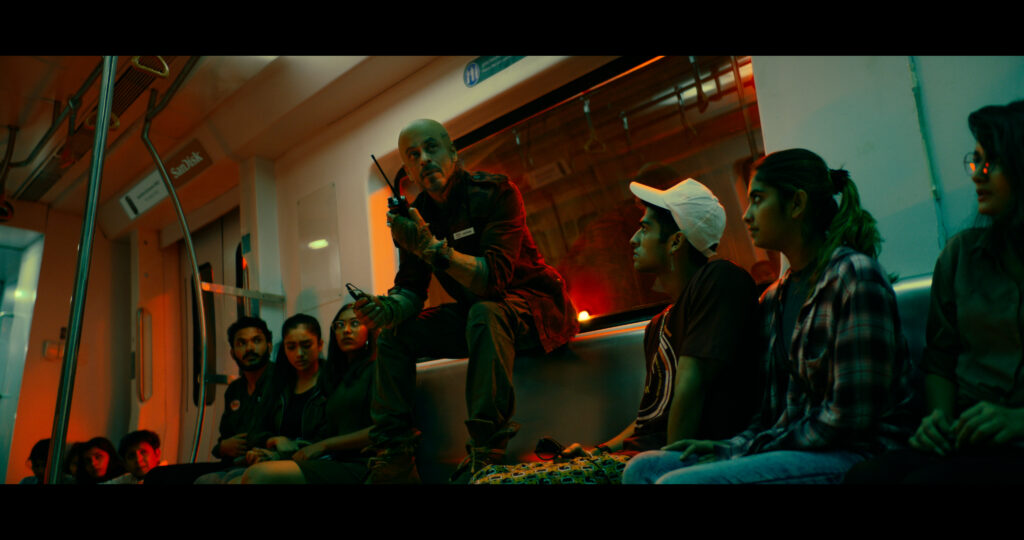
A social redemption story perched atop the reliable shoulders of vigilante drama, ‘Jawan’ is pulsating from the word go

This man revives the industry. This man disrupts the industry. This. Man. Is. The. Industry. 

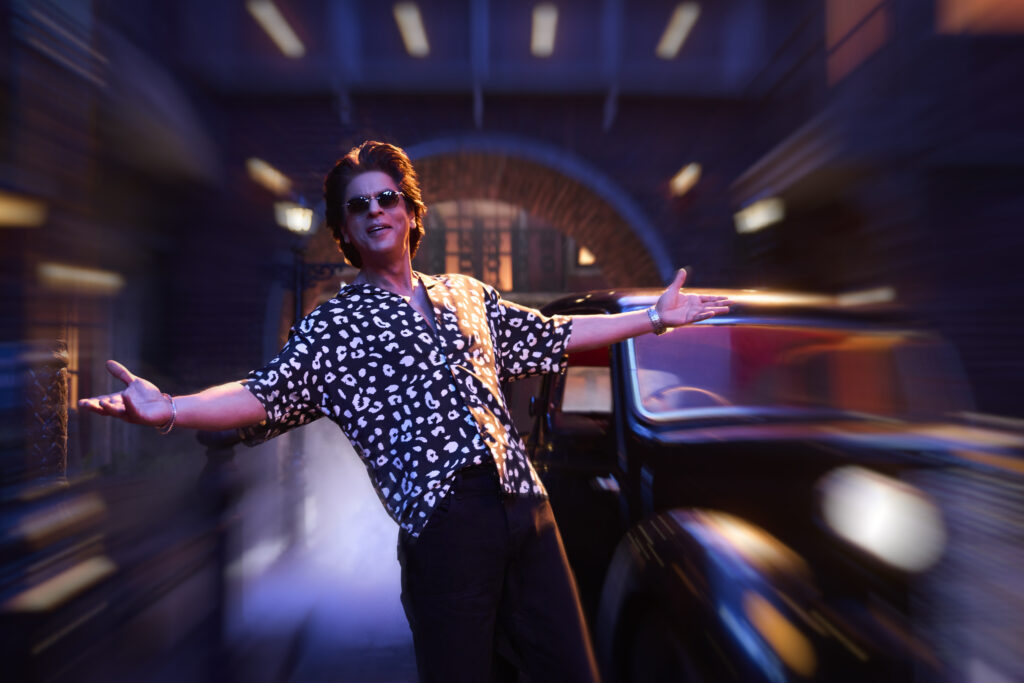
Now that I’ve got my fandom out of the way, let’s try understanding Jawan. Shah Rukh Khan’s latest nationwide house party. 

Note – I’ll not be talking about Shah Rukh Khan’s performance here as that will be a separate, forthcoming standalone article. 

You can’t term it otherwise. Shah Rukh Khan’s fanbase has transcended the realms of being a mere legion. It is so well connected, not just virtually but on an emotional plane too that it could be considered a nationwide inner sanctum at least if not a family. 

While it could’ve been fairly easy for Red Chillies Entertainment and Atlee to deliver a subpar film and play by the numbers advantage, the reward here is effort. To tell a story, to entertain and to create a value proposition.

Jawan mostly succeeds because it is an honest film that accepts it’s multitude of flawed facets. 

A social redemption story perched atop the reliable shoulders of vigilante drama, Jawan is pulsating from the word go.

Unleashed to deafening roars, the film sets off onto it’s course of rabid action pieces and rapid swerves. The lead in to all songs is visibly gimmicky and the treatment demands you to suspend disbelief, what saves the film is Atlee’s conviction.

Every frame is designed principally with elan, no matter how far fetched. Atlee’s confidence and earnest will to hold his audiences’ attention anyhow becomes rewarding as he owns the shortcomings of his film by tuning up its entertainment to levels that you’re too overwhelmed and content to complain.

A certain set piece looks over the top? There’s suddenly another action piece or entry that pulls a whistle out of your wind pipe like local train TCs pull out commuters without tickets. 

Jawan, on a mood plan front, feels like steroids are on steroids. Take prime Undertaker from WWE and put him on crack. That’s SRK in every frame, that IS every frame in Jawan.

Even though not author-backed, the women in Jawan have a lot to chew on. They represent all they key arcs and development of the story but fall victim to the edit job which has to fit all the high octane material along with some very mid and needless songs.

The soundtrack is a heavy downer. Zinda Banda needed a better singer. Chaleya is fine but not an unforgettable track. Faratta wasn’t needed. Catering to commerce, galleries and a bit of research makes it lag in places led by its disappointing album score. But equally redeeming is it’s thumping background score. Timed and tuned to perfection, the BGM is the final character of this film that enhances the experience. But the minor gripe remains.

Music cost the film some valuable screen time that was butchered in some key moments like the confrontation or the comeuppance craving climax. 

Deepika Padukone is a natural. She has earned the right to have her own action franchises. Note the plural.

She takes this extended cameo and outshines everyone in the film. Even Khan to some extent.

Nayanthara has always been an actor who reads the room like a ninja. And here she knows her job is to complement Khan as an equal, oft rival and she succeeds in both.

It is a delight to watch Priyamani every time. Flawless, she is for all the meat that is provided to her.

Sanya Malhotra seems to have made a career out of turning roles without meat into pivotal characters of the films. Her performance in Jawan is a classic case of turning chicken shite into chicken salad – proving that for great actors even a single sequence is enough to smash it out of the park.

The only bummer though is the lack of female involvement in the climactic fights. Noting how some of the most exhilarating reactions in theatres all over were when the ladies kicked ass, the heavy lifting should have been shared equally too.

Nevertheless, this is a step taken in the right direction. Ladies in Jawan aren’t damsels in distress. They are legit ass-kicking machines. 

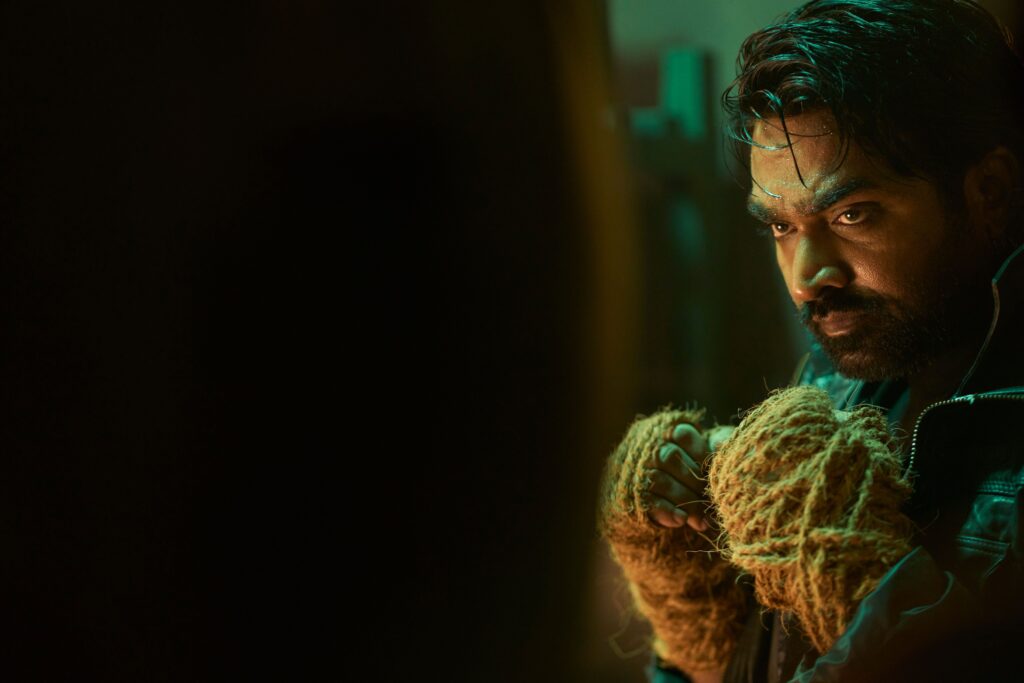
Vijay Sethupathi. Acts with his forehead. Kills with his gaze. Doesn’t even bat an eyelid, for real. By now he has aced the menacing goon to an extent that he could play such roles in his sleep.

The accented Hindi just adds to his portrayal of the Diabolical Kalee Gaekwad. An arms dealer who dupes his own nation is the perfect foil to elicit the apt nationalistic emotions and enthuse one to rally for the avenging hero.

But it is not merely the nationalism of Jawan that works well but also the perfect balance of desire and defiance. The film unapologetically makes very strong and fair political statements antidotal for a multilingual, free spirited, liberal, bohemian and welcoming country that India is originally known to be.

In a move that only he can, Shah Rukh goes meta while addressing the people in the film’s universe and and outside it with a plea that most of us want to put forth in this day of dilapidated discourse. Jawan is an anti-eshtablishment, socially aware film that rechristens the angry young man character for a newer generation. The results are heartwarming. The right kinda India represented by its favourite Hero. 

Jawan is what the current gen would call wholesome, the previous generation would call reformatory and our generation would call Humne toh bola hi tha SRK phod dega. 

Of heartstopping entry scenes, machismo and madness, the film is neither a cinematic marvel nor a thespian’s treasure. It is the celebration of that one thread that binds the nation together – Shah Rukh Khan. 

The film has its heart in the right place.

Punya hai ya paap hai. Jawan definitely box office ka baap hai! 

India evolves with Shah Rukh Khan – Immune to payoffs, attuned to love

Interesting times to be a Shah Rukh Khan fan.

In a world transforming exponentially for the debatably better or worse, the great reset of the entertainment space has led things back to square one. A one-man show with Khan atop.

So how did the giant wheel of time avert all incoming diversions and run back to status quo? And how did the biggest possible legion in the world evolve without turning one darn stone? Let’s dive in and try decrypting.

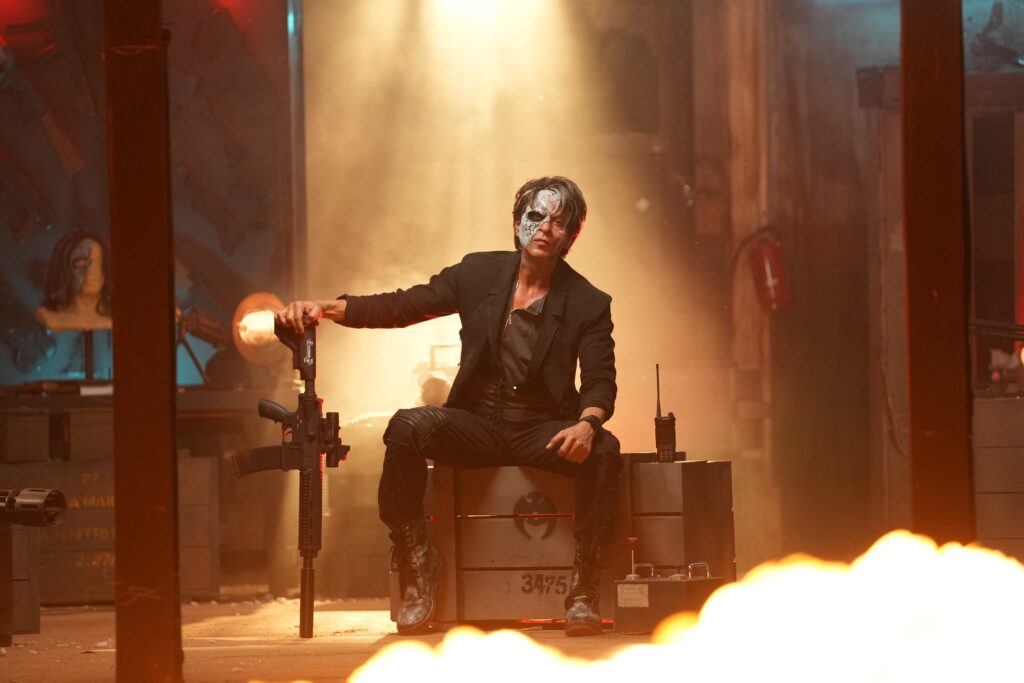
Still from Jawan

Shah Rukh Khan’s fan base, affectionately monikered the “SRK Universe” comprises lads and lasses from all walks of life. The belief system of this clan is divided into two strict halves – blind devotion and objective rallying.

The blind devotion is a sentiment residing in the younger lot, less journeyed, fervorous more than factual, mostly the heart and soul of this brigade. The objective lot encapsulates all the folks who’ve been fanatics for decades, people for whom endorsing everything Khan does is a part of their lifestyle rather than a motif. Their goal is to get the promotional job done.

Nobody’s alien to the fact that Khan had a string of mis-hits in the decade that passed by. Whilst most of his releases recovered the costs, the wider audience base was left wanting for more.

That “more” nobody could point a finger at.

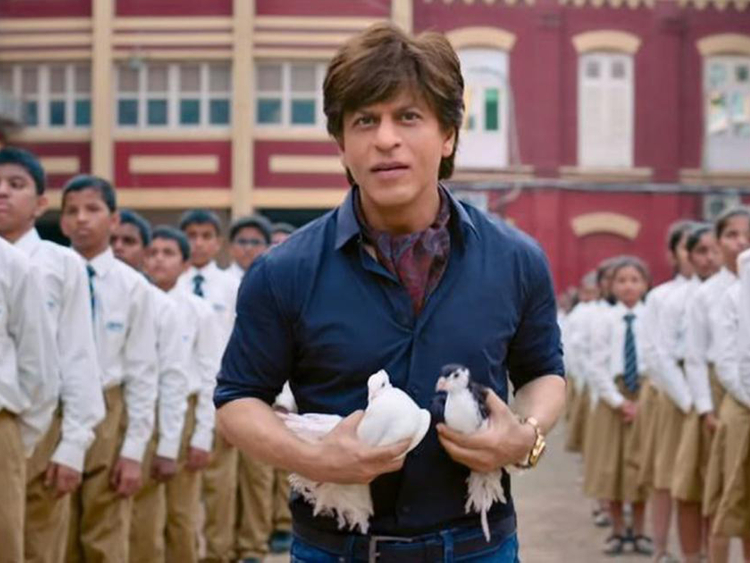
Still from Zero

Within the timeline, Khan’s passion-project Fan was panned for an overboard post-interval – no songs and his experimental outing Zero had very few takers. Nobody, not even Khan himself could decode what precisely was going amiss all these years.

Add the fact that Khan had no substantial sounding boards beyond his immediate circles, to assess the situation or be the voice of reason to clear the possibility of clouded judgement. Even his legion isn’t to blame in such a predicament. For fans, by design, are conditioned to have a bias – expected to cushion their favourite with care and empathy when the chips are down. 

To try decrypting this facet, one needs to zoom out, take a birds-eye view and glance over the general audience. The less passionate-yet more diligent movie goer. Those who might not necessarily ape Shah Rukh’s look, gait and fashion but love him as much – The Hindi film audience.

The demographic that has grown feeding off potboilers and mad-capers. To whom, Khan always seemed like that everyday man from amongst them, with a relatable and inspiring backstory that reached the pinnacle.

Chart back to Khan’s body of work through the 90s – mid 00s and you’ll trace the reflection of the evolving middle class Indian, in a stream that Khan had literally monopolised – The middle cinema.

In early 90s, he was the rebel every enterprising Indian connected with amidst rapid globalisation. Mid to late 90s he was the template Mr. Goody Two Shoes, a wholesome energy everyone either wanted to replicate or find in their close ones.

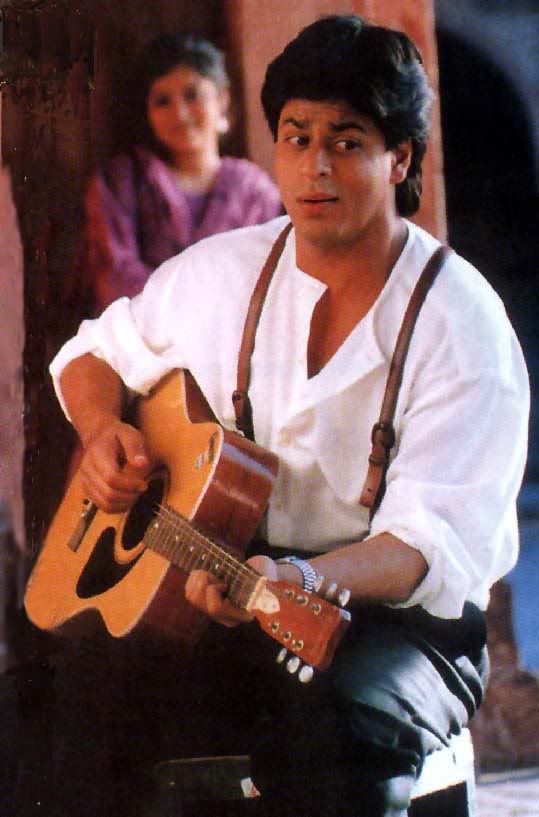
Still from Pardes

A nation traumatised for centuries by enslavement, partition and poverty, India was in a recuperative space, in dire and regular need of heroes who made the unthinkable seem attainable. It began with our freedom fighters, all the way to Kapil’s Devils igniting our hopes in sport.

An angry young man in Amitabh Bachchan represented every disgruntled Indian that raged against the machine. Across decades, the nation found it’s beacons of hope in commoners who took the plunge and disrupted the norm.

Khan’s type of disruption was more cognitive than tangible. Here was this mid looking TV actor trying to get a foot into the door with roles rejected as leftovers by bigger stars. The predicament was designed for this lanky Delhiite to fail and fizzle into obscurity.

But within the next few years, the chap was a heartthrob, the nation’s sentimental favourite. Was it his fresh take on the bad guy shtick? Or did his films disrupt the norm? Neither. It was his cocksure attitude. The testicular fortitude to bill himself better than the greatest. A demeanour that’d shape the attitude of a generation that was to follow.

Gone were the virtuous men next door. India had found the perfect foil for its time. India had found it’s antihero.

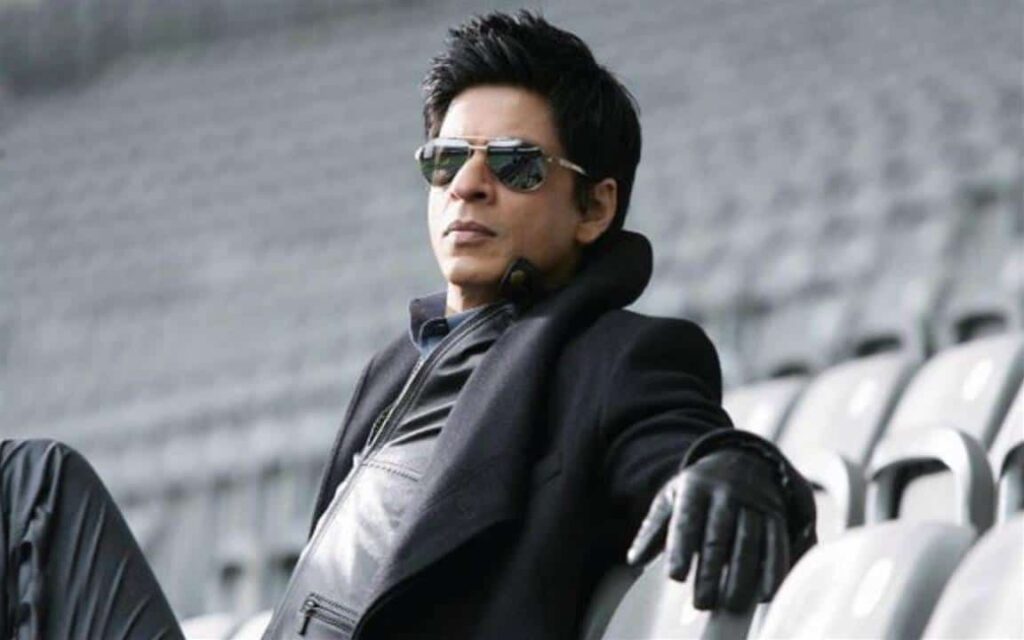
Still from Don

A cocky, upstart unabashedly taking over tombs and pillars of the establishment was the tailor-made template India enroute globalisation needed. A new hero for a brand new level of the game. Henceforth, anything Khan touched forged gold.

People rallied behind him for they wanted their favourite underdog to reach atop the food chain. His films became gospel for the youth and his ascension, a movement. The audience, within a few years were successful in anointing Shah Rukh Khan as the undisputed king of the entertainment megapolis.

The pinnacle was attained, fever pitch hit and a mission accomplished. The disruptor was now the dynasty. The invader had now become king.

This coronation was immediately followed by an inevitable polarisation. The legion was now divided into fanatics, viewers and critics. Fanatics and viewers would still crusade for every release of his with an emotional obligation to help his outings sail. The ones bereft of any solid cause to uplift the now-uplifted King gradually turned into critics.

Unable to fully relate to a ridiculously talented actor draped in fame and fortune, Khan didn’t seem like the same old, vulnerable underdog they could vouch for. Their favourite star had achieved practically everything and then some more. They sought what seemed non-existent – a challenge.

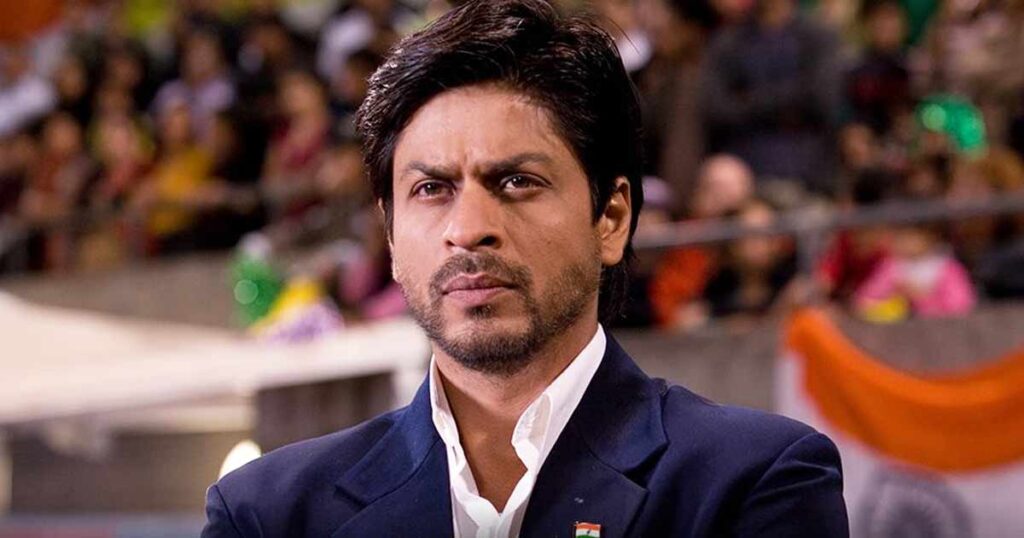
Hence rose their foolish outcry to rope more projects like Chak De! India. They wanted Khan to put something at stake, his acting chops and mettle to say the least – in an otherwise fairly easy career of a bulletproof, financially immune Superstar. Then broke the floodgates of expectations, where Khan fell short most of the times.

Still from Chak De! India

Cos for his legion – Shah Rukh Khan’s 10% = Everybody else’s 90%.

What ensued next is a flurry of disappointments despite of solid revenue spin and growing grandiose on each occasion until a global health emergency intruded and detoured Khan’s halt into a hiatus. For almost half a decade, the King went incognito.

And in these 5 years, the division of the legion – Diehards, fans and critics began dissolving. Mostly for all these folks were now growing into the most crucial and defining years of their lives.

While Khan was on his sabbatical, his fanbase went from parental guidance to being parents themselves; either kids or pets. People now in their 30s – 40s, hardened by realities of life and grappled into selflessness by their personal series of losses, for them, little and simpler things in life brought joy; glory got swapped with gratifying experiences, success became a choice and not destination.

The yearning for their long-absent star was now less for box office triumph but more for the warmth of his presence. And then, close to 5 years out, Khan was ready to return. Not without a final bump, an arm shot to his personal life where his grace and dignity outplayed all incoming vices and exemplified his character – a survivor. The one who outlives all.

Perhaps why a strictly mediocre film like Pathaan ripped the global box office into shreds. His return was a celebration for people whom he’d been inspiring for decades, obviously helped grow up into sane beings ready to give back to their unassigned mentor.

And Khan being the visionary he’s always been chose to nosedive into a trajectory where he could just have fun and let it be.

Still from Pathaan Post-Release Press Conference

A look at the Jawan prevue and his loyalists are grinning at the smartness of their hero who’s always known how to play with the market’s optics’ fascination. A man who’s tasted every media frenzy from Doordarshan to Netflix, an elusive style neither AI nor human can replicate (see actors failing to emulate the king of romance shtick in recent releases), Khan has somehow regularly managed to pioneer the media & communications space and the golden run continues.

The gall to launch Jawan‘s teaser in 4K HDR proves how confident and ready Red Chillies VFX team is with the visuals. Simply put, it’s proven, the man knows his shizz, ahead of time.

The relationship between Khan and a nationwide, oft worldwide legion has transcended the realms of success, glory, dominance and parked itself neatly in the laps of oneness. A legion and their star who now intend to and are growing old together.

A Star – Fan relationship is quite familial where the latter feels like a parent, in front of whom the star is born. And a parent-child dynamic is akin to that of a bow and arrow. The closer you pull an arrow, the farther it moves away from you.

Still from Jawan

For decades, the “SRK Universe” has pulled Shah Rukh close to the soul, protected his legacy. Now, it’s a point in time when the little star is all grown up. And, it’s time for the parent to let loose of the strands, time to let go. Woh ab bada ho gaya hai. Khud sambhaal lega. 

Interesting times to be a Shah Rukh Khan fan. Now, immune to payoffs, attuned to love.

Why do we love the classics?

Did you like the trailer of Guns & Gulaabs by Raj & DK?

I did, but not just because it has a brilliant cast, seems like a thrilling story, and has clever humorous bits, but because of its retro treatment.

Which got me thinking – What is it about that vintage filmmaking style, the visual design and aesthetics, and old songs that makes us keep going back to classics?

As a millennial who grew up on typical Bollywood films of the 90’s and was exposed to classics from my parent’s generation, I’m extremely drawn to that generation of films and music.

And I don’t know why, but it just brings me a lot of joy and warm fuzzy feeling of nostalgia.

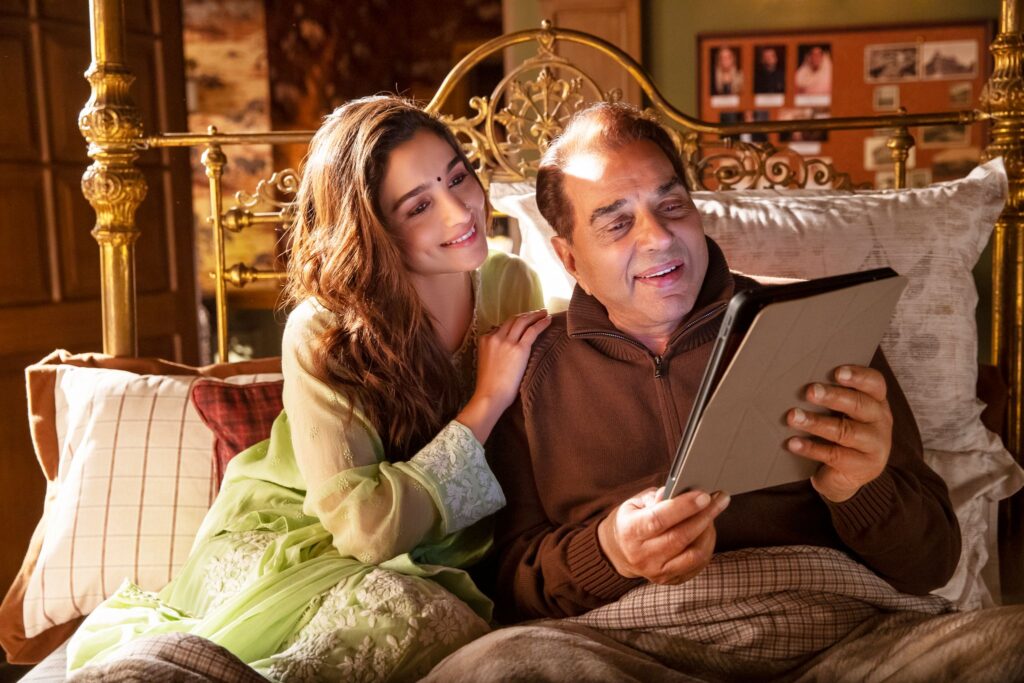
Recently in Rocky Aur Rani Kii Prem Kahani, I had happy tears when Dharmendra stood up from his wheelchair singing “abhi na jao chhod kar, ke dil abhi bhara nahi

*If you haven’t watched it yet, you’re seriously missing out on a pure gem*

Coming back to the nostaligia of retro cinema, I think genius Karan Johar also comes from that era too and knows his audience (ME), who would just melt at something like this. He knows and understands that pyaar puraane gaano pe hi hota hai.

And not just Rocky Rani; Not too long ago we watched and celebrated Jubilee by Vikramaditya Motwane and Soumik Sen, a series set in the late 40’s during Independence with very meticulous attention to detail.

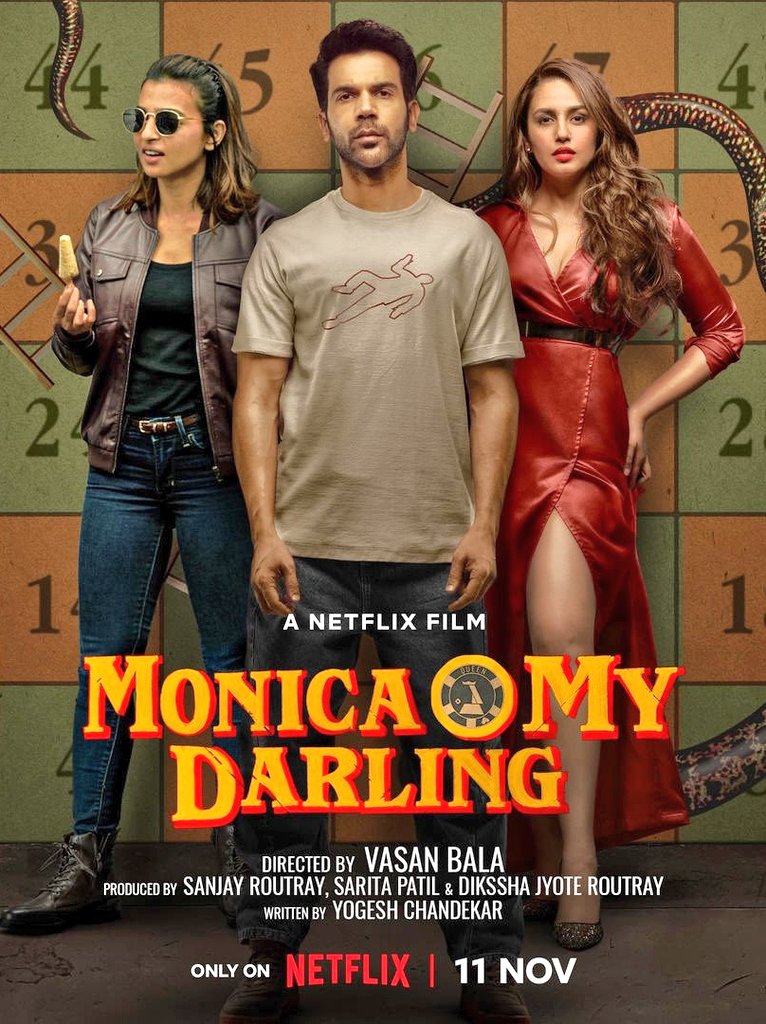
There’s also the 2022 film Monica, O My Darling by Vasan Bala, that’s set in the present but has a retro storytelling style and cinematography technique, language, and songs… and it works.

There are plenty more examples of films and series with similar design and feel, executed in unique and quirky ways that serve as a form of escapism.

And those elements and aesthetics always strike a chord because they are not bound by trends and fads. Perhaps it reminds us of simpler times?

The block typeface film titles and credits, hand painted posters, minimal to no special effects and even the Ameen Sayani-esque narration.

The characters, set designs, fashion, props, acting style and even the music brings a sense of nostalgia and authenticity of an old-world charm that both makers and the audience connect with, in this complex era of AI.

21st Asian Achievers Awards Announce Shortlist

The stage is set and the red-carpet is getting laid out as the shortlist for potential winners of the
21st Asian Achievers Awards, the UK’s most prominent and longstanding celebration of British
Asian achievement across multiple fields, are announced.

This year’s Awards will take place on Friday 15th September 2023 at the prestigious London Hilton on Park Lane. Nearly 700 people are expected to attend. These high-profile guests include celebrities, senior ministers, global stars and influencers.

In the upcoming edition, more than 500 nominations were received across all the categories.
These include: Arts And Culture, Business Person Of The Year, Community Service,
Entrepreneur Of The Year, Lifetime Achievement Award, Media, Professional Of The Year
Sports Personality Of The Year, Uniformed And Civil Service and Woman Of The Year.
Judges were chosen to represent a wide cross-section of society from charity, public services,
business, entrepreneurship and politics. They include Farzana Baduel (CEO and Co-Founder,
Curzon PR), Shamil Thakrar (Co-Founder, Dishoom), former England cricketer and Yorkshire
captain Azeem Rafiq, Chair of Unicef UK Shatish Dasani, Chair of the Police Federation for the City of London Mike Reed, and Mohammed Amin MBE, trustee of the The National Warm
Memorial.

This year’s shortlist includes accomplished figures across various fields. This includes the star of
BBC One drama A Suitable Boy and Apple TV+ Shantaram, Shubham Saraf, as well as Anwar
Uddin MBE, who created history by becoming the first British-Bangladeshi player in English
football history, and Chair of KPMG UK Bina Mehta – the first woman to hold the role in company’s
150 year history.

Art and Culture

  • Archana Kumar
  • Jasdeep Singh Degun
  • Prathiba Parmer
  • Shubham Saraf

Business Person of the Year

  • Dr Dharminder Nagar
  • Harren Jhoti
  • Nisha Katona
  • Zeeshan Shah

Community Service

  • Atif Ali
  • Baljeet Chane
  • Poulomi Desai
  • Shalni Arora

Entrepreneur of the Year

  • Nurdin Jivraj
  • Rishi Patel
  • Siddhi Mittal
  • Tani Dulay
  • Vaysh Kewada

Media

  • Aditya Chakrabortty
  • Anila Dhami
  • Rubina Papani and Poppy Jay
  • Shamim Chowdhury

Professional of the Year

  • Bina Mehta
  • Dr Nikki Kanani
  • Lubna Shuja
  • Professor KJ Patel

Sports Personality of the Year

  • Anwar Uddin
  • Bhupinder Singh Gill
  • Hamzah Sheeraz
  • Naomi Dilip Dattani

Uniformed and Civil Service

  • Asrar-Ul-Haq
  • HHJ Anuja Ravindra Dhir QC
  • Murugesvran Subramanian
  • Salman Desai

Woman of the Year

  • Dr Lalitha Iyer
  • Ridwana Wallace-Laher
  • Rukshana Kapasi
  • Saloni Bhijwani and Samira Ann Qassim

Speaking about this year’s programme, Liji George, Commercial Director, Asian Achievers
Awards says: “We see in the Shortlist that the Awards represent the best and brightest in South
Asian excellence across the country. We have community leaders, innovators and job creators
that have added to the social, cultural and business fabric of the UK. Congratulations to all the
shortlist and best of luck for the Awards.”

South Asians in the UK today occupy leadership positions across a range of fields, including
politics, business and civil society. The Asian Achievers Awards continue to recognise the
outstanding work of such individuals within the South Asian community. The event is organised by
global advisory firm EPG, supported by Market Financial Solutions (MFS), Axiom DWFM, Asian
Voice, Gujarat Samachar and others, with expected funds of upwards of £150,000 expected to
be raised for charity partner One Kind Act on the night.

Nitin Ganatra (Eastenders), entrepreneur, philanthropist and documentary filmmaker, returns as
the host of the evening. Joining him as the co-host is renowned Pakistani actress and model, Ainy
Jaffri Rahman (Balu Mahi). Ganatra says: “The Asian Achievers Awards celebrate the best of the
awe-inspiring talent we have in the South Asian community today. Every year I come to these
Awards and am impressed by the standard of nominations and the quality of the shortlist. Just look
back at the last two decades of winners and you’ll see the event has tracked the growth of our
community for more than a generation.”

Rahman adds: “Everywhere we look in the South Asian community in Britain today, it is full of
inspirational people. Some excel on screen, and others do it quietly in their local neighbourhoods.
I’m pleased to be involved in the AAA to be able to celebrate these hidden gems, who I hope can
inspire the next generation.”

Over the last few editions, the net worth of the room has consistently been over £40 billion. Tickets
for the event will be available at: asianachieversawards.com.

5 reasons why ‘Rocky Aur Rani Kii Prem Kahaani’ is a total package and its brilliant

If you, like me, too have doubts about Rocky Aur Rani Kii Prem Kahaani, then you’re in for a pleasant surprise. I went to watch the film with extremely low expectations because I couldn’t quite resonate with trailer or the songs.

But RRKPK is a total package and its brilliant.

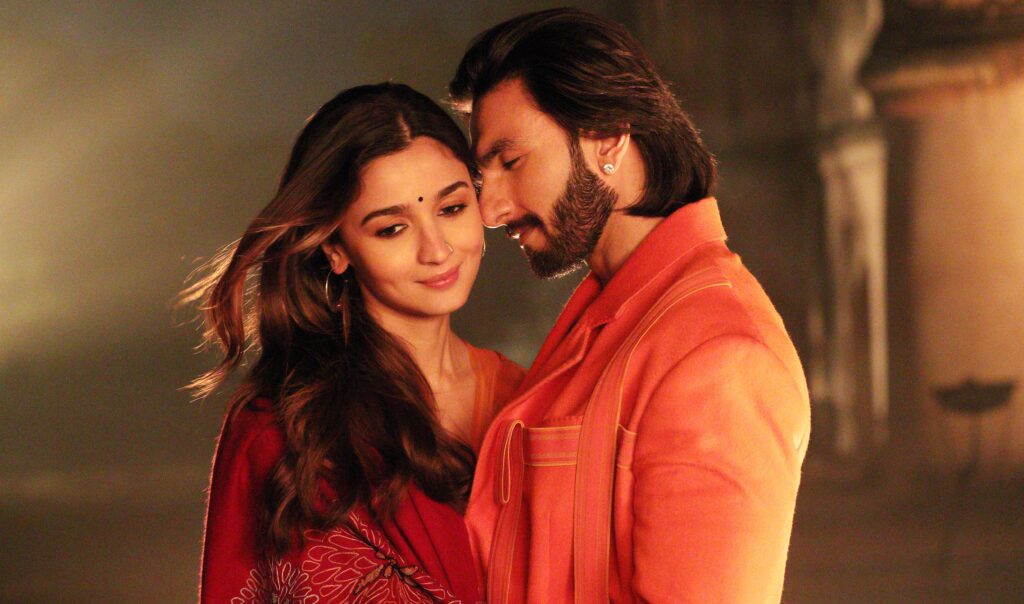
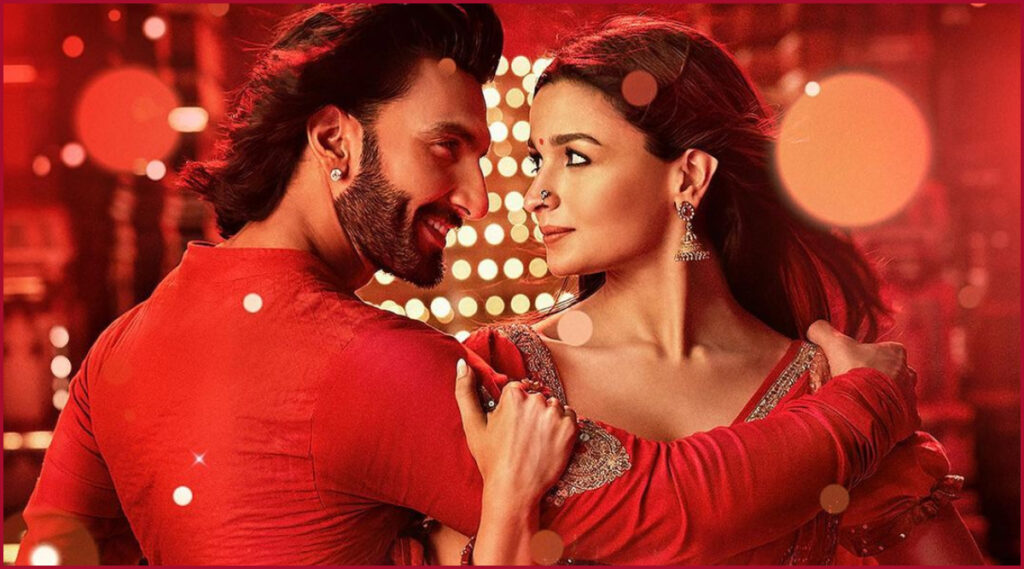
Set in Delhi, India, we’re introduced to the worlds of Rocky Randhawa (Ranveer Singh) and Rani Chatterjee (Alia Bhatt), both of whom are poles apart.

While Rocky is a loud, unpolished, and flamboyant Punjabi man, Rani is a sophisticated, ambitious Bengali woman. But these opposites attract in an unconventional way, which is a real treat (not revealed in the trailer – so no spoilers here).

Here are 5 reasons why the film has the potential to become a classic and why I thoroughly enjoyed it:

Please note: the following may include spoilers.

Karan Johar’s sensibilities

Johar is a filmmaker who isn’t afraid to take risks or make mistakes and is highly aware of evolving times. But he also loves and values his signature style of being extra, and RRKPK is no different. It’s a through-and-through “Dharma Production” from its actors, sets, drama, special appearances, and even low-cut Gucci shirts.

However, what sets it apart from any other mushy love story are the evolved themes it explores.

The storyteller understands the pulse of the audience and has masterfully woven some progressive, sensitive, and socially relevant themes in a superbly entertaining film.

What we witnessed in the trailer is truly just a glimpse of the grandeur that the film presents, which is worth the hype.

Music

The Johar-Pritam duo is known to make memorable music for the movies. But this time, after a very long time, they’ve (thankfully) gone beyond the tried-and-tested formula of remakes. The album is packed with only originals – all of which are quite hummable and sure to be hits at parties and weddings in days to come.

However, the true gems are the refreshing use of timeless retro tracks such as abhi na jao chhod kar, ke dil abhi bhara nahi picturised on icons like Dharmendra and Shabana Azmi. The nostalgia of good old Bollywood songs and sequences they are placed in will surely melt your heart.

Once again, Johar touches the pulse of his audience because pyaar puraane gaano pe hi hota hai (old songs have the power to make you fall in love).

Also, watch out for a whistle-worthy twist before Dhindhora Baje Re.

Sensitive subjects

In recent times, there has been a noticeable trend in films attempting to be “woke” by addressing critical social issues. While this movement is commendable, there is a risk of losing sight of the core subject or narrative in the process.

RRKPK builds a story touching upon multiple themes such as gender equality that goes both ways, body shaming, judgements, and patriarchy, but it manages to strike a balance without getting too preachy.

Both Rocky and Rani, and their respective families have moments of educating other characters as well as the audience on sensitive subjects. But good storytelling prevails that not only engages and enlightens but also entertains.

Watch out for Rocky’s emotional breakdown with Rani’s family on judgements and the heated argument between lead characters in the second half. It’s as real as it gets.

Balanced humor, drama and meta

Writers Ishita Moitra, Shashank Khaitan and Sumit Roy have developed an absolute cracker of a script. Every sequence and every character is crafted carefully with distinct features and dialogues that resonate as real conversations.

There are intended moments of cringe, drama, emotions, love and even empowerment that play out beautifully.

My favorite are the meta moments of Johar deliberately mocking himself and his previous films’ quirks.

I must say, the film has mass appeal and potential for being a classic with high repeat value, like the good old K3G, Kal Ho Naa Ho and the likes.

Cast

Bhatt as Rani is mesmerising. She exudes confidence and charisma essential to play such a character. Its heart-warming to see her journey from the naïve Ishq Waala Love transform to a more mature Phagun ke Mausam waala love.

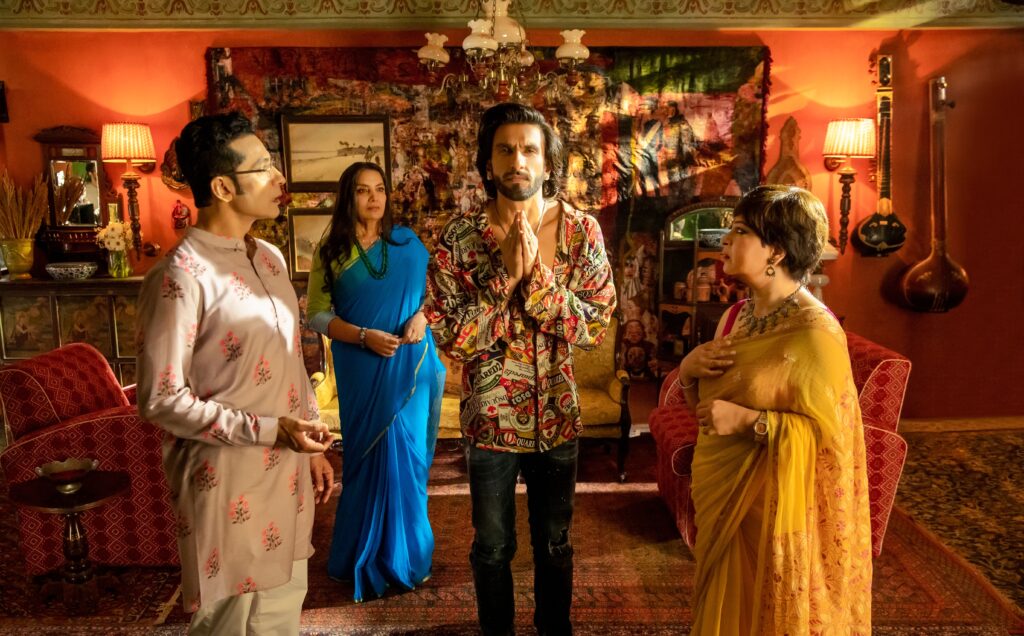
Singh as Rocky is a show-stealer. He makes the over-the-top character with cringe jokes, broken English, and “cheap” taste in fashion lovable… and even acceptable. The actor has once again proved his versatility as a performer and fearlessness of pushing his own boundaries.

While he is the heart of the film, Bhatt is the soul, and the ensemble cast are its pillars.

RRKPK rests on the shoulders of its tremendously talented cast. From Anjali Anand, Aamir Bashir, Kshitee Jog to Tata Roy Chowdhury and Churni Ganguly, every actor is incredible in their parts lifting the story forward.

And legends like Jaya Bachchan, Shabana Azmi and Dharmendra are a site for sore eyes.

Popcorn Rating – [4/5]

Rocky Aur Rani Kii Prem Kahaani is an absolute entertainer. At no point does the film lose momentum while taking us through the whirlwind of emotions, conflicts, resolutions, and romance for the ages (really trying hard to avoid spoilers). Be ready to feel all the feels.

RRKPK is playing at cinemas worldwide on 28 July 2023.

Barbie the character and Barbie the film, both suffer from a severe case of identity crisis

In the second half of Barbie, there’s a 3-minute speech by Gloria (played by America Ferrera) where she highlights harsh facts about the plight of women all over the world – whether it’s at the workplace, at home, as a mother, as a married or unmarried woman, or even her health and beauty standards.

This speech should’ve / could’ve been the focal point of the film . However, it keeps losing the plot each time it reaches a highpoint and leaves the viewers confused of its purpose.

Source: Warner Bros.

Greta Gerwig’s Barbie opens on a fun note, introducing the origins of the American toy as seen in the first teaser of the film, followed by the perfect world called “Barbieland”.

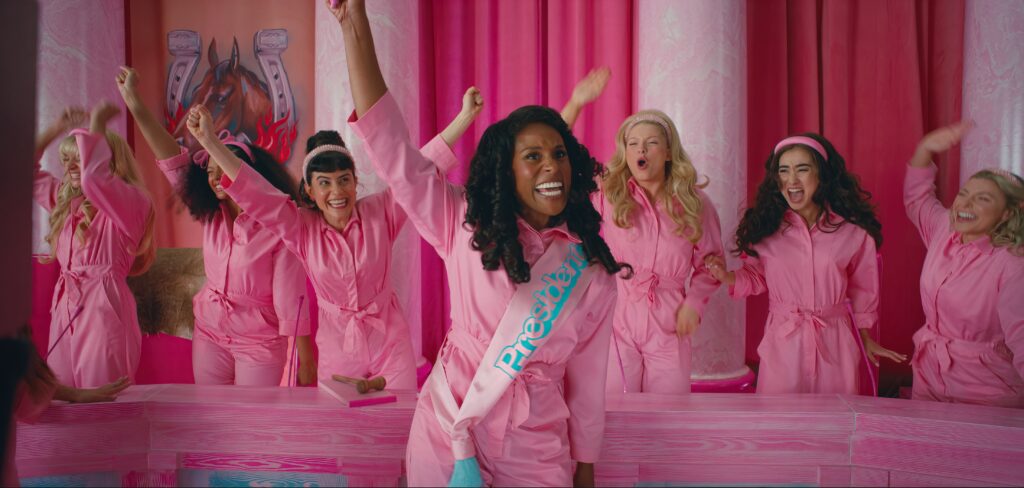
It’s everything you can imagine – attractive women with perfect teeth, tiny frames, luscious hair and pointed toes. It’s a world run by women, for women; Men (or Kens) are second-class citizens and merely an accessory in this world. You guessed it – it’s the opposite of the real world.

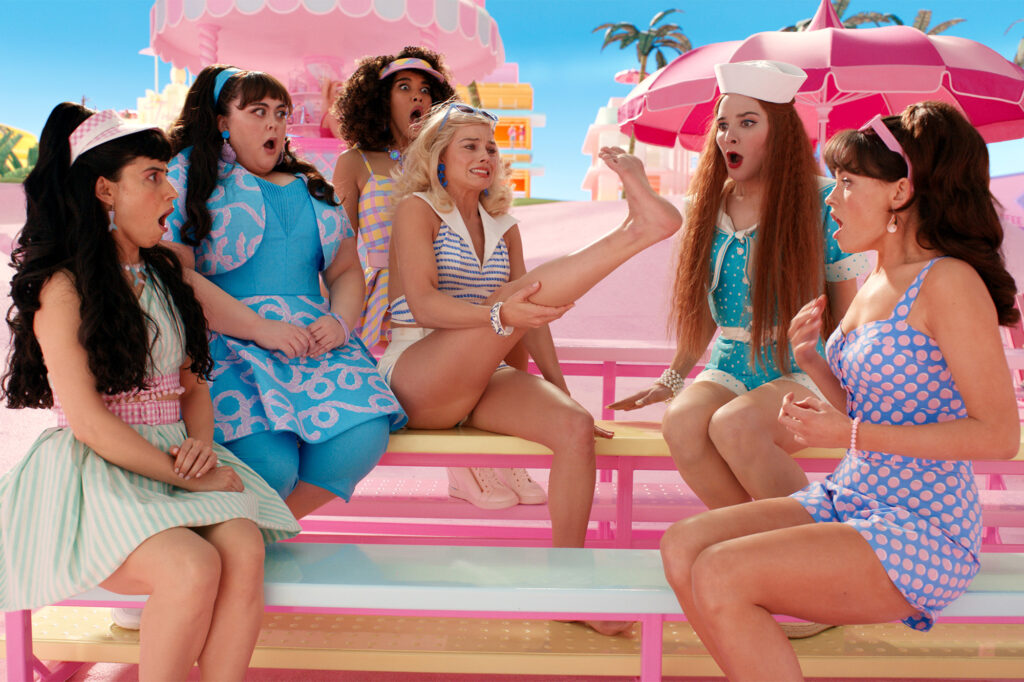
All the Barbies wake up with a charming smile and fresh breath, wear cute colorful outfits, eat (or imagine eating) heart-shaped food, live in beautiful dream houses, greet each other every morning with love and affection, and spend their days chilling on the beach.

Source: Warner Bros.

It’s genuinely thrilling to get immersed in this world fused with nostalgia and explore your child-like imagination. There are also some light-hearted giggles and puns along the way to keep you entertained.

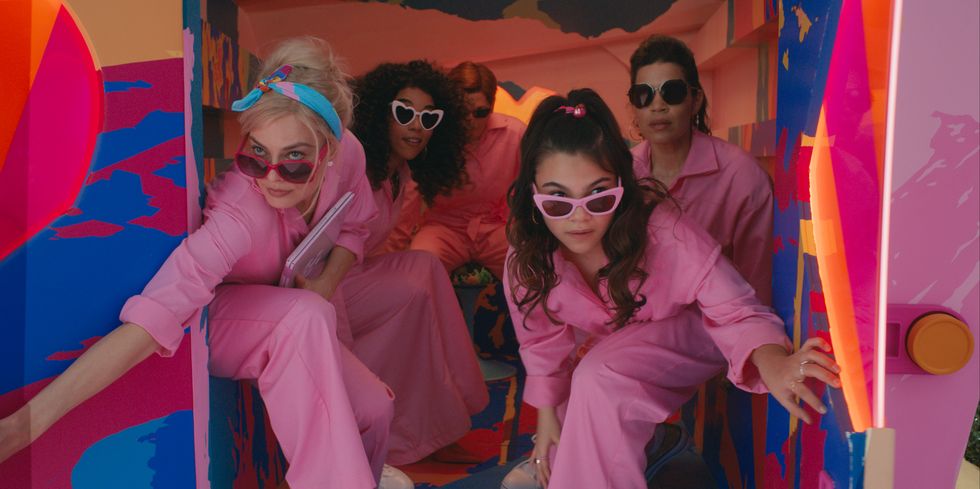
Not just Margot Robbie as the leading Barbie and Ryan Gosling as the leading Ken, but all the other Barbies and Kens, and even Allan (who’s supposedly Ken’s best friend) played by Michael Cera, flawlessly convince us of this perfect toy-land.

From playing volleyball on the pink hard sand to surfing on rock-solid beach waves and even pretend-driving a fancy convertible pink ride – Barbie does a terrific job of world-building with great production design and costumes.

Source: Warner Bros.

However, it soon loses the plot when Barbie (Robbie) suddenly experiences emotional and physical signs of distress. Described as a “stereotypical” Barbie, she experiences existential crisis that are beyond her comprehension, leaving her no choice but to embark on a journey into the “human world” to discover her purpose.

Smitten by her, Ken (Gosling) joins her on the journey, only to learn about the “bliss” of patriarchy and find his purpose.

While Barbie is on a mission to find her identity and values through the human who “owns” her, Ken is determined to bring patriarchy to “Barbieland”.

What follows for the rest of the duration of the film is a hotch-potch of woke themes, talk of women empowering and feminism, equality, patriarchy, and self-worth.

If you’re confused by this premise – you’re not alone.

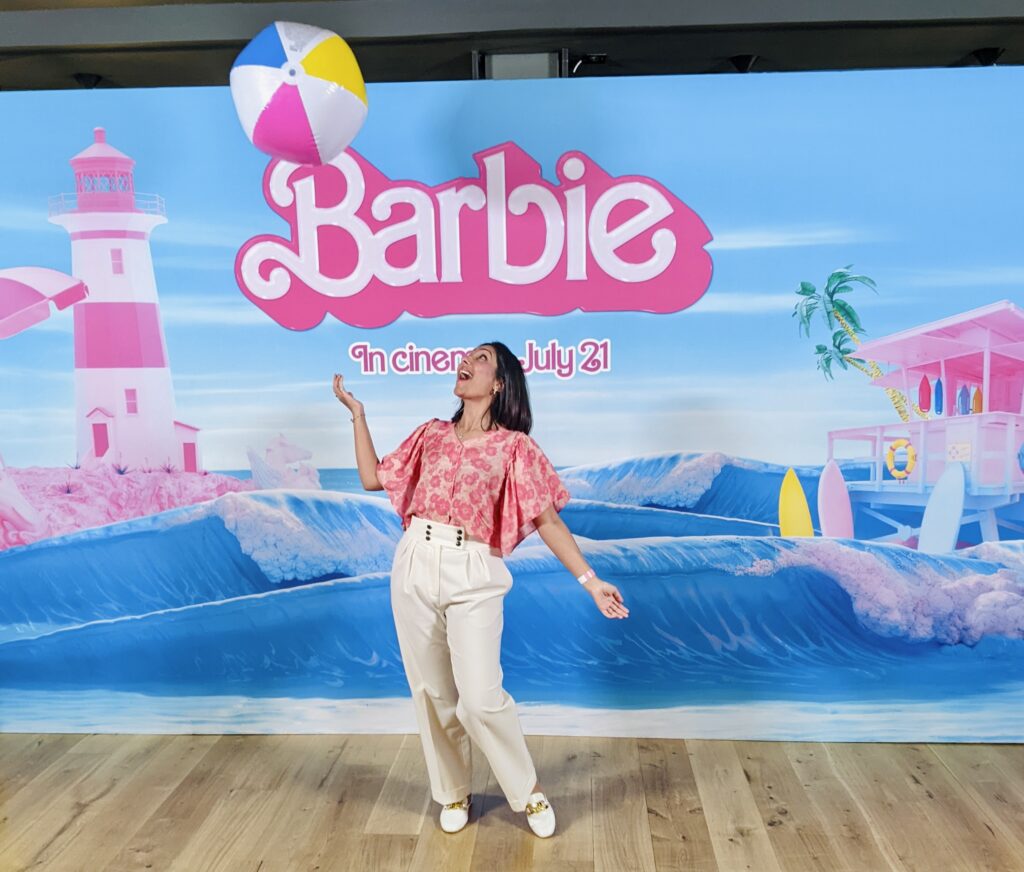
I watched Barbie at a press viewing which included an exciting pre-screening reception filled with photo ops such as surf boards, beach chairs, beach ball and even the Mattel Barbie box. It was an immersive experience with everyone dressed in pink, reliving their childhood.

However, as entertaining as the pre-party was, the film left no impact at all.

The makers of Barbie have been on a marketing and promotional frenzy, painting the world pink. However, the film’s story isn’t half as creative, bold, or even coherent.

Popcorn Rating – [3/5]

Barbie feels like desperate attempt at making the brand relevant again (there’s a definite possibility of spikes in sales at Mattel) and crafting a story tapping into the Gen-Z and Gen Alpha market.

Sadly, Barbie the character and Barbie the film, both suffer from a severe case of identity crisis.

‘Jawan’ Prevue is out and its GRAND!

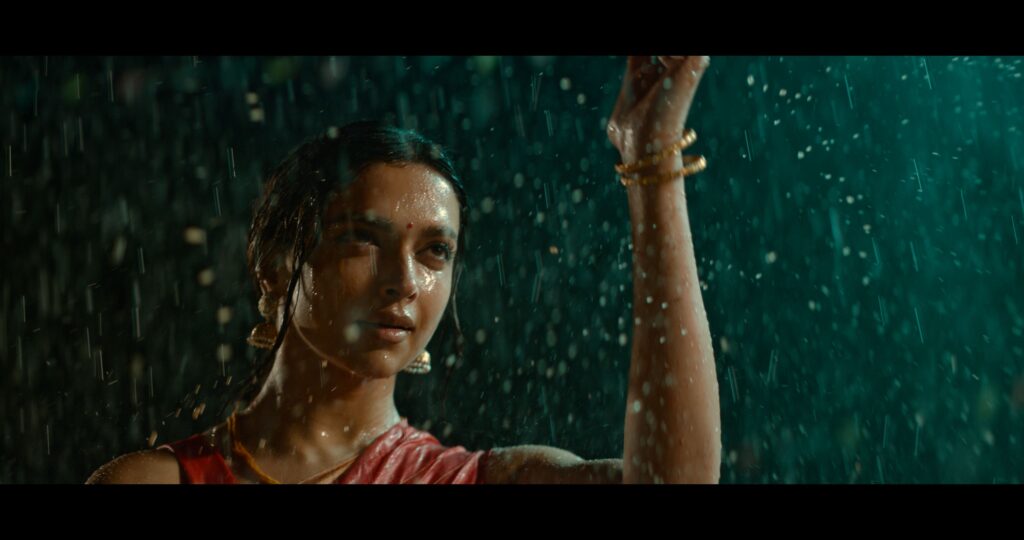
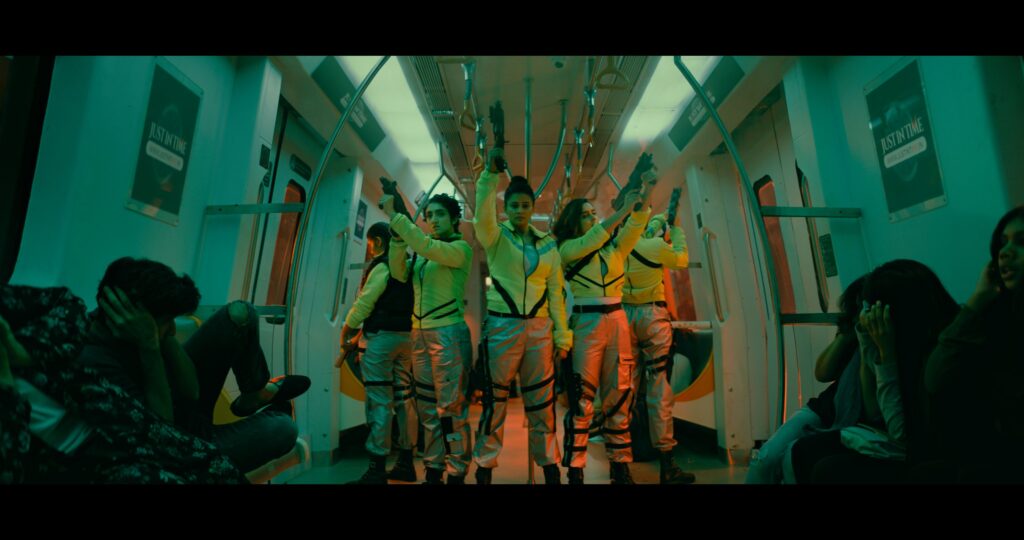
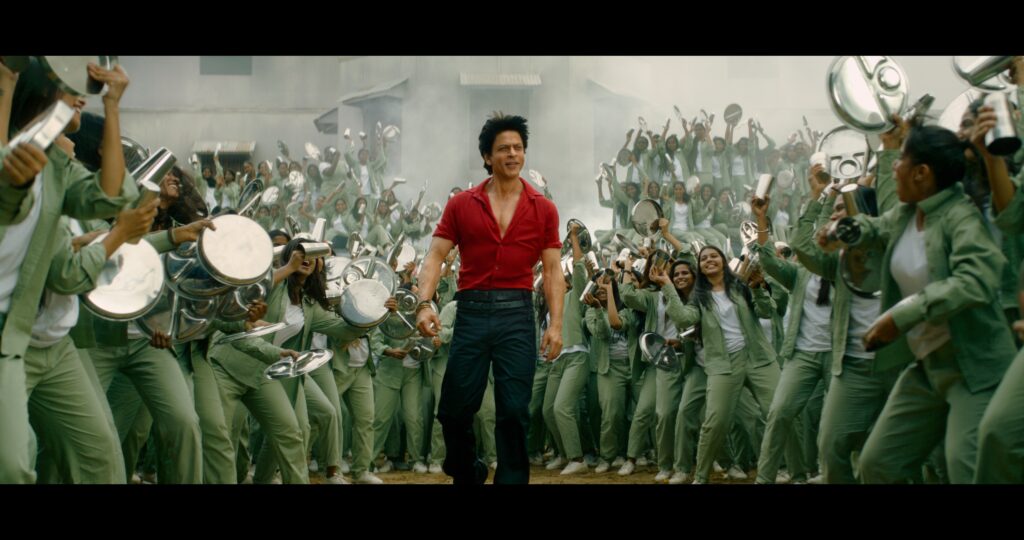
The highly anticipated prevue of Shah Rukh Khan’s mega film, ‘Jawan’ has taken the internet by storm, upon its release today. Jawan, promises to be a high-octane action thriller that outlines the emotional journey of a man who is set to rectify the wrongs in the society.

The action-packed prevue has pushed the anticipation for the film to the next level, captivating audiences with its grand scale and promising an extraordinary cinematic experience. Bringing together a perfect blend of action and emotion, the Jawan prevue showcases stunning visuals and an unparalleled scale bound to leave viewers wanting more. Every frame of the prevue is attention-grabbing and offers a glimpse into the world of Jawan.

The prevue begins with the inimitable voiceover of King Khan, building up the excitement for what awaits. One of the highlights for fans is witnessing the various looks of SRK, in avatars they have never seen before. Moreover, the prevue unveils a star-studded cast, featuring names from across Indian cinema. With clips of explosive action sequences, grand songs and a menacing performance by SRK on the retro track ” Beqarar Karke” the film promises to be full of surprises.

Directed by Atlee, known for delivering a series of successful films, brings his directorial prowess to ‘Jawan’. Adding to the excitement is the captivating background score and tracks composed by Anirudh, known for his musical contributions to some of the biggest films in recent times. Jawan also features ‘The King Khan rap, a high-energy and captivating track, by the Grammy-nominated and extremely popular artist Raja Kumari, which is also featured in the prevue.

Jawan is one of the most anticipated and ambitious films, produced at a never seen before scale for an Indian film, it is backed by an exceptional cast, including some of the biggest names in the entertainment industry from all parts of India along with Shah Rukh Khan starting from, Nayanthara, and Vijay Sethupathi in lead roles, and Deepika Padukone in a special appearance, along with Sanya Malhotra, Priyamani, Girija Oak, Sanjeeta Bhattacharya, Lehar Khan, Aaliyah Qureshi, Ridhi Dogra, Sunil Grover and Mukesh Chhabra will be seen in pivotal roles, broadening its appeal to audiences across all Indian languages, making it a true PAN India film.

Jawan’s prevue delivers the promise of undoubtedly one of the most highly anticipated films of the year. After teasing the audience with intriguing posters and a short teaser, the prevue finally arrived with a bang.